Experiencing F150 Control Arm Bushing Problems Get Answers
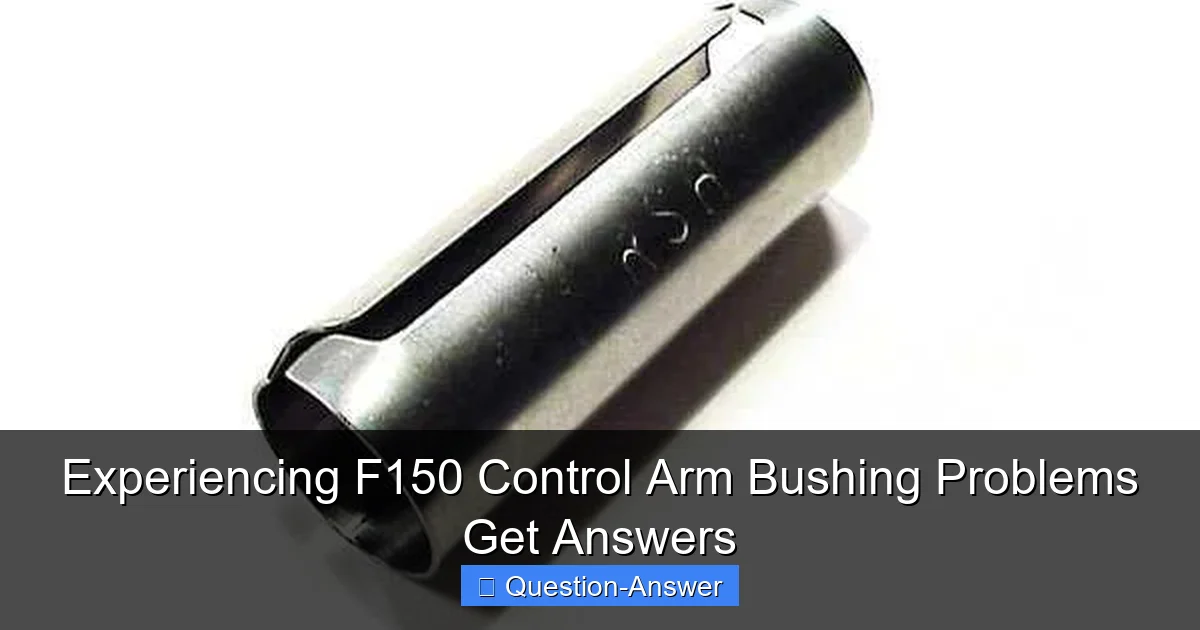
Featured image for f150 control arm bushing problems
Image source: c1552172.r72.cf0.rackcdn.com
Experiencing F150 control arm bushing problems can manifest as frustrating clunks, wandering steering, and uneven tire wear. This article provides essential answers on identifying common symptoms, performing accurate diagnosis, and choosing effective repair solutions to restore your truck’s optimal handling and extend component life. Don’t let worn bushings compromise your F-150’s ride quality or safety!
Experiencing F150 Control Arm Bushing Problems? Get Answers
Hey fellow F150 owners! Ever hear a mysterious clunk or feel your truck just isn’t handling right? If so, you might be dealing with a common culprit: F150 control arm bushing problems. I’ve been there, and let me tell you, those worn-out little rubber pieces can make a big difference in how your trusty truck feels on the road. It’s frustrating when your ride gets a bit wobbly or noisy, but don’t worry, you’re not alone, and we can figure this out together.
Think of control arm bushings as the unsung heroes of your truck’s suspension. They connect the control arms to the frame, allowing for smooth movement while absorbing vibrations. But over time, they wear out, leading to those annoying issues. So, if you’re experiencing some less-than-stellar performance, let’s dive into what’s happening and how to fix it.
What are the common signs and best solutions for F150 control arm bushing problems?
Well, when your F150 control arm bushing problems start showing up, your truck definitely won’t be shy about letting you know. These little guys are designed to provide a cushion and allow your suspension to move freely without metal-on-metal contact. But with miles, weather, and rough roads, that rubber or polyurethane can crack, tear, or just generally lose its integrity. When that happens, you lose that essential buffer, and things get loud and loose.
Here are the tell-tale signs I’ve personally experienced or heard from other F150 owners:
- Unsettling Noises: This is often the first sign. You might hear a distinct clunking, squeaking, or rattling noise when you go over bumps, accelerate, brake, or even turn. It’s usually more pronounced at lower speeds. I remember thinking my F150 was falling apart, only to find out it was just a few worn bushings causing all that racket!
- Loose or Wandering Steering: Does your truck feel less precise? Like it’s floating a bit or constantly needs small steering corrections to stay straight? Worn F150 control arm bushings can cause excessive play in the suspension, making your steering feel vague and less responsive. It’s not just annoying; it can be unsafe.
- Vibrations: Sometimes, you’ll feel vibrations through the steering wheel or even the floorboards, especially at certain speeds. This is another symptom of suspension components not being properly isolated.
- Uneven Tire Wear: If your bushings are severely worn, they can mess with your wheel alignment. You might start noticing that your tires are wearing unevenly, which costs you money in the long run. Get an alignment check if you suspect this.
- Visual Cues: If you or your mechanic can safely get under your F150 and inspect the control arms, look for visible cracks, tears, or dry rot in the rubber bushings. Sometimes, you’ll even see them completely separated. This is a clear indicator of F150 control arm bushing problems.
So, you’ve identified the signs. What’s next for these F150 control arm bushing problems?
Diagnosing the Problem:
You can do a quick check yourself. With your F150 safely on jack stands (or a lift), grab the wheel at 12 and 6 o’clock, then 3 and 9 o’clock, and try to wiggle it. Excessive play could indicate issues. A more precise method involves using a pry bar to gently put pressure on the control arms and watch the bushings for movement. Any significant give or visible cracking under load means trouble. If you’re unsure, a trusted mechanic can quickly confirm the issue.
Solutions and Repair Options:
When it comes to fixing F150 control arm bushings, you generally have two main routes:
- Replace Just the Bushings: This can be a more budget-friendly option if the control arm itself is in good shape. However, it requires special tools to press out the old bushings and press in the new ones. It can be a labor-intensive job, and honestly, sometimes it’s more trouble than it’s worth unless you have the right equipment and experience. I tried this once on an older vehicle, and it was a real struggle.
- Replace the Entire Control Arm: This is often the preferred and easier solution. New control arms come with fresh bushings pre-installed, making the replacement process much more straightforward. While the part cost is higher, the labor might be less because it’s a simpler swap. For me, the peace of mind knowing I have a completely new, solid component is usually worth the extra cost. Plus, you often get a new ball joint thrown in!
Whether you go the DIY route or head to a shop, addressing these F150 control arm bushing problems sooner rather than later is key. Ignoring them can lead to further damage to other suspension components, uneven tire wear, and a much less enjoyable (and safe!) driving experience. Trust me, your F150 will thank you for it!
In conclusion, while F150 control arm bushing problems are a common wear item, they’re definitely fixable. Listen to your truck, pay attention to the signs, and don’t hesitate to investigate any suspicious noises or handling changes. A proactive approach will keep your F150 riding smoothly and safely for many more miles to come.