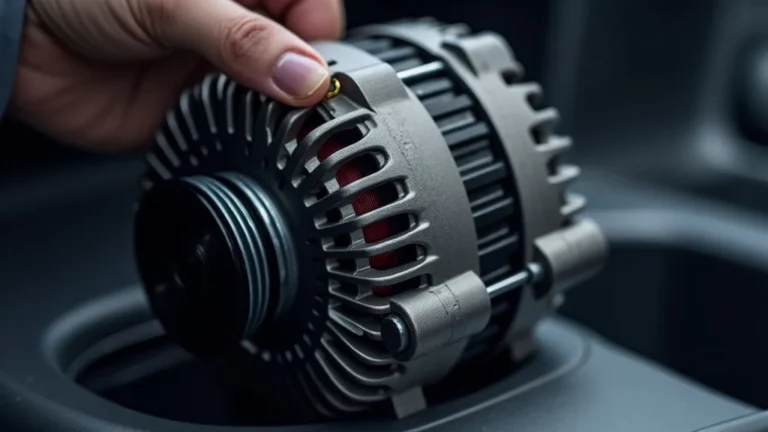
How Does the F150 Mass Airflow Sensor Work: A Simple Guide
If you’re wondering how does f150 mass airflow sensor work, you’re not alone! It can seem like a complicated topic, especially if you’re new to car mechanics. Many people find it a little tricky at first. But don’t worry, it’s actually pretty straightforward when broken down step by step. This guide will walk you through the process in easy-to-understand language. We’ll explore the basics, what the sensor does, and how it helps your F150 run smoothly. Let’s get started!
Key Takeaways
- The mass airflow sensor (MAF) measures the air entering your engine.
- It sends vital data to the engine control unit (ECU) for optimal performance.
- Common issues include a dirty or failing sensor leading to performance problems.
- Cleaning or replacing the MAF sensor can often fix these issues.
- Understanding MAF function helps diagnose engine problems and improve fuel efficiency.
- Simple maintenance like cleaning your MAF sensor can prevent costly repairs.
The Mass Airflow Sensor’s Role in Your F150
The mass airflow (MAF) sensor is a key component in your Ford F150’s engine management system. Its primary job is to measure the amount of air entering the engine. This information is crucial because the engine control unit (ECU) uses it to determine how much fuel to inject. This precise air-fuel mixture is essential for efficient combustion and optimal engine performance. Without accurate readings from the MAF sensor, your engine might run poorly, wasting fuel and potentially causing damage over time. The sensor does its job by staying in the intake air stream, right after the air filter, where it can get the air’s precise measurements. It works seamlessly and quietly, but it is an important part of your truck.
How the MAF Sensor Works
The MAF sensor is a marvel of engineering, usually found in a small housing inside the intake tube. This housing usually contains the sensor’s internal workings. There are a few different types of MAF sensors, but most modern F150s use a hot-wire MAF sensor. This type uses a heated wire or film (hot wire) that’s exposed to the incoming airflow. As air flows across this wire, it cools it down. The sensor measures how much electricity is needed to keep the wire at a constant temperature. The greater the airflow, the more the wire cools, and the more electricity is required. This data is converted into a signal that the ECU uses. The ECU then adjusts the fuel injection to match the amount of air. Other MAF types use a vane, but hot wire is most commonly used.
-
Hot-Wire Sensor: The most common type, this sensor uses a heated wire. The air cools the wire, and the amount of electricity needed to maintain the wire’s temperature is measured to determine airflow. The ECU uses the reading to control fuel delivery. This is a very common type.
The sensor’s hot wire is typically made of platinum or another metal with a high melting point and good conductivity. It is designed to withstand the heat generated by the sensor itself.
-
Hot-Film Sensor: Similar to the hot-wire, but uses a heated film instead of a wire. The principle remains the same. Air cools the film, and the electrical current needed to maintain temperature is measured. The measurement is then used by the ECU to determine the fuel mixture.
Hot-film sensors are often preferred for their faster response times and greater resistance to contamination. They react quickly to changes in airflow, ensuring a precise air-fuel mixture under varying conditions.
-
Vane Meter Sensor: This older design uses a flap or vane that moves in proportion to the airflow. A potentiometer connected to the vane measures its position, which the ECU uses to calculate airflow. This is less common in modern vehicles.
This sensor design has fewer issues with contamination compared to hot-wire sensors. The vane itself can sometimes stick or get stuck.
Sensor Components and Functions
The MAF sensor is more than just a wire or film. It’s a collection of precise electronic parts working together. There are the temperature sensors, the electronics, and the housing. The sensor’s main components consist of the sensing element (hot wire or film), a temperature sensor, and the electronics module. The sensing element directly measures the airflow. The temperature sensor is important because air density changes with temperature, influencing how much air enters the engine. The electronics module processes the signals and converts them into a form that the ECU can understand. Together, these parts provide accurate information. The whole system helps your truck run as smoothly and efficiently as it should.
-
Sensing Element: This is the part that directly measures the airflow, whether a hot wire, hot film, or vane. It is key to providing accurate readings of the amount of air entering the engine.
The sensitivity of the sensing element is key. For example, a hot wire sensor is often made of a platinum wire that is heated to a certain temperature. Airflow cools the wire. The electronics measure the current needed to maintain the temperature.
-
Temperature Sensor: This sensor measures the temperature of the incoming air. Air density changes with temperature, which affects the mass of air entering the engine. The temperature reading is critical for calculating the proper air-fuel mixture.
The temperature sensor is often a thermistor, a type of resistor whose resistance changes with temperature. This allows the ECU to compensate for temperature variations, improving engine performance in various weather conditions.
-
Electronics Module: This module processes signals from the sensing element and the temperature sensor, converting them into a digital signal that the ECU can understand. This module is like a translator, transforming raw data into usable information for the engine.
The electronics module must be precise. It is essential for converting the sensor’s readings into a format the ECU can use. Its accuracy determines whether your truck runs efficiently and avoids issues like poor fuel economy or engine stalling.
Common Problems and Symptoms of a Bad MAF Sensor
A failing MAF sensor can cause a variety of problems with your F150. These issues often manifest as poor engine performance. Some common symptoms include rough idling, stalling, reduced fuel economy, and a general lack of power. The Check Engine light will often turn on, signaling a potential problem with the engine management system. If you notice any of these issues, it is a good idea to inspect and potentially test the MAF sensor. Early detection and proper troubleshooting can prevent more serious engine issues.
-
Rough Idling: A faulty MAF sensor can lead to an incorrect air-fuel mixture, resulting in an uneven or rough idle. The engine may shake or vibrate noticeably when idling.
When the MAF sensor isn’t accurately measuring airflow, the ECU struggles to maintain a consistent idle speed. This is because the engine’s control module doesn’t know how much fuel to inject correctly at a specific speed.
-
Stalling: If the MAF sensor fails completely, the engine may stall, especially during startup or when coming to a stop. This happens because the ECU cannot regulate the fuel injection system.
If the sensor malfunctions, the ECU may cut off fuel supply or provide too much fuel, causing the engine to stall. This is especially likely in older trucks.
-
Reduced Fuel Economy: An incorrect air-fuel mixture can lead to decreased fuel efficiency. The engine may consume more fuel than usual to compensate for the inaccurate readings from the MAF sensor.
When the MAF is inaccurate, the ECU may inject more fuel than necessary (rich condition) or less fuel than necessary (lean condition). Both scenarios make the vehicle waste fuel.
-
Lack of Power: A malfunctioning MAF sensor might cause a noticeable reduction in engine power, especially when accelerating or going uphill. This could be due to an imbalance in the air-fuel mixture or the engine operating in a “limp mode”.
The engine’s ability to generate power is affected because the ECU cannot optimize engine performance. The engine might struggle to respond quickly to throttle inputs.
-
Check Engine Light: One of the most common signs of a bad MAF sensor is the activation of the Check Engine Light on the dashboard. The ECU detects a problem and triggers the light as a warning.
The Check Engine Light can be triggered by a wide range of issues. However, if accompanied by performance problems, the MAF sensor is a strong possibility.
Diagnosing and Testing the MAF Sensor
If you suspect a problem with your MAF sensor, the first step is diagnosis. The steps include checking for stored trouble codes, and visual inspection. You can then use a multimeter to test the MAF sensor’s signals. A faulty sensor often registers inaccurate readings or no readings at all, which are clues. If you’re not comfortable working on your truck, a mechanic can help. Regular checks are also recommended. They can include cleaning, or replacing. Accurate diagnosis is key to efficient repairs.
Using a Diagnostic Tool
A diagnostic tool can help you identify if the MAF sensor is at fault. Connecting the tool to the diagnostic port can reveal any related trouble codes. The tool lets you examine real-time data from the MAF sensor. You can observe the airflow readings as the engine runs. This can reveal if the MAF sensor is providing incorrect readings. Using the diagnostic tool, you can see if other sensors, such as the oxygen sensors, are also acting in an unusual way. This is an important part of the diagnostic process.
-
Retrieving Trouble Codes: The diagnostic tool can read the error codes stored in the ECU. These codes can point directly to a malfunctioning MAF sensor or related issues, helping to pinpoint the problem quickly.
Trouble codes are important, because they provide a starting point for the diagnostic process. Codes like P0100 (MAF Sensor Circuit Malfunction) often point to a clear problem.
-
Live Data Monitoring: Diagnostic tools allow you to watch live data. This is useful for monitoring the MAF sensor’s readings in real time. This can help reveal any unusual behavior, such as fluctuating or inconsistent readings.
Live data includes air mass readings in grams per second (g/s) or pounds per minute (lbs/min). It allows you to check whether the readings change appropriately with engine speed and load.
-
Visual Inspection: Before using the diagnostic tool, check the sensor and wiring for physical damage. The tool isn’t going to help if there is obvious damage, such as loose connections or broken wires.
Sometimes, it’s something easy, like a disconnected wire or a damaged connector. Always begin with a careful look to save time.
Testing the MAF Sensor With a Multimeter
If you have access to a multimeter, it can be useful in testing the MAF sensor’s electrical signals. You’ll need to know the proper testing procedures for your F150. These steps can involve checking the voltage and signal output of the sensor. If you’re not familiar with electrical components, it’s best to consult a professional. It’s an important process that you should only do if you are comfortable and familiar with electrical measurements.
-
Voltage Testing: With the ignition on, check the voltage supply to the MAF sensor. The voltage should be within the range specified in your truck’s service manual. This is a common check.
If the voltage is not within the specified range, there could be a problem with the wiring or the power supply. Fixing these issues can restore the MAF sensor’s function.
-
Signal Output Testing: Use the multimeter to check the sensor’s signal output. The signal voltage should change as the engine speed increases. The changes must be linear.
An erratic or constant signal indicates a problem with the MAF sensor. The multimeter lets you confirm that the sensor is changing readings as it should.
-
Resistance Testing: On some sensors, you can measure the resistance of the sensor’s internal components. This helps reveal internal failures.
Resistance tests are usually performed with the engine off. This can help you identify a faulty sensor before it affects engine performance.
Cleaning and Replacing the MAF Sensor
Many MAF sensor problems can be resolved through cleaning. Cleaning the sensor can remove dirt and debris that affect its readings. However, if cleaning does not resolve the issue, replacement may be necessary. Replacing a faulty MAF sensor can restore proper engine operation and improve fuel efficiency. Proper maintenance is useful. By cleaning the MAF sensor, or doing so when replacing it, you can keep your truck in good working order.
Cleaning the MAF Sensor
Cleaning your MAF sensor is a cost-effective solution for improving your F150’s performance. The procedure starts with removing the sensor from the air intake. You will need a special MAF cleaner spray. Never use harsh cleaners. Carefully spray the cleaner onto the sensor’s wires or film. Avoid touching the sensor’s delicate parts. Let the sensor air dry completely before reinstalling it. Check for any signs of damage or wear before putting it back. Regular cleaning is a simple step, yet it can prevent many issues.
-
Remove the MAF Sensor: You will first need to disconnect the sensor’s electrical connector and carefully remove it from the air intake tube. The location is important.
Before removing the sensor, make sure the engine is off and the key is out of the ignition. Locate the sensor in the air intake tube.
-
Use MAF Sensor Cleaner: Purchase a dedicated MAF sensor cleaner. Never use standard cleaners, as they can damage the sensor. Follow the instructions on the cleaner.
Apply the cleaner to the sensor’s wires or film, following the manufacturer’s instructions. Usually, you spray the cleaner onto the sensor.
-
Air Dry Completely: Before reinstalling the sensor, let it air dry completely. This is important to ensure that the sensor operates correctly and does not damage the components.
Allowing the sensor to dry completely prevents any residue from affecting the readings. This usually takes only a few minutes.
Replacing the MAF Sensor
If cleaning the MAF sensor does not solve the engine problems, replacing the sensor might be necessary. To replace the sensor, start by removing the old sensor. You may need to remove the air intake tube. Then, you can install the new sensor in the same location. Make sure you use the right type of sensor. Connect the electrical connector and reinstall any other parts. After installation, make sure the engine runs correctly. This will help maintain your F150’s performance and fuel economy.
-
Remove the Old Sensor: Unplug the electrical connector, and remove the sensor from the air intake tube. You may need to remove the air filter housing for easy access.
Carefully disconnect the electrical connector, usually by pressing a tab. Remove any screws or clips holding the sensor.
-
Install the New Sensor: Insert the new MAF sensor into the air intake tube. Make sure it is correctly oriented and secure it with the clips or screws.
Make sure the new sensor is the correct part for your F150 model and year. Align and secure the new sensor.
-
Reconnect and Test: Reconnect the electrical connector and reinstall any parts removed during the process. Start the engine and check for any error codes.
Confirm that the Check Engine Light is off. If the light remains on, there may be another problem.
Maintenance Tips to Keep Your MAF Sensor Healthy
Regular maintenance is a key way to ensure your F150’s MAF sensor operates correctly. There are a few steps you can take. These steps help prevent problems. You can use high-quality air filters to keep debris from entering the intake. Clean the MAF sensor at regular intervals. Watch out for any warning signs. By following these steps, you can help protect the sensor. With proper care, your truck will stay running smoothly for miles.
-
Use High-Quality Air Filters: Using a high-quality air filter can prevent dust and debris from entering the intake system and contaminating the MAF sensor. It’s one of the simplest and most effective preventative measures.
Select an air filter from a well-known brand, and replace it regularly. This is critical for preventing debris from reaching the MAF sensor.
-
Clean the MAF Sensor Regularly: Make cleaning the MAF sensor a part of your regular maintenance routine, especially if you drive in dusty conditions. It is easy to do and can extend the life of the sensor.
Clean your MAF sensor at every oil change, or every 10,000 to 15,000 miles, or according to your truck’s service schedule. This can prevent buildup.
-
Watch for Warning Signs: Keep an eye out for any of the symptoms we’ve discussed, such as rough idling, stalling, reduced fuel economy, and lack of power.
Addressing issues promptly can prevent more serious problems. Don’t ignore the Check Engine Light, and have your truck checked.
Real-Life Examples and Case Studies
To illustrate the impact of the MAF sensor, let’s explore some real-life scenarios. These examples demonstrate the sensor’s key role in engine performance. By observing some examples, you can get a better picture of the issues.
-
Case Study 1: Stalling and Rough Idle
A Ford F150 owner noticed their truck was stalling at stoplights and running rough at idle. The Check Engine Light was on, so they brought their vehicle into a mechanic. Diagnostic tests revealed a faulty MAF sensor. After replacing the sensor, the stalling and rough idle issues disappeared, and the engine ran smoothly. The repair resolved these issues.
-
Case Study 2: Reduced Fuel Economy and Lack of Power
A driver of a Ford F150 noticed a decrease in fuel efficiency and a lack of power, especially when going uphill. The diagnostic tool detected issues with the MAF sensor, which wasn’t measuring air intake correctly. After cleaning the sensor, the fuel economy improved, and the truck regained its power. The problem was resolved quickly and easily.
F150 MAF Sensor Scenarios
Here are some sample situations to illustrate how a MAF sensor can affect your truck. Each one has a different effect.
-
Scenario 1: The Dirty Sensor
Imagine your F150 has a dirty MAF sensor due to driving on dusty roads. The sensor provides inaccurate readings to the ECU, causing the engine to run slightly rich. As a result, your fuel economy drops, and you may notice a slight loss of power. The ECU receives incorrect data. The result is poor fuel economy.
-
Scenario 2: The Failing Sensor
Now, let’s say your MAF sensor is failing completely. The ECU does not receive any data about the air intake. The engine may stall frequently, especially at startup or when idling. The Check Engine Light comes on. You may also experience significant power loss. The engine runs erratically without the right information.
| Symptom | Cause | Effect |
|---|---|---|
| Rough Idling | Incorrect air-fuel mixture | Unstable engine operation |
| Stalling | Complete MAF sensor failure | Engine shuts down unexpectedly |
| Reduced Fuel Economy | Incorrect air-fuel mixture | Increased fuel consumption |
| Lack of Power | Improper air-fuel mixture | Difficulty accelerating or climbing hills |
| Check Engine Light | MAF sensor malfunction | Warning of a potential engine issue |
Frequently Asked Questions
Question: How often should I clean my F150’s MAF sensor?
Answer: It’s a good idea to clean your MAF sensor every 10,000 to 15,000 miles, or during every oil change, especially if you drive in dusty environments.
Question: Can I use any cleaner to clean the MAF sensor?
Answer: No, you should only use a cleaner specifically designed for MAF sensors. Other cleaners can damage the delicate components.
Question: What happens if I drive with a bad MAF sensor?
Answer: Driving with a bad MAF sensor can cause a range of problems, including poor fuel economy, rough idling, stalling, and a loss of power. It’s best to address it promptly.
Question: Will replacing the MAF sensor fix all my engine problems?
Answer: Replacing the MAF sensor can fix many performance issues caused by a faulty sensor. However, other problems can cause similar symptoms. If the symptoms continue after replacement, it’s best to have a mechanic examine the engine.
Question: Is it difficult to replace the MAF sensor?
Answer: Replacing the MAF sensor is often a straightforward process. However, if you are uncomfortable working on your truck, a mechanic can complete the job. Refer to your truck’s service manual or get help from a professional if you’re unsure.
Final Thoughts
Knowing how does f150 mass airflow sensor work is a step toward keeping your truck running great. We’ve explored the sensor’s role in measuring incoming air, how it communicates with the engine control unit, and the common signs of trouble. You now know the steps to troubleshoot these issues. From understanding the basics, to cleaning or replacing the sensor, you can prevent major issues. Keep your truck running well with basic maintenance. Regular care can help you avoid costly repairs and keep your F150 performing at its best for years to come. With this knowledge, you are equipped to keep your F150 on the road and running smoothly.