The Ultimate F150 Fuel Tank Size by Year Comparison
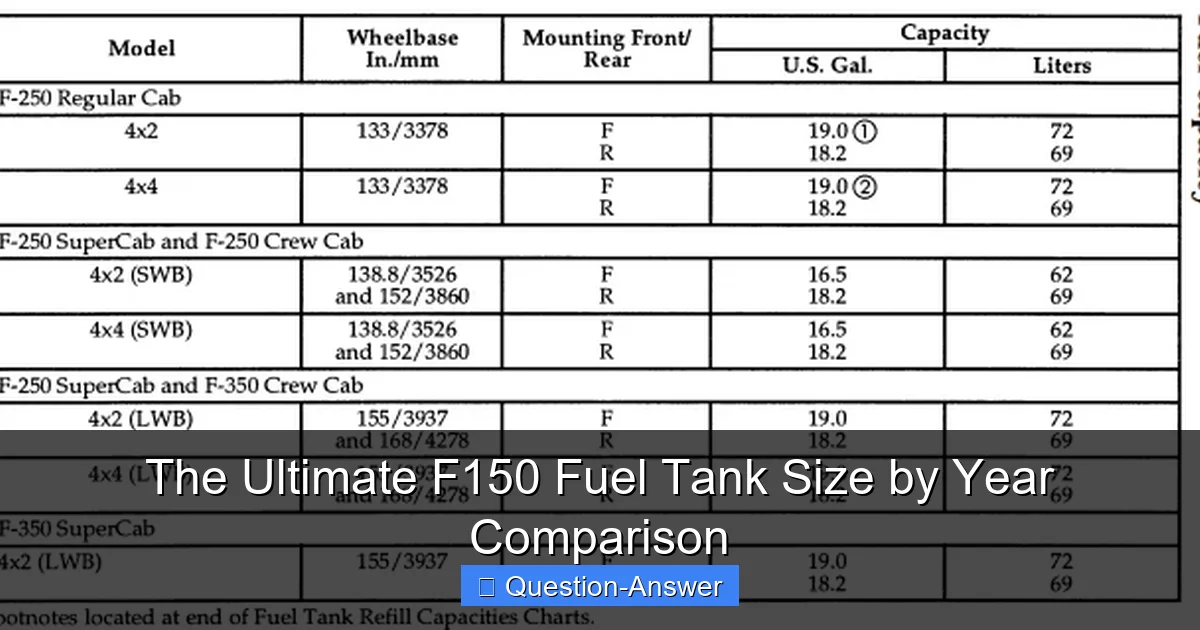
Featured image for f150 fuel tank size by year
Image source: cimg7.ibsrv.net
F150 fuel tank sizes vary significantly by model year and configuration, typically ranging from 23 to 36 gallons, offering drivers diverse options. While 26-gallon tanks are standard for many, the larger 36-gallon tank is a popular upgrade, providing extended range and fewer stops at the pump. Understanding these year-specific differences is crucial for optimizing your truck’s performance and utility.
Hey there, fellow F150 enthusiasts! Ever found yourself wondering, “Just how big is my F150’s fuel tank?” Or maybe you’re planning a road trip and need to know how far you can really go before that dreaded fuel light pops on. Trust me, I’ve been there! It’s a common question, and one that doesn’t have a single, simple answer. The truth is, your F150 fuel tank size by year, cab, and bed configuration can vary quite a bit.
From experience, knowing your truck’s fuel capacity makes a huge difference. Whether it’s for towing, long commutes, or just avoiding extra stops on a family vacation, understanding your specific F150’s tank size is super helpful. Let’s dive in and unravel this mystery together!
So, what’s the real scoop on F150 fuel tank sizes across different years and configurations?
Alright, let’s get down to the nitty-gritty. When it comes to F150 fuel tank size by year, it’s not a one-size-fits-all situation. Ford has offered a few common sizes over the years, typically ranging from about 23 gallons up to a very generous 36 gallons. My first F150, an older Regular Cab, had a 26-gallon tank. It was decent, but I quickly learned to plan my fuel stops on longer hauls.
Here’s how it generally breaks down, based on what I’ve observed and learned over time:
- The “Standard” Tanks: Many F150s, especially earlier models or those with shorter beds and Regular Cabs, often came with a 23-gallon or 26-gallon tank. This is pretty common. If you have an older truck, or a newer one with specific base configurations, you might have one of these. They’re perfectly fine for daily driving, but for those really long stretches, you’ll be hitting the pump more often. I remember a trip through the desert where my 26-gallon felt tiny!
- The Mid-Range Option: Sometimes you’ll find a 30.5-gallon tank. This isn’t as prevalent as the others, but it does exist in certain configurations, especially in earlier 2000s models or specific packages. It’s a nice compromise, offering more range without the larger tank’s weight and cost to fill.
- The Long-Hauler’s Dream: This is the big one, the 36-gallon tank. It became much more common in later F150 generations, especially with SuperCrew cabs, longer bed options, and certain tow packages. This is what my current F150 has, and let me tell you, it’s a game-changer. I can easily get 600+ miles on a single tank on the highway, which means fewer stops on those epic road trips. It truly extends your range significantly, perfect for my camping adventures far from civilization.
Now, why the variation? It usually comes down to:
- Cab and Bed Length: Generally, a SuperCrew cab with a 5.5-foot or 6.5-foot bed is more likely to have the larger 36-gallon tank. Regular Cabs or SuperCabs with shorter beds often default to the smaller sizes due to space constraints or the expected use case. Ford figures if you’re getting a bigger truck, you’re probably driving it further or towing more, so a larger fuel capacity makes sense.
- Model Year: Newer F150s, particularly those from 2015 onwards, saw the 36-gallon tank become a much more widely available and popular option, sometimes even standard on higher trims or specific configurations. Older models had it too, but it was less common.
- Engine Size/Package: While not a direct correlation, specific engine choices or towing packages might have nudged Ford to offer the larger tank as an option, knowing those trucks would be working harder and needing more range.
So, how do you find your specific F150 fuel tank size by year and configuration? The easiest way is to check your owner’s manual. It will list the exact capacity. You can also look at the sticker on your driver’s side door jamb; sometimes the Gross Vehicle Weight Rating (GVWR) sticker includes a code that helps identify the fuel tank. When in doubt, a quick search using your VIN on a Ford parts website can also reveal your truck’s original specs.
In my opinion, if you have the option, go for the larger tank. Yes, it costs more to fill up, but the convenience and extended range are invaluable, especially if you drive a lot for work or recreation. The peace of mind alone is worth it, knowing you won’t be scrambling for a gas station in the middle of nowhere.
Understanding your F150’s fuel tank size by year is more than just a number; it’s about knowing your truck’s capabilities and planning your journeys effectively. Whether you’ve got the standard tank or the mighty 36-gallon behemoth, knowing your range helps you master the road.