Fixing F150 10 speed transmission problems ultimate guide
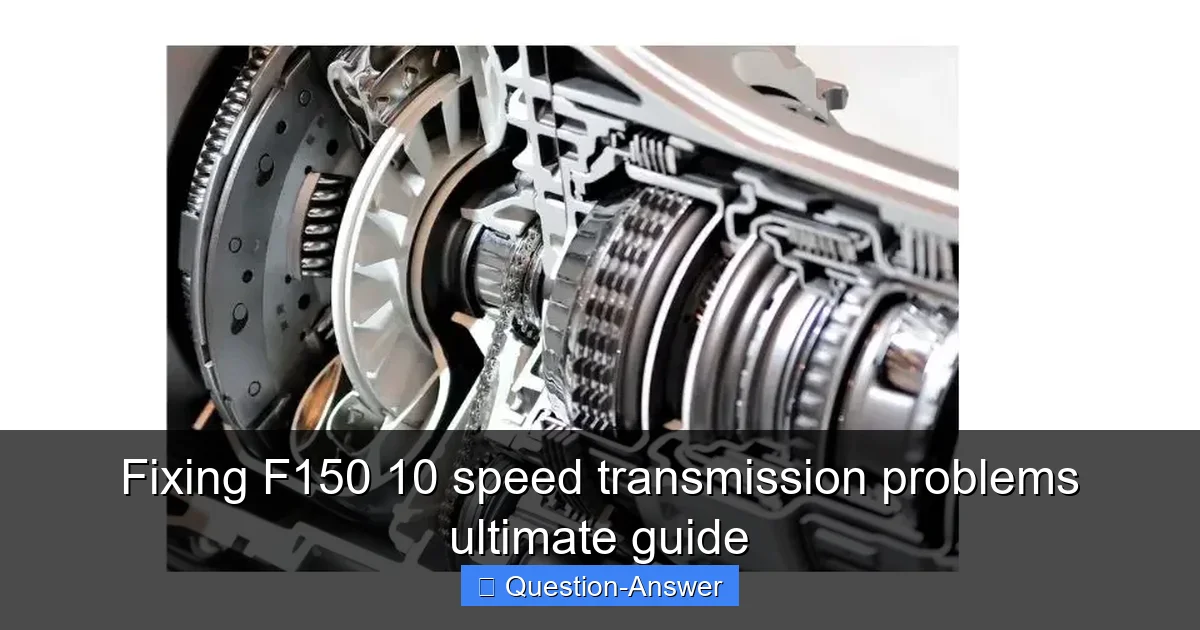
Featured image for f150 10 speed transmission problems
Image source: chevyguide.com
F-150 owners frequently encounter common 10-speed transmission issues, including harsh shifts, delays, and clunking, which are often rectifiable. This ultimate guide provides a comprehensive overview of identifying these prevalent problems, ranging from software glitches and fluid issues to mechanical wear, and outlines crucial solutions such as critical software updates, fluid services, adaptive learning resets, and professional diagnostic advice to restore optimal performance.
Fixing F150 10 speed transmission problems ultimate guide
Hey there, fellow F150 owner! If you’re reading this, chances are you’ve experienced some of the frustrating quirks that can come with the 10-speed transmission in your truck. Believe me, I know how unsettling it can be when your trusty F150 starts acting up, especially with something as crucial as the transmission. It’s not just a minor annoyance; it can make you wonder if your truck is reliable. But don’t fret! Many of the common
F150 10 speed transmission problems
have known causes and, thankfully, often straightforward solutions. We’re going to dive deep into understanding these issues and what you can do about them.
What are the most common F150 10-speed transmission problems, and what practical steps can I take to diagnose and fix them?
Oh boy, this is a question many F150 owners, including myself, have asked! The 10R80 10-speed automatic transmission, while generally efficient, can definitely throw some curveballs. From my own experiences and talking to countless friends with these trucks, the most common
F150 10 speed transmission problems
usually revolve around shifting.
You might notice harsh shifts, especially between lower gears like 1st to 3rd or 3rd to 5th. It can feel like a sudden jerk or a “clunk” that just isn’t right. Sometimes, it’s a delayed engagement, where you put it in drive or reverse, and there’s a noticeable pause before the truck moves. I’ve also personally felt a slight shudder or vibration, particularly during light acceleration or when cruising at certain speeds, which often points towards the torque converter. Other common complaints include gear hunting, where the transmission seems unsure which gear to be in, or even a complete loss of gear. It’s like the truck is having a mini identity crisis!
So, what can you do? Let’s break it down with some practical tips:
-
Start with Software Updates: This is often the first and simplest fix. Ford frequently releases software updates (TSBs – Technical Service Bulletins) that address known shifting issues. I remember when my F150 first started having rough shifts, a quick trip to the dealership for a transmission control module (TCM) update made a significant difference. It’s like a fresh brain for your transmission. This is usually done by a Ford dealer.
-
Check Your Transmission Fluid: While these are “sealed for life” transmissions, fluid can still degrade or be at the wrong level. Unfortunately, there’s no dipstick on the 10R80, so checking it yourself is tricky. It involves getting under the truck and following a specific procedure. If you suspect low or dirty fluid, a professional inspection and fluid flush/fill with the correct Mercon ULV fluid might be needed. I had a buddy whose weird shifts disappeared after a fluid change at a reputable shop.
-
Consider an Adaptive Learning Reset: Your transmission’s computer “learns” your driving style. Sometimes, if you’ve had a battery disconnect, driven aggressively, or just had a lot of different drivers, this learning can get confused. Resetting the adaptive learning allows the transmission to “relearn” optimal shift points. This can often be done with an advanced OBD-II scanner or by a dealership. Many F150 owners report smoother shifts after this.
-
Investigate Mechanical Components (Torque Converter, Valve Body, Solenoids): If software and fluid aren’t the culprits, the problem might be mechanical.
- Torque Converter: That shudder I mentioned earlier? It’s often a sign of a failing torque converter. It feels like driving over rumble strips, especially around 30-50 mph. This is a bigger repair, often requiring transmission removal.
- Valve Body or Solenoids: These control the fluid flow to engage gears. Faulty solenoids or a worn valve body can lead to harsh or delayed shifts. A good diagnostic scan can sometimes pinpoint these issues.
-
Driving Habits: Believe it or not, how you drive can impact transmission behavior. Smooth, consistent acceleration and deceleration can help the transmission learn and operate optimally. Avoid constant rapid acceleration and braking if you’re trying to diagnose an issue.
When in doubt, especially after trying the simpler solutions, your best bet is to visit a trusted Ford dealership or a specialized transmission shop. They have the advanced diagnostic tools to read specific transmission codes that generic scanners can miss, helping them pinpoint the exact
F150 10 speed transmission problems
you’re facing. Don’t let these issues get you down too much; with the right steps, your F150 can get back to shifting smoothly again!
Dealing with F150 10-speed transmission problems can feel like a real puzzle, but you’re not alone in this. By systematically checking software, fluid, and considering a reset, you can often address many common issues. If those steps don’t clear things up, remember that professional diagnosis is invaluable for tackling more complex mechanical challenges. Here’s to many more miles of smooth sailing in your F150!