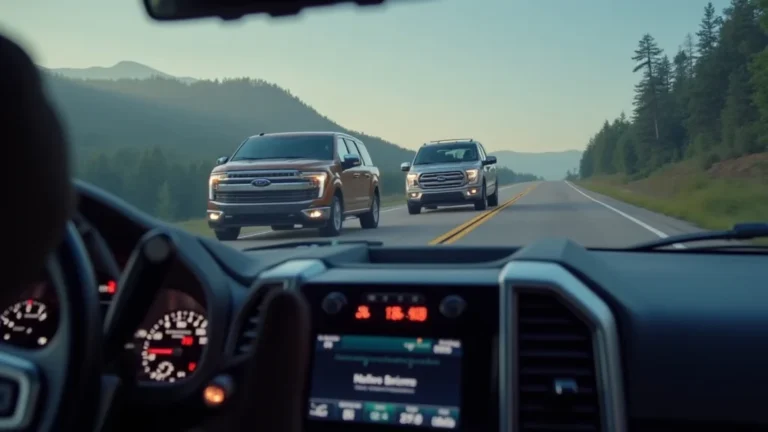
F150 Towing MPG Differences Explained: Get Better Mileage
Figuring out the f150 towing mpg differences can be tricky for many truck owners. It feels like there are so many things to consider! Don’t worry, you’re not alone in finding this topic a little confusing. We’ll make it simple. We’ll break down the factors that affect your fuel economy and show you how to improve your truck’s miles per gallon. Let’s start by exploring the basics.
Factors Affecting Ford F150 Fuel Efficiency
Many things impact how far your F150 goes on a gallon of gas. It’s not just about the engine size! Your driving style, the type of terrain you’re on, and even the weather play a role. When it comes to towing, these factors become even more important. Learning about them helps you make smart choices to get the best fuel economy possible.
Engine Choices and Their Fuel Consumption
The engine is the heart of your truck, and its type significantly impacts fuel efficiency. The F150 offers different engine options, from smaller, more economical engines to larger, more powerful ones. Each engine provides a different balance of power and fuel economy. For example, a turbocharged EcoBoost engine might offer better fuel economy in certain situations than a larger V8, especially when not towing. However, when towing, the EcoBoost might work harder, potentially leading to lower MPG compared to a naturally aspirated V8. Understanding the specific capabilities of each engine option available is key to making an informed choice that suits your needs.
- EcoBoost Engines: These engines use turbochargers to boost power while still offering decent fuel economy. They can be great for everyday driving and lighter towing, but they can use more fuel when under heavy loads.
- V6 Engines: These engines provide a good balance between power and fuel economy. They are often a good choice for people who do some towing but don’t need the most powerful engine.
- V8 Engines: V8s offer more power, which is helpful for heavy towing. However, they usually use more fuel than the other engine options, especially when not towing.
- Hybrid Engines: Some F150 models now come with hybrid options. These combine a gasoline engine with an electric motor to improve fuel economy, particularly in city driving and during light towing.
Each engine type has its strengths and weaknesses when it comes to fuel economy. Choose wisely based on your typical driving needs and the weight you plan to tow.
Weight of the Load and Its Impact
The amount of weight you tow directly impacts your fuel economy. Heavier loads require the engine to work harder, which burns more fuel. This is simple physics: more mass requires more energy to move. Even the weight of the truck itself plays a role, with heavier trims often having lower MPG. This is why it’s important to match your towing needs to your truck’s capabilities. Don’t try to tow more than your truck is rated for, as this can severely affect fuel economy and even damage your vehicle. Keep the weight of what you are towing as low as possible and only carry what you truly need.
- Trailer Size and Weight: A small, lightweight trailer will have less impact on fuel economy than a large, heavy one.
- Cargo in the Trailer: Every pound adds to the total weight and affects your MPG.
- Gross Vehicle Weight Rating (GVWR): Don’t exceed the truck’s GVWR. This is the maximum the truck can safely handle, including the weight of the truck, passengers, cargo, and trailer.
- Aerodynamics: A streamlined trailer will produce less drag and have a lesser effect on your fuel economy compared to a boxy trailer.
Always check the weight of your trailer and its cargo before you hit the road. Staying within the truck’s weight limits not only improves fuel economy but is also essential for safe towing.
Driving Style and Its Effect on MPG
How you drive makes a big difference in fuel economy, especially when towing. Aggressive driving, such as quick acceleration and hard braking, can quickly drain your fuel. Gentle acceleration and maintaining a steady speed help to conserve fuel. Using cruise control on the highway can also improve MPG, as it helps to maintain a consistent speed. Planning your route to avoid stop-and-go traffic can also make a significant difference. Taking time to drive in a fuel-efficient way will save you money.
- Gentle Acceleration: Avoid pressing the gas pedal hard. Accelerate slowly and steadily.
- Consistent Speed: Use cruise control when possible to maintain a constant speed.
- Anticipate Stops: Look ahead and ease off the gas early when approaching a stop sign or red light.
- Avoid Rapid Braking: Brake gradually to avoid wasting fuel.
- Idling: Turn off the engine if you’re going to be stopped for more than a minute. Idling wastes fuel.
Being mindful of your driving habits can significantly increase your fuel efficiency. Taking your time and driving smoothly is a good strategy when you are on the road.
Understanding Ford F150 Towing MPG Differences
There are many different types of F150 models, from basic work trucks to luxurious trims. The trim level impacts the truck’s weight, features, and engine options, all of which influence fuel economy. For example, a heavier truck with more features will typically get lower MPG than a lighter, more basic model. Furthermore, some trims may come with specific towing packages that optimize performance, affecting fuel usage. Examining the specific model of your F150, its trim level, and any towing packages it has will offer insights into your MPG.
Trim Level and Its Influence
The trim level of your F150 plays a part in fuel economy. Trucks that have more features often weigh more, affecting MPG. For instance, a fully loaded Limited trim might get lower MPG than a base XL model due to the extra weight of the added features. The engine choices available in each trim level also vary. Some trims come standard with V8s, while others offer more fuel-efficient options. It’s always helpful to consider the weight, features, and engine choices when you are looking at different trim levels.
- XL and XLT: These are the entry-level trims. They’re often lighter, and they may offer better MPG than higher trims.
- Lariat, King Ranch, Platinum: These trims have more features and are often heavier, potentially affecting fuel economy.
- Limited: This top-of-the-line trim is packed with features, which can impact MPG due to the added weight.
- Tremor and Raptor: These off-road-focused trims might have lower MPG due to their specialized equipment and design.
The trim level is an important factor. Consider the features you really need and how they might affect your fuel economy.
Towing Package Variations and Fuel Efficiency
Ford offers different towing packages to improve your truck’s towing capabilities. These packages often include features such as a heavy-duty cooling system, an upgraded transmission, and a trailer brake controller. While these features enhance towing performance, they may or may not impact fuel economy. Some towing packages are designed to optimize efficiency during towing, while others may focus on maximizing towing capacity. It’s important to understand the details of your towing package to see how it affects your MPG when hauling a trailer. Review the specifications of your specific towing package to determine how it is engineered to impact fuel economy.
- Standard Tow Package: This typically includes a Class IV trailer hitch receiver and wiring harness.
- Max Trailer Tow Package: This package increases towing capacity, often with a heavier-duty cooling system and other upgrades.
- Integrated Trailer Brake Controller: This feature helps control the trailer brakes, which can affect fuel economy.
- Upgraded Suspension: Some towing packages include a more robust suspension to handle the extra weight.
Consider the towing package when choosing an F150. It’s a good idea to know how the specific features in the package will impact your fuel consumption.
Real-World Mileage Comparisons
Real-world driving conditions can vary. This can impact your truck’s MPG. Factors such as driving conditions and the specific load affect fuel economy. Tests conducted in various driving scenarios provide insight into the efficiency differences between F150 models. Consider the type of driving you’ll do most often and the loads you’ll be towing to get a better idea of what MPG to anticipate. It’s also helpful to look at reviews and reports from other truck owners who share their real-world experiences.
Here’s a comparison table showing some approximate MPG differences based on different driving conditions and scenarios:
| Scenario | Engine Type | Estimated MPG (City) | Estimated MPG (Highway) |
|---|---|---|---|
| Empty Truck (No Towing) | EcoBoost | 19-22 | 24-26 |
| Empty Truck (No Towing) | V8 | 16-18 | 21-23 |
| Towing a Small Trailer | EcoBoost | 14-17 | 18-20 |
| Towing a Small Trailer | V8 | 12-15 | 16-19 |
| Towing a Large Trailer | EcoBoost | 10-13 | 14-17 |
| Towing a Large Trailer | V8 | 9-12 | 13-16 |
Note: These are estimates. Your actual MPG may differ.
Here’s an example:
Case Study 1: A driver with an EcoBoost engine consistently achieved 25 MPG on the highway when not towing. However, when towing a 6,000-pound travel trailer, the MPG dropped to around 16 MPG.
Case Study 2: An owner of a V8 F150 reported averaging 18 MPG in city driving. When towing a boat, the MPG fell to about 12 MPG.
Strategies for Maximizing Fuel Economy When Towing
Fuel efficiency can be improved with the right approach. Improving your MPG while towing is possible with a few adjustments. Consider these tips as you plan your trip. Proper maintenance, smart driving habits, and appropriate load management will improve your fuel efficiency. There are adjustments you can make to your F150 to get the best MPG.
Maintenance and Its Effects
Keeping your truck in good shape is key to getting the best fuel economy. Regular maintenance helps your engine run efficiently. You can also make sure your tires are properly inflated. Regularly checking and replacing your air filter helps your engine breathe better, reducing fuel consumption. Also, changing your oil on schedule keeps your engine running smoothly. All of these maintenance items are easy and will keep your truck in good working order.
- Regular Oil Changes: Use the correct type of oil and change it as recommended by the manufacturer.
- Tire Pressure: Maintain the correct tire pressure. Under-inflated tires increase rolling resistance.
- Air Filter: Replace the air filter regularly to ensure proper airflow to the engine.
- Spark Plugs: Replace spark plugs as recommended. They affect engine performance.
- Wheel Alignment: Keep your truck’s wheels aligned. Misalignment increases rolling resistance and reduces MPG.
Take care of your truck. Regular maintenance will have a positive impact on fuel economy, reducing wear and tear. A well-maintained vehicle also runs safer and more reliably.
Driving Techniques to Improve MPG
How you drive can make a significant difference in your fuel consumption. Gentle acceleration and consistent speeds are essential for maximizing fuel efficiency. Avoid sudden stops and starts, and anticipate traffic conditions to prevent unnecessary braking. Use cruise control on the highway to maintain a steady speed. It’s also helpful to plan your route. Try to avoid heavy traffic and hilly terrain when possible, as both can decrease your fuel economy. By incorporating these techniques into your driving habits, you can greatly improve your MPG when towing.
- Smooth Acceleration: Avoid pressing the gas pedal hard. Accelerate smoothly.
- Consistent Speed: Use cruise control to maintain a steady speed on the highway.
- Anticipate Traffic: Look ahead and ease off the gas when you need to stop.
- Avoid Heavy Braking: Brake smoothly and gradually.
- Plan Your Route: Choose routes that minimize stop-and-go traffic and steep hills.
Driving with fuel efficiency in mind will pay off with lower fuel costs. Developing good driving habits will make your truck more fuel efficient.
Load Management for Better Fuel Economy
How you manage your load can have a great effect on your fuel consumption. Always try to reduce the weight you’re towing. Only carry what you need in your trailer. If possible, distribute the weight evenly to maintain balance. You should also consider aerodynamics. A more streamlined trailer will cause less drag and consume less fuel. Finally, check your truck’s weight ratings to ensure you are not exceeding the limits.
- Reduce Weight: Only pack what you need in your trailer.
- Distribute Weight: Balance the load in the trailer to maintain stability.
- Aerodynamics: Consider using a trailer with better aerodynamics to reduce drag.
- Check Weight Ratings: Stay within your truck’s weight limits (GVWR and GCWR).
- Use a Weight-Distribution Hitch: If towing a heavy trailer, a weight-distribution hitch can improve fuel economy and handling.
By carefully managing your load, you can significantly improve your MPG while towing. It’s a good strategy to make sure your truck performs optimally. You’ll save money, too!
Frequently Asked Questions
Question: Does using a higher octane fuel improve MPG?
Answer: For most F150 engines, using a higher octane fuel won’t improve MPG unless the manufacturer specifically recommends it. Higher octane fuel is designed for engines that require it.
Question: Is it better to tow in a lower gear?
Answer: Sometimes. Lower gears can give you more power for climbing hills or accelerating. However, they can also use more fuel. It’s best to use the highest gear possible while still maintaining a safe speed and avoiding strain on the engine.
Question: Does the type of trailer affect MPG?
Answer: Yes, the type of trailer can affect MPG. Aerodynamic trailers use less fuel than boxy trailers. Also, a heavier trailer will impact fuel economy more than a lighter one.
Question: How much does towing a trailer reduce MPG?
Answer: It varies. Towing can reduce your MPG by 20-50% or more, depending on the weight of the trailer, driving conditions, and your truck’s engine.
Question: Should I use cruise control when towing?
Answer: It depends. Cruise control can help maintain a steady speed on flat roads, which can improve fuel economy. However, on hilly roads, it might cause the engine to work harder. In some situations, it’s better to manage the throttle manually.
Final Thoughts
Understanding the factors that affect f150 towing mpg differences is important. The engine type, trim level, and driving habits can influence how far your truck goes on a gallon of gas. You can take steps to improve your MPG, like regular maintenance, driving in a fuel-efficient way, and load management. Knowing your truck’s weight ratings and towing capacity is always a good idea. Doing all of these things will help you save money and make your towing experience much smoother. By paying attention to these aspects, you can enjoy better fuel economy and get the most out of your F150. Remember, every little bit helps!