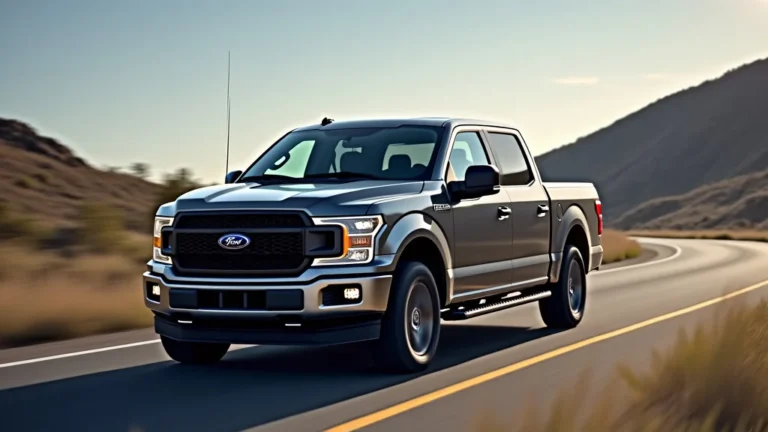
F150 Bed Weight Capacity: How Much Can It Really Carry?
Figuring out the f150 bed weight capacity can seem tricky at first. Many new truck owners get confused about how much they can safely put in their truck beds. It’s totally understandable! There are different cab styles, bed lengths, and trim levels, each impacting what your truck can haul. Don’t worry, though; it’s not as hard as it sounds. We’ll break down everything step-by-step so you know exactly what your F-150 can handle. Let’s start with the basics, so you’re confident in your truck’s capabilities!
What Influences F150 Bed Weight Capacity?
The amount of weight your F150 truck bed can handle isn’t just a number; it’s a combination of several factors. These elements work together to determine the truck’s overall payload capacity. Things like the engine, transmission, cab configuration, bed length, and trim level all play a significant part. Different versions of the F-150 are built with varying components, directly impacting their ability to haul cargo. Knowing these factors is essential for safe operation and preventing damage to your truck.
Engine Choices and Payload
The engine in your F150 has a direct impact on its payload limit. Different engine options offer varying levels of power and torque, affecting what the truck can haul. For example, a heavy-duty engine, like a powerful V8, might be able to handle a greater payload than a smaller, more fuel-efficient engine. The engine’s horsepower and torque capabilities are key indicators of its hauling prowess. Keep in mind that when you chose your engine the payload capacity, which is the total weight the truck can carry, including passengers, cargo, and fuel, is affected by this choice.
- EcoBoost Engines: These engines often provide a great balance of power and efficiency, which can translate into a solid payload capacity. However, the specific payload depends on the exact engine variant and other vehicle configurations.
- V6 Engines: Ford’s V6 engines come in different forms, with the naturally aspirated versions generally having lower payload capacities compared to the turbocharged options.
- V8 Engines: Generally, V8 engines are known for their high torque output, enabling them to haul more weight. The payload capacity can vary based on the specific V8 engine used and other vehicle specifications.
- Hybrid Engines: Hybrid powertrains can have varying payload capacities, depending on the combination of the gasoline engine and electric motor. The addition of batteries can impact the overall payload capacity.
- Engine Upgrades: Upgrading to a more powerful engine might increase payload capacity, but other components, like suspension and brakes, should also be considered to ensure the truck can safely handle the extra weight.
Remember that when selecting an engine for your F150, think about what you’ll be using it for. If you plan on frequently hauling heavy loads, a more powerful engine is likely your best bet. If you mostly use your truck for lighter duties, a more fuel-efficient engine might be more suitable. There’s no single “best” engine; it all depends on your individual needs.
Cab and Bed Configurations
The configuration of your F150, including its cab style and bed length, greatly impacts its payload. The cab style, which is the type of passenger compartment, affects the overall weight distribution and, consequently, how much weight the truck can carry in its bed. For instance, a larger cab, like a SuperCrew, weighs more and therefore might have a slightly reduced payload capacity compared to a Regular Cab. The bed length also influences the payload; longer beds often offer more space but can also shift the weight balance.
- Regular Cab: Typically lighter than larger cab configurations, which can mean a higher payload capacity.
- SuperCab (Extended Cab): Offers more interior space than the Regular Cab, but the added weight might slightly reduce the payload capacity compared to a Regular Cab.
- SuperCrew (Crew Cab): This offers the most spacious interior, making it heavier. As a result, the SuperCrew usually has a lower payload capacity compared to the other cab styles.
- Short Bed: Usually lighter and can provide a slightly higher payload compared to a longer bed.
- Long Bed: Offers more cargo space but might have a slightly lower payload due to the increased overall length and weight.
Choosing the right cab and bed configuration is all about balancing your needs. If you regularly transport passengers, a larger cab is essential. If you primarily need to haul cargo, a longer bed can be helpful. However, keep in mind the payload limitations associated with each configuration, and make sure that the truck you choose can safely carry the weight you intend to haul. Consider your lifestyle and the typical use of your truck when making your decision.
Trim Level Considerations
The trim level of your F150 greatly affects its payload capacity. Trim levels represent different levels of features, equipment, and materials used in the truck. Higher trim levels often include extra features like leather seats, advanced technology, and upgraded suspension systems. These features add weight to the vehicle, which, in turn, reduces the available payload capacity. Lower trim levels, with fewer features, might have a higher payload because they are lighter.
- Base Trim: Usually has a higher payload capacity, as it comes with fewer features and lighter components.
- Mid-Level Trim: Offers a balance between features and payload capacity.
- High-Level Trim: These trims often include luxurious features that add weight, potentially decreasing the payload capacity.
- Special Editions: Certain special edition F150s might have unique features that affect payload capacity. For example, a heavy-duty off-road package could decrease the available payload due to added weight.
- Aftermarket Accessories: Installing aftermarket accessories, like a bed liner or a tonneau cover, can increase the truck’s weight and decrease the available payload capacity.
When picking a trim level, balance your desire for features with the payload you need. If you regularly haul heavy loads, consider a trim level with fewer extras to maximize your payload capacity. If you don’t haul heavy loads, then the comfort and convenience features of a higher trim level might be worth the slight reduction in payload capacity.
Finding Your F150’s Payload Capacity
Knowing your F150’s payload capacity is essential for operating the truck safely. It’s not a guessing game; there are clear methods to find this critical information. You can consult specific sources that give you an accurate number. Checking the sticker on your driver’s side door jamb is the easiest way. You can also look it up in your owner’s manual or use online resources.
Decoding the Door Jamb Sticker
The sticker on your driver’s side door jamb is a goldmine of information, including your F150’s payload capacity. This sticker provides information specific to your truck’s configuration, so it’s the most accurate source. It will list the maximum weight the truck can carry, including passengers, cargo, and any added equipment. The sticker also includes the Gross Vehicle Weight Rating (GVWR) and the Gross Axle Weight Rating (GAWR) for both the front and rear axles. These numbers are very important for safe operation.
- Locating the Sticker: Open the driver’s side door. Look for a white or yellow sticker on the door jamb, the area where the door latches when closed.
- Payload Capacity: The sticker will clearly state the payload capacity, usually in pounds. It’s often labeled as “The combined weight of occupants and cargo should never exceed
- Gross Vehicle Weight Rating (GVWR): This is the maximum the truck can weigh when fully loaded, including the truck itself, passengers, cargo, and fuel.
- Gross Axle Weight Rating (GAWR): This rating specifies the maximum weight that each axle (front and rear) can handle. Exceeding the GAWR can damage the axle and is unsafe.
Always respect the numbers on this sticker. Exceeding them can lead to unsafe driving conditions and potential mechanical issues. When loading your truck, take into account the weight of everything you put in it. If you need to haul a large load, check the payload capacity on the door jamb sticker first to be sure your truck can handle it safely.
Owner’s Manual as a Resource
Your owner’s manual is a treasure trove of information about your F150, and it includes details on payload capacity. The manual provides a general understanding of the payload, detailing how it’s calculated. It explains how factors like the engine, cab configuration, and trim level influence your truck’s weight limits. It often provides tables or charts that show the payload capacity for different F150 configurations. This resource also explains related safety guidelines and precautions for loading and operating the truck safely.
- Locating the Information: Search for sections on “Weights” or “Payload Capacity”. The index can help you find the specific pages.
- Understanding Payload: The manual will clearly define payload and explain how it’s calculated. It considers passengers, cargo, and fuel.
- Configuration Charts: These charts usually list the payload capacity based on your truck’s specific configuration, engine, cab style, and bed length.
- Safety Guidelines: The manual covers essential guidelines for safe loading, weight distribution, and driving. It explains the risks of overloading your truck.
- Maintenance Tips: There is often information on how to maintain your truck to ensure it can handle its rated payload safely.
The owner’s manual provides detailed information that’s specific to your F150. It’s an invaluable tool for understanding your truck’s capabilities and ensuring safe operation. Use it to understand the payload capacity and other crucial weight-related information.
Online Resources and Tools
The internet provides many resources and tools to find your F150’s payload capacity. Numerous websites and online calculators can help you determine the capacity based on your truck’s specifications. These resources often ask you to enter information like the model year, engine type, cab configuration, and bed length. By inputting this data, they will provide the payload capacity for your specific truck model. Many Ford-related forums and communities also offer detailed discussions and information.
- Ford’s Official Website: You can often find payload information on Ford’s official website. Search for your specific model year and configuration.
- Online Calculators: Many third-party websites offer payload calculators. Enter your truck’s information to get an estimate.
- Truck Review Websites: Websites that review trucks often provide detailed specifications, including payload capacity.
- Automotive Forums: Ford truck forums are a good place to ask for help and find information from other owners.
- VIN Decoder: Use a VIN (Vehicle Identification Number) decoder. The VIN provides specific details about your truck’s configuration, which can help determine the payload capacity.
Online resources are good for quickly finding payload capacity information. However, always double-check the information with the door jamb sticker or your owner’s manual to ensure the most accurate data. These resources can give you a starting point, but the specific details on your vehicle are always the most accurate.
Calculating Payload for Safe Hauling
Calculating the payload capacity is very important for safely hauling cargo in your F150. You can’t just throw things in the truck bed without considering the total weight. The process requires knowing your truck’s payload capacity, estimating the weight of the cargo, and accounting for the weight of all occupants and any extra equipment. By following these steps, you can ensure you’re not overloading your truck, which is essential for both your safety and the health of your vehicle.
Estimating Cargo Weight
Accurately estimating the weight of your cargo is essential for figuring out the total load. Knowing how much your items weigh helps you avoid overloading your F150. You can weigh the cargo using several methods, like a bathroom scale for smaller items, a luggage scale for bags, or a platform scale for larger items. If you are unsure of the weight, you can use online resources to calculate the weight based on the type of cargo. For instance, if you are transporting construction materials, websites provide weight estimates for common items. Be accurate when estimating the cargo weight.
- Using a Scale: Use a bathroom scale for smaller items like boxes or personal belongings.
- Luggage Scale: A luggage scale is good for weighing travel bags and similar items.
- Platform Scale: Platform scales are used for weighing larger items, like appliances, furniture, or construction materials.
- Online Weight Calculators: Many websites offer weight calculators for common cargo, like building materials.
- Manufacturer Information: Look for the weight information on the packaging of your items. For example, a bag of cement will have its weight printed on the bag.
Take your time to estimate the weight of your cargo accurately. Overestimating is better than underestimating, as it allows for a safety buffer. Being precise in your estimates helps you avoid overloading your truck and drive safely.
Accounting for Occupants and Equipment
Besides cargo, you must account for the weight of your passengers and any equipment you may be carrying in your F150. The combined weight of passengers and any extra equipment reduces the available payload capacity. This includes the driver, passengers, pets, and any gear you bring along, such as tools, camping equipment, or additional accessories. It’s a simple calculation: weigh each person and add their weight to the total. Add the weight of your equipment to this total. Subtract the combined weight from your truck’s payload capacity to determine the remaining weight you can safely add as cargo.
- Passenger Weight: Calculate the weight of each person who will be riding in the truck. Use an average weight if you don’t know the exact weight.
- Equipment Weight: Include the weight of any equipment you are carrying, like tools, camping gear, or other accessories.
- Pet Weight: Don’t forget the weight of your pets.
- Weight of Accessories: The weight of accessories, such as a toolbox or a bed liner, can add up, so be sure to include them.
- Remaining Payload: Subtract the combined weight of occupants and equipment from the payload capacity to find out how much weight you can safely add as cargo.
Always prioritize safety when calculating your truck’s weight. Be sure to include all passengers and gear, and then carefully determine how much cargo you can add. This ensures you do not exceed the payload capacity, keeping you, your passengers, and your vehicle safe.
Calculating Total Load
Once you’ve estimated the weight of your cargo, passengers, and equipment, you must calculate the total load. This involves adding up all the individual weights to see if you are within the payload capacity. To do this, add the cargo weight, passenger weight, and equipment weight together. Compare the total load to your truck’s payload capacity, which you can find on the door jamb sticker or in your owner’s manual. If the total load exceeds the payload capacity, you are overloading your truck. If you are under the capacity, you can safely haul your cargo.
- Cargo Weight: Add up the estimated weight of all the items you plan to haul.
- Passenger Weight: Add the weight of all occupants riding in the truck.
- Equipment Weight: Add the weight of any equipment, tools, or accessories.
- Total Load Calculation: Add the cargo weight, passenger weight, and equipment weight. This gives you the total load.
- Comparing to Payload Capacity: If the total load is less than or equal to your truck’s payload capacity, you’re fine. If the total load exceeds the payload capacity, you’re overloading the truck, which is unsafe.
Always double-check your calculations to ensure accuracy. If you’re close to the limit, consider reducing the cargo or making multiple trips. Safety is the most important factor, and knowing how to calculate the total load is essential for safe operation of your F150.
Safe Driving and Loading Practices
Safe driving and loading are key to making sure you use your F150 safely and effectively. This involves following the recommended weight limits, distributing the weight evenly, and adjusting your driving habits to compensate for a loaded truck. By sticking to these practices, you can reduce the risks of accidents and protect both yourself and your cargo.
Weight Distribution and Center of Gravity
Weight distribution is very important for the stability and handling of your F150. How you load the cargo affects the truck’s center of gravity. You want to distribute the weight so the truck remains balanced. Place heavier items toward the front of the truck bed, closer to the cab. This shifts the center of gravity forward, improving stability. Avoid placing all the weight in the rear of the bed, as this can cause the rear of the truck to sag and affect steering. Ensure that cargo is secured to prevent it from shifting while driving. Tie down the cargo securely using straps, ropes, or nets. Distribute the weight evenly from side to side to keep the truck balanced.
- Heavier Items Forward: Place heavy items towards the front of the truck bed, closer to the cab.
- Secure the Cargo: Use straps, ropes, or nets to secure the cargo and prevent it from shifting.
- Even Distribution: Spread the weight evenly from side to side to maintain balance.
- Avoid Overloading One Area: Don’t concentrate the weight in one area of the truck bed, as this can affect handling.
- Check the Load: Stop periodically during a long trip to make sure the cargo is still secure and properly distributed.
When loading your F150, take your time and plan. Proper weight distribution and securing the cargo are critical to the safe operation of your truck. These steps reduce the risk of accidents and maintain the truck’s stability.
Driving Adjustments for a Loaded Truck
When driving with a loaded truck, make adjustments to your driving style to account for the added weight. The truck will handle differently than when it’s empty. Give yourself more space between vehicles, as it will take longer to stop. Reduce your speed, especially on curves and turns, to maintain control. Be extra cautious in windy conditions, as a loaded truck is more susceptible to being blown around. Make sure your tires are properly inflated for the load. Use the appropriate tire pressure as specified in your owner’s manual. Inspect your truck regularly, particularly the suspension and brakes. Listen for any unusual sounds or changes in handling that could indicate a problem.
- Increase Following Distance: The stopping distance will be increased, so maintain a longer following distance.
- Reduce Speed: Lower your speed, especially on curves and turns.
- Be Cautious in Windy Conditions: The added weight will increase the truck’s sensitivity to wind.
- Proper Tire Inflation: Follow the tire pressure recommendations in your owner’s manual.
- Regular Inspections: Inspect the truck’s suspension, brakes, and tires regularly.
Being aware of these adjustments will greatly enhance your safety when driving a loaded truck. These tips will help you navigate safely and effectively.
Inspection and Maintenance
Regular inspection and maintenance is crucial for the safe operation of your F150, especially when hauling loads. Check the tires regularly for proper inflation and wear. The correct tire pressure is essential for load-carrying capacity and handling. Inspect the brakes, ensuring they are in good working order. Brakes need to be in optimal condition when hauling heavy loads. Examine the suspension components, including shocks, struts, and springs, for any signs of damage or wear. These parts help support the load and maintain ride stability. Make sure all lights, including headlights, taillights, and brake lights, are functioning correctly. Check the fluid levels, including engine oil, coolant, brake fluid, and transmission fluid. Ensure they are at the appropriate levels and that the systems are working properly.
- Tire Pressure: Regularly check and adjust tire pressure.
- Brake System: Inspect the brakes to ensure they are functioning properly.
- Suspension: Examine suspension components for any damage.
- Lights: Make sure all lights are working.
- Fluid Levels: Check all fluid levels.
These maintenance practices will ensure that your F150 is ready to handle the demands of hauling cargo safely and efficiently.
Real-Life Examples and Scenarios
Real-life examples can help you to understand how to apply payload capacity information. These examples show how to assess payload capacity, distribute weight, and make safe driving choices. This information shows how to handle various hauling tasks safely and effectively.
Scenario 1: Moving Furniture
You’re helping a friend move furniture with your F150. You need to transport a couch, a bed frame, two dressers, and a few boxes. First, you check your truck’s door jamb sticker and see that its payload capacity is 1,800 pounds. Then, estimate the weight of each item: the couch (150 lbs), the bed frame (100 lbs), two dressers (100 lbs each), and the boxes (50 lbs). That’s a total of 500 lbs of furniture. You estimate your friend and yourself each weigh 200 lbs, so 400 lbs total. You will have a total cargo weight of 900 lbs. Since you are well below the payload capacity of 1,800 lbs, the trip is safe for your truck. You load the heavier items, like the couch and bed frame, toward the front of the bed and secure everything with straps.
Scenario 2: Hauling Construction Materials
You’re using your F150 to haul materials for a small home improvement project. You need to transport bags of concrete mix, lumber, and some tools. The door jamb sticker shows your truck’s payload capacity is 1,600 pounds. You estimate that the concrete mix weighs 300 lbs, the lumber weighs 300 lbs, and the tools weigh 50 lbs. You add yourself at 200 lbs, and your friend helping you at 150 lbs, for a total of 700 lbs. The cargo total is 650 lbs. This brings the total weight of the cargo, passengers, and equipment to 1,350 lbs. You are under the payload capacity of 1,600 lbs, which means it is safe to haul all items. Place the bags of concrete mix at the front of the bed, closer to the cab, to improve weight distribution and secure with straps.
- Load Distribution: For both scenarios, properly distribute the weight within the truck bed. This maintains the vehicle’s balance and handling. Place the heavier items closer to the cab and secure them with tie-down straps or nets.
- Driving Adjustments: Drive at a safe speed and increase your following distance. A loaded truck requires a longer stopping distance, so adjust your driving accordingly. Be cautious of curves and turns.
Frequently Asked Questions
Question: Where can I find my F150’s payload capacity?
Answer: You can find your F150’s payload capacity on the sticker located on the driver’s side door jamb.
Question: What does payload capacity include?
Answer: Payload capacity includes the combined weight of passengers, cargo, and any added equipment.
Question: How do I calculate the payload I can safely haul?
Answer: Subtract the weight of passengers and equipment from your truck’s payload capacity.
Question: What should I do if my total load exceeds my payload capacity?
Answer: Reduce the amount of cargo or make multiple trips.
Question: How does weight distribution affect driving?
Answer: Proper weight distribution ensures balanced handling and stability while driving. Heavier items should be placed towards the front of the truck bed.
Final Thoughts
Understanding your f150 bed weight capacity is essential for using your truck safely. Knowing what your specific model can handle, from the door jamb sticker to other resources, will keep you from overloading it. Learning about the factors that influence the payload, like engine and trim level, gives you a clearer picture of your truck’s capabilities. Remember to calculate your total load by adding up the weight of the cargo, passengers, and equipment. You can ensure safe driving by distributing the weight correctly and adapting your driving habits. The best step is to always check your truck’s weight limits and follow these safety guidelines. Drive with confidence knowing how much weight your F150 can carry, and enjoy your truck responsibly!