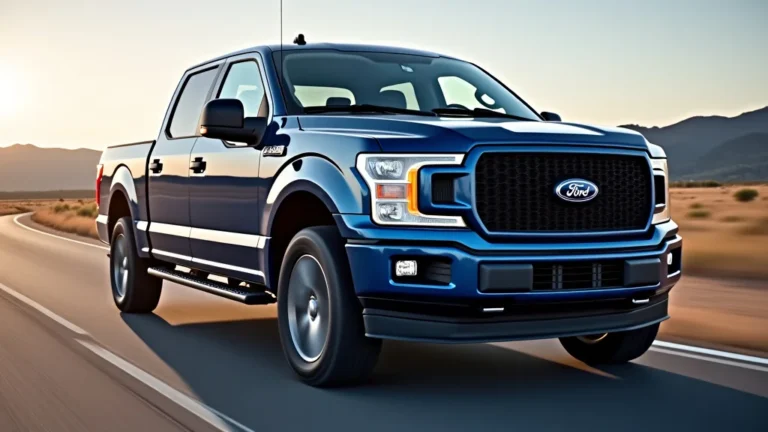
F150 Traction Control Explanation: What It Is and How It Works
Figuring out a f150 traction control explanation can be tricky for new truck owners. It can seem confusing because it involves computers and sensors, but it’s really not that bad. Don’t worry, we’ll break it down step by step, using easy-to-understand language. By the end, you’ll know exactly what traction control does and how it keeps you safe on the road. We’re going to explore all the details, from the basics to some helpful tips.
Key Takeaways
- Traction control helps prevent wheelspin, improving vehicle control.
- The system uses sensors to detect when tires lose grip.
- It automatically reduces engine power or applies brakes to regain traction.
- You can usually turn traction control on or off depending on the driving conditions.
- Understanding traction control enhances your safety on slippery surfaces.
- Knowing how it functions builds confidence when driving your F-150.
What Is F150 Traction Control?
Traction control is a safety feature in your F-150 that helps you stay in control, especially on slippery surfaces like ice, snow, or loose gravel. Essentially, it prevents your wheels from spinning when you accelerate too quickly. This helps you maintain stability and steer your truck in the direction you want to go. It is a critical component of modern vehicle safety, working alongside other systems like anti-lock brakes (ABS) to improve overall handling.
How Traction Control Works
Traction control systems are designed to monitor wheel speeds. This is done with wheel speed sensors. These sensors are attached to each wheel and send information to the vehicle’s computer. The computer compares the speed of each wheel to determine if any of them are spinning faster than the others. When a wheel spins faster than the others – indicating a loss of traction – the system takes action.
- Wheel Speed Sensors: These are the eyes of the traction control system. They constantly monitor how fast each wheel is turning. If a sensor detects one wheel spinning faster than the others, that signals a traction loss.
- Engine Power Reduction: The system reduces engine power to help regain control. This is the first line of defense. It does this by either reducing the throttle opening or, in some systems, adjusting fuel delivery to the engine.
- Selective Braking: This is a more advanced technique where the system applies the brakes to the spinning wheel. Applying the brakes to a wheel that’s losing traction helps slow it down and redirect power to the wheels that still have grip.
Wheel speed sensors are a key element in providing accurate data to the traction control system, enabling it to react quickly. These sensors are usually magnetic or inductive, detecting the rotation of a toothed wheel (tone ring) attached to the wheel hub. The system also uses these sensors to determine the vehicle’s overall speed.
Reducing engine power immediately decreases the amount of torque delivered to the spinning wheel. Less power means the wheel is less likely to spin uncontrollably. This is especially helpful in situations where you might accidentally press too hard on the accelerator.
This is a targeted approach, using the vehicle’s braking system to manage individual wheels. This helps distribute power more effectively. Selective braking can be incredibly useful when one wheel is on a slippery surface and the other on a grippier surface.
Traction Control Components
The F-150’s traction control system includes several important components that work together. These are not always visible, but they play important roles. Understanding each part is essential for a good f150 traction control explanation.
- Electronic Control Unit (ECU): This is the brain of the traction control system. It receives information from the wheel speed sensors and other sensors to decide when and how to intervene.
- Wheel Speed Sensors: As explained earlier, these sensors monitor the speed of each wheel. They send this information to the ECU.
- Throttle Control System: This system helps manage the engine’s power output. It can reduce the throttle opening to decrease the amount of power sent to the wheels.
- Brake System: The brake system is used for selective braking. The ECU can apply individual brakes to control wheel spin.
The ECU processes data and sends commands to other components, like the engine or the brakes. The ECU has pre-programmed algorithms that control the traction control system’s actions. It is crucial to maintaining vehicle stability.
These sensors are often integrated into the wheel hub assembly. They are a critical part of the system’s ability to detect wheel spin. Without them, the system can’t react.
Modern vehicles have electronic throttle control systems. These systems allow the ECU to adjust the throttle electronically. This provides precise control over engine power.
The brakes work with the ECU to slow down the spinning wheel. This process helps the vehicle regain traction. The system uses the ABS to apply braking force to specific wheels.
Benefits of F150 Traction Control
The benefits of traction control are numerous, making your F-150 safer and easier to drive. It helps in various driving scenarios, from everyday commutes to challenging road conditions.
Safety and Stability
The primary benefit of traction control is enhanced safety and stability. By preventing wheelspin, the system helps you maintain control of your truck in various situations. Whether you’re accelerating quickly from a stop, driving on wet roads, or facing icy conditions, traction control is an ally.
- Improved Control on Slippery Surfaces: Traction control excels on ice, snow, and wet roads. It helps prevent skidding.
- Reduced Risk of Loss of Control: By preventing wheelspin, traction control reduces the chance of losing control, which could lead to accidents.
- Faster Acceleration on Slippery Surfaces: When accelerating on slippery surfaces, traction control can help you accelerate faster without losing control.
The system quickly detects and corrects wheelspin. This helps maintain directional control. This feature is particularly useful when encountering unexpected patches of ice or snow.
Loss of control can happen easily on slippery surfaces. The system counteracts this risk. This is very important for overall road safety.
It manages wheelspin, helping you to move forward. This is advantageous when merging onto highways or accelerating from a stop on a wet road.
Enhanced Driving Experience
Beyond safety, traction control can make driving your F-150 more enjoyable. It minimizes wheelspin. This makes acceleration smoother. It also reduces driver stress in difficult conditions. This also builds driver confidence.
- Smoother Acceleration: Traction control ensures smooth acceleration. It prevents jerky movements caused by wheelspin.
- Less Driver Effort: With traction control, you don’t need to constantly adjust the accelerator to maintain control.
- Improved Confidence: Knowing that your truck has traction control can boost your driving confidence, especially in adverse conditions.
This provides a more comfortable driving experience. The driver feels a sense of control.
It reduces driver effort. This helps the driver concentrate on the road.
This peace of mind allows you to drive with greater assurance. This is particularly relevant during winter or rainy conditions.
When to Use and Disable Traction Control
While traction control is useful, there are specific situations where you might consider disabling it. This is usually done with a button in the cabin, allowing you to choose the setting. Knowing when to enable or disable is important for optimal performance.
Situations Where Traction Control Is Most Helpful
Traction control is designed to enhance safety in many conditions. The system works best when it can consistently monitor wheel speed and apply corrective actions.
- Rainy Conditions: On wet roads, traction control helps prevent hydroplaning and wheelspin, providing better control.
- Snowy or Icy Roads: Traction control is essential in winter. It prevents your wheels from spinning, allowing you to move forward.
- Loose Gravel or Dirt Roads: Traction control helps when driving on loose surfaces. It prevents your wheels from spinning and losing grip.
The system constantly adjusts for changing road conditions. This helps you steer and accelerate safely.
This is especially true during acceleration or when going up hills. Traction control can reduce the risk of skidding and loss of control.
This is useful when starting or accelerating on dirt roads. It helps maintain directional control.
Situations Where Disabling Traction Control Might Be Necessary
While traction control is a great feature, there are times when disabling it can be useful. These situations often involve very specific driving scenarios where wheelspin is needed.
- Off-Roading: In certain off-road situations, wheelspin can be necessary to gain momentum. Disabling traction control can help you climb hills or navigate obstacles.
- Deep Snow or Mud: When stuck in deep snow or mud, disabling traction control can help free the vehicle. Controlled wheelspin can assist in digging out and gaining traction.
- Rocking the Vehicle: If you get stuck in snow or mud, you might need to rock the vehicle back and forth. Disabling traction control is helpful.
Wheelspin can help you dig your tires into the terrain. Traction control might restrict the wheelspin needed to get through difficult terrain.
The system will limit wheelspin. Therefore, disabling it allows you to use all available power. This can make the difference between getting stuck and getting unstuck.
By preventing wheelspin, traction control may limit the vehicle’s movement. Turning it off can facilitate this rocking motion.
Common Traction Control Issues and Troubleshooting
Like any automotive system, the traction control system can experience issues. If you notice any problems, it is important to address them promptly. You can often troubleshoot minor issues yourself. However, more complex problems may require professional assistance. For a better f150 traction control explanation, consider the following:
Warning Lights and Indicators
Modern vehicles use warning lights to alert drivers to any system issues. The traction control system has specific lights that indicate a problem.
- Traction Control Light: This light looks like a car with squiggly lines behind it. It comes on briefly when you start the car. It illuminates when the system is active. If the light stays on, it suggests an issue.
- ABS Light: The anti-lock brake system (ABS) is closely related to traction control. A problem with the ABS can affect the traction control system.
- Check Engine Light: Sometimes, issues with the traction control system can trigger the check engine light. This alerts you to a problem that may affect the vehicle’s performance.
The continuous illumination of this light often signals a problem with the system. This could range from a minor sensor issue to a more significant problem.
This light often indicates a problem with the brake system. It needs to be checked by a professional.
When the light comes on, the vehicle’s computer has detected a problem. This might relate to the engine or any of the vehicle’s systems.
Troubleshooting Steps
If you encounter traction control issues, start with simple checks. Some of these steps may help you resolve the problem without the need for a mechanic. Understanding these basic steps is crucial.
- Check for Obvious Issues: Start by visually inspecting your tires. Make sure they have adequate tread and are properly inflated.
- Check Fuses: Examine the fuses related to the traction control and ABS systems. A blown fuse can interrupt the power supply to the system.
- Restart the System: Sometimes, a simple restart can resolve temporary issues. Turn off the vehicle, wait a few minutes, and then start it again.
Underinflated or worn tires can cause issues with the traction control system. This is a simple step.
Consult your owner’s manual to identify the specific fuses related to traction control. Replacing a blown fuse is often a quick fix.
This is often the first step in troubleshooting any electronic system. It can reset the computer.
F150 Traction Control and Other Vehicle Systems
Traction control doesn’t work alone. It works with other systems to enhance safety and performance. Understanding these connections is important for a complete picture of the F-150’s capabilities.
Anti-lock Braking System (ABS)
The ABS and traction control systems work hand-in-hand to provide optimal vehicle control. The ABS prevents the wheels from locking up during braking. The traction control system prevents wheelspin during acceleration.
- Shared Sensors: Both systems often use the same wheel speed sensors. The wheel speed sensors monitor each wheel’s rotational speed.
- Integrated Control: Both systems work through the Electronic Control Unit (ECU). The ECU receives data from the sensors and controls both systems.
- Braking Intervention: Both systems utilize the braking system to improve performance. The ABS prevents wheel lockup during braking. The traction control system can apply individual brakes to control wheelspin.
This allows both systems to gather the information needed. This includes wheel speed for optimal braking and acceleration control.
The ECU makes sure that both systems act to maintain stability. This is especially true during slippery conditions.
This coordinated use of the brakes maximizes safety. This is by preventing loss of control.
Electronic Stability Control (ESC)
Electronic Stability Control (ESC) builds on traction control. It helps prevent skidding during turns. This is useful for preventing oversteer and understeer.
- Yaw Rate Sensors: ESC uses yaw rate sensors. These sensors detect the rate at which the vehicle is rotating around its vertical axis.
- Steering Angle Sensors: ESC also uses a steering angle sensor. It monitors the position of the steering wheel.
- Comprehensive Control: ESC integrates both ABS and traction control. It applies brakes to individual wheels and adjusts engine power.
This is essential for recognizing a potential loss of control during turns. The sensors communicate with the ECU.
This is an important factor in helping the ESC understand the driver’s intent. Then the system can respond appropriately.
This comprehensive approach ensures that the truck remains stable. It also prevents loss of control in challenging driving situations.
Frequently Asked Questions
Question: How do I turn off traction control in my F-150?
Answer: Usually, there’s a button on your dashboard, often labeled “TCS,” “ESC,” or with a symbol of a car with squiggly lines. Press and hold the button for a few seconds to disable it.
Question: What happens if the traction control light stays on?
Answer: If the traction control light stays on, it means there’s a problem with the system. You should have your truck inspected by a mechanic as soon as possible.
Question: Can I damage my F-150 by driving with traction control off?
Answer: No, you won’t damage your truck. However, driving with traction control off on slippery surfaces can increase the risk of losing control. Use it only when necessary, like off-roading.
Question: Does traction control affect my fuel efficiency?
Answer: Not directly. However, if traction control frequently intervenes on slippery surfaces, it might slightly affect fuel consumption due to the reduction of engine power.
Question: How often should I check my F150 traction control system?
Answer: You don’t need to check it frequently. The system monitors itself. However, if the warning light comes on, get it inspected by a mechanic.
Final Thoughts
In a nutshell, traction control in your F-150 is a smart safety feature that keeps your wheels from spinning and helps you stay in control. It uses sensors, the engine, and the brakes to keep you safe, whether you’re driving in the rain, snow, or on a loose surface. When it’s working, you’ll feel the difference through better handling and less wheelspin. If you ever have questions or see a warning light, don’t hesitate to consult your owner’s manual or have your truck checked out by a mechanic. By understanding how this system works, you’ll be better equipped to handle any driving situation and enjoy the road ahead. Keep in mind that safe driving practices are always key; drive cautiously and be aware of the conditions around you.