Solve Your F150 Alternator Not Charging Problem Now
Featured image for f150 alternator not charging
Image source: i.redd.it
Don’t let an F150 alternator not charging leave you stranded; quick diagnosis is key. This guide empowers you to pinpoint common issues, from a failing alternator itself to dead batteries or wiring problems, providing clear steps to test components. Resolve your charging woes efficiently and restore your truck’s crucial power supply.
Solve Your F150 Alternator Not Charging Problem Now
Hey F150 owners! Ever turn the key only to be greeted by that dreaded battery light, or worse, a completely dead truck? It’s a frustrating feeling, especially when you suspect your F150 alternator not charging is the culprit. We’ve all been there, scratching our heads and wondering if a costly repair is around the corner. But here’s the good news: often, the solution isn’t as complicated or expensive as you might think.
In most cases, when your F150 seems like its alternator isn’t charging, it could be a few things: a tired battery, some loose wires, or yes, even the alternator itself. Let’s dig into how you can pinpoint the problem and get your trusty F150 back to full power, without immediately jumping to conclusions.
What are the common reasons my F150 alternator isn’t charging, and how can I fix it?
When your F150 starts showing signs that its alternator isn’t charging, it’s easy to panic and assume the worst. But trust me, from personal experience, it’s usually best to work through a few common suspects before condemning the alternator itself. Here’s a breakdown of what I’ve found to be the most frequent issues and how to tackle them:
1. Don’t Overlook the Battery. This is my number one go-to. A failing battery can often mimic an F150 alternator not charging issue perfectly. If your battery is old or weak, it simply won’t hold a charge. This makes it seem like the alternator isn’t doing its job. I once spent hours diagnosing a supposed alternator problem on a buddy’s F150, only to discover his battery was just completely toast.
Tip: Get your battery professionally tested. Most auto parts stores do this for free. Or, use a multimeter. A healthy battery shows about 12.6V with the engine off. With the engine running, you should see 13.8V to 14.5V if the alternator works right.
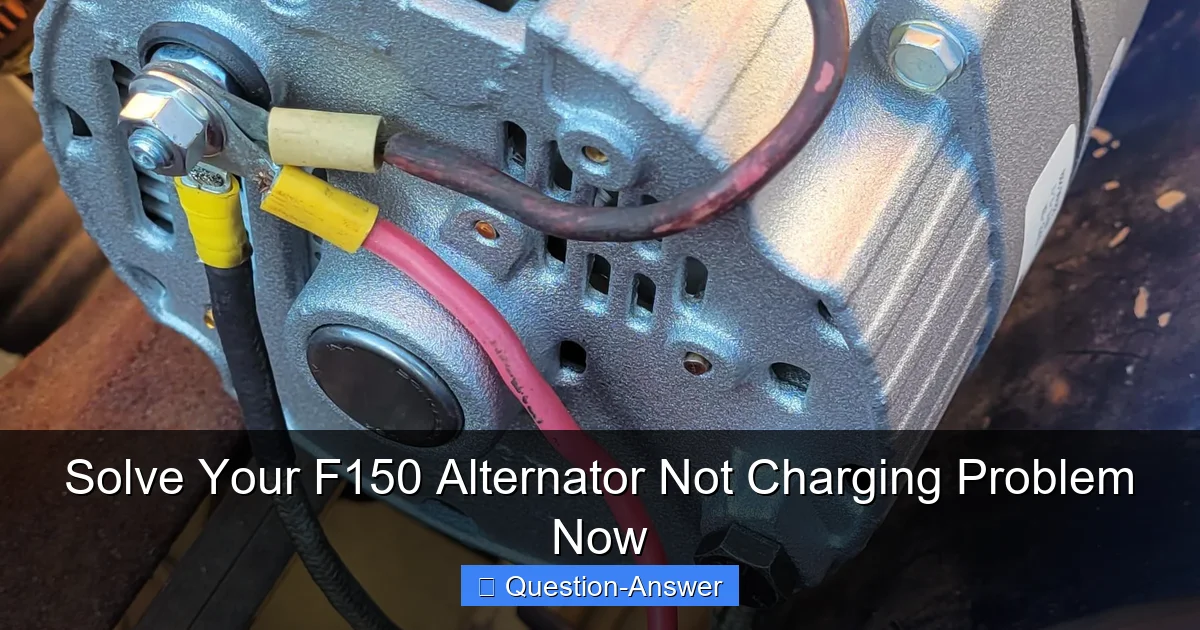
2. Inspect Your Wiring and Connections. Loose or corroded connections are silent killers. Check your battery terminals. Are they clean and tight? Follow the main positive cable from the battery to the alternator. Also, check the ground cable from the battery to the chassis. See any green crusty stuff? That’s corrosion. Any fraying wires? These can block current flow. This makes it seem like your F150 alternator not charging properly.
Tip: I’ve helped friends track down baffling electrical issues. They turned out to be nothing more than a loose ground wire near the battery or alternator. Clean any corrosion with a wire brush and a baking soda mix. Then, tighten everything well. Give the wires a gentle wiggle to be sure they’re snug.
3. The Alternator Itself. Okay, if the battery and wiring are fine, but you still have that battery light or dim lights, the alternator might be the real problem. Alternators have parts like voltage regulators that can fail. When your F150 alternator stops charging, you’ll notice dim headlights, the radio cutting out, or a slow engine crank.
Tip: Many auto parts stores can test your alternator for free. If it’s bad, replacing it can be a DIY job for some. Or, your mechanic can do it. I’ve personally replaced several F150 alternators over the years; it’s manageable with the right tools.
4. Drive Belt Issues. Your alternator needs the serpentine belt to spin. This spin generates power. If the belt is loose, worn, or broken, your alternator won’t turn. A squealing sound from the engine is a classic sign of a slipping belt. If it breaks, your power steering will also stop.
Tip: Look at the belt closely. Check for cracks, fraying, or missing parts. Check its tension. It should feel firm. I once had an F150 alternator not charging, and the squeal of a worn belt gave it away immediately.
5. Blown Fuses or Faulty Relays. This is less common. But a blown fuse or a bad relay can stop power flow to or from the alternator. This prevents it from charging the battery. Your F150’s owner’s manual shows fuse box diagrams.
Tip: Check fuses for the charging system. Look in the under-hood box and the interior panel. Find the main fuse for the alternator. It’s a long shot, but I once solved a stubborn F150 alternator not charging puzzle by finding a specific blown fuse.
Here’s a simple troubleshooting flow I recommend:
- Check Battery: Test voltage (engine off, then running).
- Inspect Connections: Clean and tighten battery terminals, alternator connections, and ground wires.
- Examine Belt: Make sure it’s tight and in good shape.
- Look for Fuses: Check your manual and relevant fuses.
- Test Alternator: If all else fails, get the alternator tested.
So, the next time your F150’s battery light comes on, or you find your truck struggling to start, don’t jump straight to replacing the alternator. Take a deep breath! Systematically go through these steps. An F150 alternator not charging can be tricky, but with a bit of patience and these tips, you’ll likely pinpoint the problem yourself. You’ve got this!