Spotting F150 Ball Joint Failure Symptoms Early Saves Money
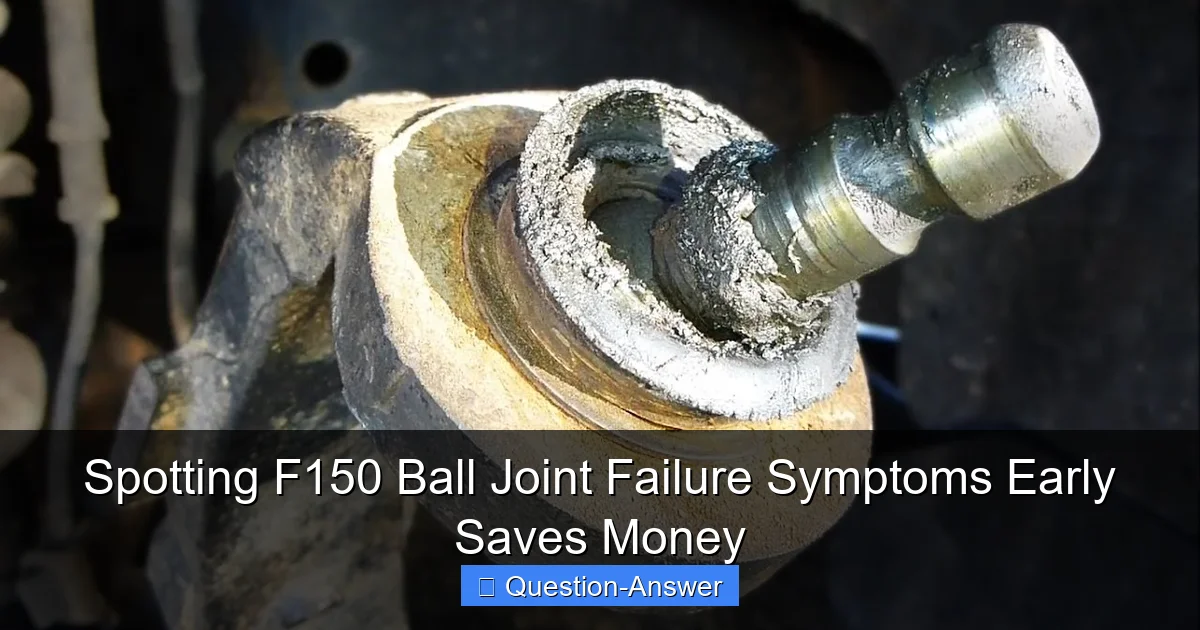
Featured image for f150 ball joint failure symptoms
Image source: i.ytimg.com
Spotting early F150 ball joint failure symptoms is paramount to saving significant money and ensuring your truck’s safety. Listen for tell-tale signs like clunking noises, feel for loose steering or vibrations, and inspect for uneven tire wear or a sagging front end. Addressing these issues promptly prevents more extensive and expensive damage, keeping your F150 reliable and secure on the road.
Hey there, fellow F-150 owner! We all adore our trucks for their toughness and reliability, don’t we? But just like any hardworking machine, certain parts can wear out. One common culprit is the ball joint. Spotting F150 ball joint failure symptoms early isn’t just smart; it’s a huge money-saver down the road.
Trust me, ignoring those early warning signs can turn a relatively simple repair into a much bigger, more expensive problem involving tires, steering components, and even safety. Let’s chat about what to listen for and feel, so you can keep your F-150 running smoothly and safely.
What are the common F150 ball joint failure symptoms I should look out for, and how can I tell if mine are going bad?
Understanding F150 ball joint failure symptoms is crucial for preventative maintenance. Ball joints are vital pivots in your F-150’s suspension, connecting the control arms to the steering knuckle. They allow your wheels to steer and move vertically. When they start to wear out, your truck will definitely let you know. Here are the main things to watch and listen for, along with some personal tips:
- Unusual Noises: This is often the first and most obvious sign. You might hear a distinct clunking, popping, or squeaking noise, especially when going over bumps, turning, or during low-speed maneuvers. I remember driving my ’15 F-150 and hearing this distinct “clunk” every time I pulled into my driveway over the curb. It was subtle at first, but grew louder. That’s usually the ball joint moving too much within its worn housing.
- Loose or Wandering Steering: Does your F-150 feel less precise on the road? Do you find yourself constantly correcting the steering wheel to keep it going straight? A worn ball joint can introduce excessive play into the steering system, making your truck feel “loose” or causing it to wander. It’s like trying to steer a boat with a paddle – not ideal for a truck!
- Uneven Tire Wear: This is a sneaky one that can cost you a new set of tires if ignored. When ball joints fail, they can affect your F-150’s alignment. This often leads to abnormal and uneven tire wear patterns, like cupping or feathering on the edges of your tires. Always keep an eye on your tire tread. My friend learned this the hard way with his ’17 F-150, wearing out a brand new set of tires prematurely because of bad ball joints.
- Vibrations: While many things can cause vibrations, worn ball joints can certainly contribute. You might feel a subtle tremor or vibration in the steering wheel or through the floorboards, which can get worse at higher speeds.
- Pulling to One Side: Similar to loose steering, a severely worn ball joint on one side can cause your F-150 to pull noticeably to that side, even on a flat road. This is more than just a slight drift; it’s a persistent pull that requires constant correction.
So, how can you tell for sure? If you’re comfortable and have the right tools, you can do a simple inspection. Safely jack up the front of your F-150 so the wheel is off the ground. Place a pry bar under the tire and try to lift it. If you see movement where the ball joint connects, or hear a clunk, that’s a strong indicator. Another method is to grab the tire at the 12 and 6 o’clock positions and try to wiggle it. Any noticeable play can point to worn ball joints or wheel bearings. However, if you’re unsure or uncomfortable, it’s always best to have a trusted mechanic perform a professional inspection. They have the expertise to distinguish between ball joint issues and other suspension problems that might present similar F150 ball joint failure symptoms.
Catching these F150 ball joint failure symptoms early truly is the key. Your F-150 works hard for you, so give it the attention it deserves. A proactive approach to maintenance means a safer, more enjoyable ride and more money in your pocket. Happy trucking!