F150 Cruise Control Not Working Top Reasons and Fixes
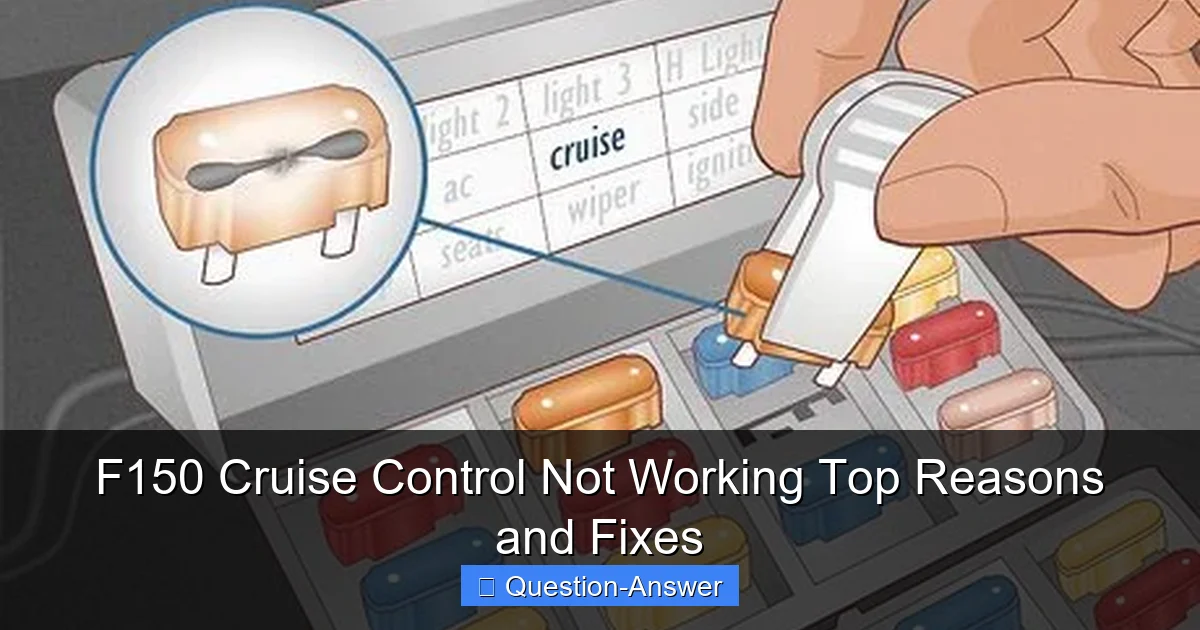
Featured image for f150 cruise control not working
Image source: wikihow.com
F150 cruise control failure often stems from common culprits like a faulty brake light switch, speed sensor issues, or even simple blown fuses, making it a frustrating but usually fixable problem. This guide helps you systematically diagnose and resolve these issues by checking critical electrical components and vacuum lines. Most fixes are surprisingly manageable with the right troubleshooting steps.
Hey there, fellow F150 owner! Ever been cruising down the highway, ready to set your speed, only for your F150 cruise control to decide it’s taking a day off? It’s super frustrating, right? I’ve definitely been there, tapping that button repeatedly, wondering what gives. Most of the time, it’s not a huge catastrophe, but rather one of a few common culprits that stop your F150 cruise control from engaging.
It’s a common issue across different F150 generations, and thankfully, many of the reasons your F150 cruise control not working can be simple fixes you might even tackle yourself. Let’s dive into the common reasons and how to get your trusty cruise control back in action!
Q: My F150 cruise control is not working. What are the top reasons and how can I fix it?
A: When your F150 cruise control is not working, it can feel like a big deal, but often the root cause is quite common and fixable. From what I’ve seen and experienced, here are the top reasons and what you can do:
Brake Pedal Position Switch (BPPS)
This is probably the most common culprit! Your cruise control system needs to know if your foot is on the brake pedal. If the Brake Pedal Position Switch (sometimes called the Brake Light Switch) is faulty, it might constantly tell the system that the brakes are engaged, preventing the cruise control from activating. It’s a safety feature, really.
- My experience: My 2012 F150 cruise control once quit on me, and this was the exact issue. It’s usually located near the brake pedal arm.
- The fix: This switch is often a simple screw-in or clip-in part. You can typically replace it yourself with basic tools. A new one usually costs under $30.
Blown Fuse
Sometimes, the simplest answers are the right ones. Your cruise control system relies on electrical power, and a blown fuse can easily cut that off. It’s always one of the first things I check.
- My experience: I’ve seen fuses blow for no apparent reason. It’s worth a quick check before anything else.
- The fix: Check your owner’s manual for the specific fuse (or fuses) related to your cruise control. It might be labeled “Speed Control,” “Cruise,” or even something general like “IGN.” Inspect it visually – if the wire inside is broken, it’s blown. Replace it with a fuse of the exact same amperage.
Faulty Clockspring
The clockspring is a delicate coiled wire assembly inside your steering wheel. It maintains electrical connections for components like the airbag, horn, and yes, your cruise control buttons, as you turn the wheel. If it fails, your F150 cruise control not working might be accompanied by other issues.
- My experience: When my friend’s F150 cruise control and horn both stopped working, we knew it was likely the clockspring.
- The fix: This is a more complex repair, usually requiring airbag removal. It’s best left to a professional mechanic unless you’re very comfortable with automotive electrical work and safety precautions.
Worn Steering Wheel Buttons
Over time, the buttons on your steering wheel for cruise control can wear out, get dirty, or even have broken internal contacts. If your other steering wheel controls work, but only the cruise buttons don’t, this is a strong possibility.
- My experience: On my older F150, I had to press the “ON” button harder and harder until it eventually gave up.
- The fix: Sometimes cleaning the contacts can help, but often the entire button pad or module needs replacement. This can be a DIY job if you’re comfortable disassembling parts of your steering wheel.
Vacuum Leaks (Older F150 Models)
For some older F150 models (think 9th to early 10th gen), the cruise control system relied on engine vacuum to operate. A leak in one of these vacuum lines or a faulty vacuum actuator could cause your F150 cruise control not working.
- My experience: This was a common headache on some of the older trucks I used to work on.
- The fix: Inspect all vacuum lines connected to the cruise control servo (usually under the hood near the brake booster) for cracks or disconnections. Repair or replace any damaged lines.
Speed Sensors or ABS Issues
Your cruise control needs accurate speed information. If a wheel speed sensor (part of your ABS system) is failing or there’s an issue with your Anti-lock Brake System (ABS), it can prevent cruise control from engaging. You might notice your ABS light on, too.
- My experience: A buddy had this when his ABS light came on, and his F150 cruise control immediately stopped working.
- The fix: This usually requires a diagnostic scan tool to pinpoint which sensor is faulty. Replacement can range from simple to involved depending on the sensor’s location.
In short, when your F150 cruise control not working, start with the simplest checks: the brake switch and fuses. They account for a huge percentage of issues. Only move to more complex troubleshooting if those easy fixes don’t work.
So, don’t let a non-working cruise control ruin your road trip plans! While it can be annoying, most issues with your F150 cruise control not working are quite manageable. Start with the easy checks, and if those don’t pan out, you’ll have a much better idea of what to tell your trusted mechanic. Happy cruising!