F150 Driveshaft Vibration Fix Restore Your Smooth Ride Now
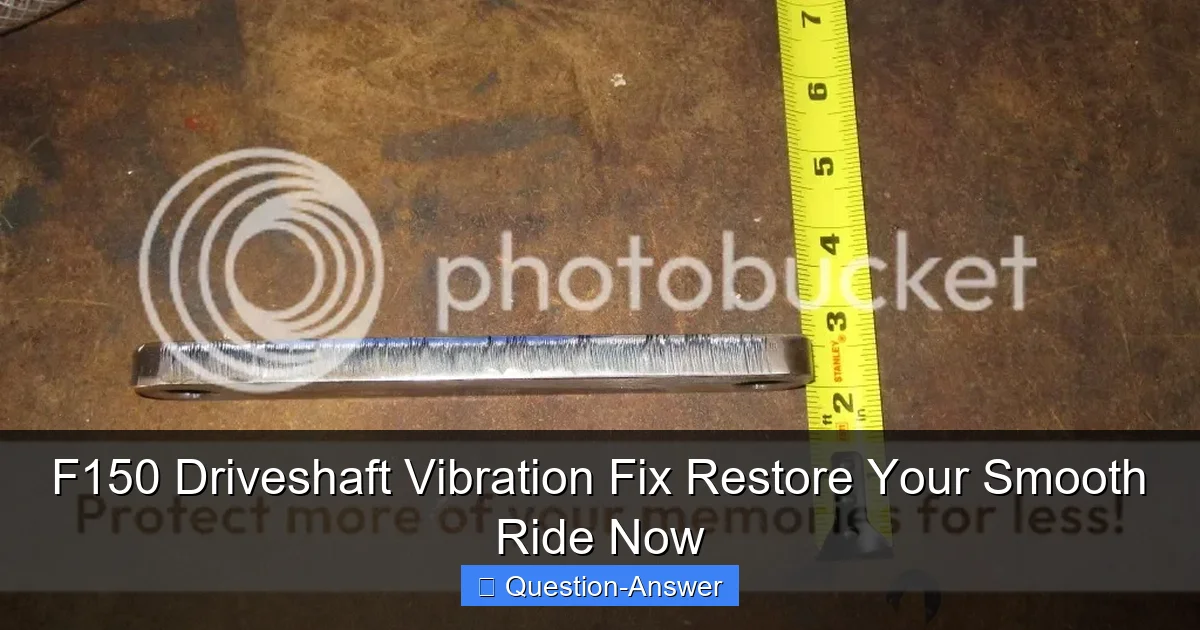
Featured image for f150 driveshaft vibration fix
Image source: i183.photobucket.com
Frustrated by persistent F150 driveshaft vibrations? This article dives into the common culprits behind those unsettling shakes, offering crucial diagnostics and effective fixes to restore your truck’s factory-smooth ride. Learn how to identify and resolve issues like worn U-joints, faulty carrier bearings, or improper pinion angles, ensuring a comfortable and confident driving experience once again.
Hey there, fellow F-150 owner! Ever been cruising along, enjoying your truck, when suddenly that annoying hum or shudder starts up? You know, that dreaded F150 driveshaft vibration? It’s a truly frustrating experience, right? It can make your smooth ride feel like a bumpy roller coaster. But don’t despair! I’ve been there, and I’m here to tell you that an F150 driveshaft vibration fix is absolutely possible. With a little detective work and the right approach, you can restore your truck’s comfort and get back to that smooth, confident drive you love.
What causes F150 driveshaft vibration and how can I fix it to get my smooth ride back?
Ah, the million-dollar question! From my own F-150 adventures and helping friends, I’ve learned that several things can cause that unsettling F150 driveshaft vibration. It’s like a puzzle, but once you find the right piece, the picture becomes clear. Let’s break down the common culprits and what you can do:
1. Worn U-Joints (Universal Joints)
This is often the first place to look. U-joints connect sections of your driveshaft. They allow for movement. Over time, they wear out. They lose lubrication. Then, they develop play. When U-joints fail, you might feel a clunk when shifting into drive or reverse. You could also feel a persistent vibration. This vibration often gets worse with speed. I remember my buddy’s truck. It felt like someone was tapping underneath at highway speeds! That’s a classic sign.
The Fix: Replacing U-joints is a common F150 driveshaft vibration fix. It’s a fairly straightforward job. You can DIY with the right tools. Or, take it to a reputable mechanic. Just make sure to get quality replacements. Don’t cheap out on these crucial parts!
2. Faulty Carrier Bearing (Center Support Bearing)
Does your F-150 have a two-piece driveshaft? Many longer wheelbase trucks do. If so, it will have a carrier bearing. This bearing supports the middle section. If it wears out, it causes too much movement. And, yes, vibration. You might notice a hum or rumble. It often gets louder with speed. It usually comes from the middle of the truck. This is a tell-tale sign of a carrier bearing issue.
The Fix: Replacing the carrier bearing is often a simple driveshaft vibration fix. It usually means dropping the driveshaft. Sometimes, the rubber around the bearing fails too. So, check that carefully when you’re under there.
3. Driveshaft Imbalance or Damage
Your driveshaft needs to be perfectly balanced. Think of it like a tire. If balance weights fall off, you get problems. Or if the shaft gets bent or dented. Maybe from an off-road trip or hitting road debris. All these can create a severe vibration. This type of F-150 vibration often starts at lower speeds. It gets worse as you go faster. Sometimes it feels quite violent. I once had a small dent in my driveshaft after a minor mishap. Replacing it was the only real way to get rid of that persistent F150 driveshaft vibration.
The Fix: For imbalance, a specialized shop can rebalance the driveshaft. If it’s bent or damaged badly, replacement is usually the best bet. A new driveshaft can make a huge difference to your smooth ride.
4. Incorrect Pinion Angle
This one’s a bit more technical. The pinion angle is about your differential’s input shaft. It needs to be at the right angle relative to the driveshaft. If these angles are wrong, it can cause “driveline bind” and vibration. This often happens after a lift kit or suspension changes. It can be tricky to diagnose without special tools.
The Fix: Adjusting pinion angles often means installing shims. These go between your leaf springs and axle. Or, using adjustable control arms if your truck has them. This is definitely a job to research thoroughly. Or, get a professional opinion. It’s key to a proper F150 driveshaft vibration fix.
My Personal Tip for Diagnosis:
Before you start replacing parts, do some detective work. Crawl safely under your truck! Grab each U-joint. Try to twist it. Then push and pull on the driveshaft itself. Any noticeable play, clunking, or looseness? That’s a big red flag. For the carrier bearing, try to move the driveshaft up and down where it’s supported. Too much movement means a problem. Sometimes, just feeling the U-joints after a drive helps. A U-joint that’s much hotter than the others is often failing. Trust me, these simple checks can save you time and money on your driveshaft vibration fix journey.
Finding and fixing that F150 driveshaft vibration can feel daunting. But with a bit of patience and knowing where to look, you can absolutely bring back that smooth, quiet ride your F-150 is meant to have. Don’t let a little vibration ruin your driving experience. Take these tips, roll up your sleeves, and get ready to enjoy your truck again!