Why Your F150 Fuel Gauge Not Working And How To Fix It
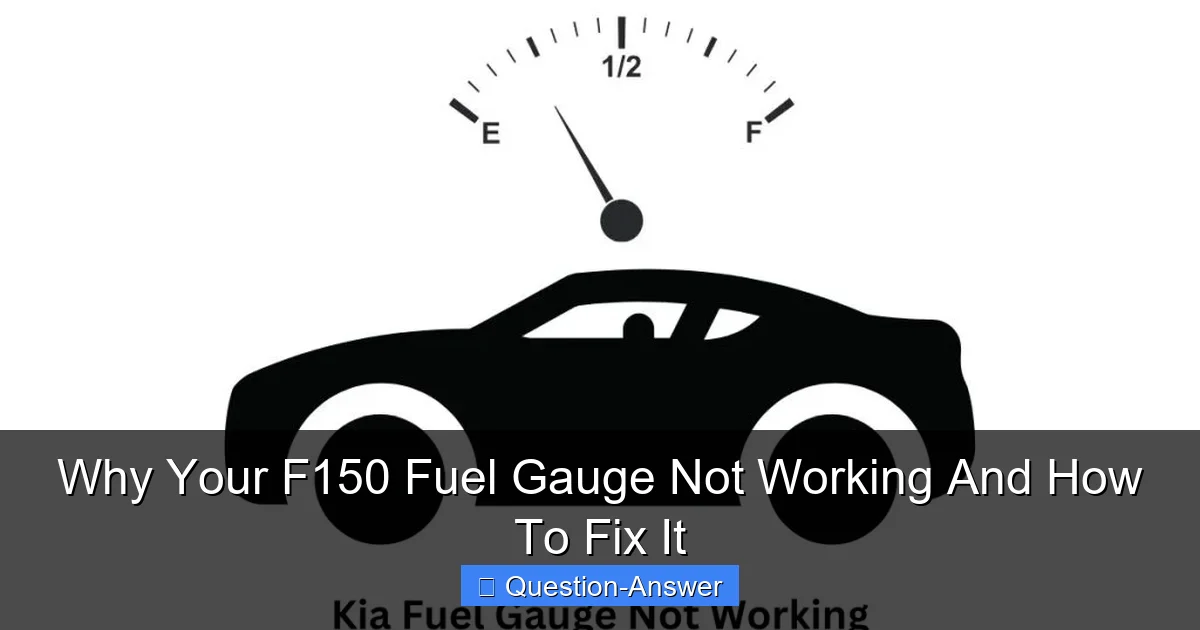
Featured image for f150 fuel gauge not working
Image source: vehiclechef.com
If your F150 fuel gauge is malfunctioning, the primary suspect is almost always a faulty fuel sender unit located within the fuel tank. Other common causes include damaged wiring, a defective instrument cluster, or a blown fuse, all of which require systematic troubleshooting to pinpoint and resolve the problem effectively.
Why Your F150 Fuel Gauge Not Working And How To Fix It
Ever hopped into your trusty F150, turned the key, and noticed that dreaded fuel gauge needle stuck on empty, or maybe bouncing around like it’s got a mind of its own? It’s super frustrating, right? Especially when you know you just filled up! You’re not alone; many F150 owners have faced the headache of their F150 fuel gauge not working properly.
When your F150 fuel gauge isn’t working, it usually points to a few common culprits. The good news? It’s often fixable, and sometimes, it’s simpler than you might think. Let’s dive into what’s going on and how you can get that gauge reading accurately again.
So, what’s usually behind an F150 fuel gauge not working, and how can I get it fixed?
Oh, I totally get how unsettling it is when you can’t trust your fuel gauge. I’ve been there, staring at an empty indicator, wondering if I’ll make it to the next gas station. It’s a common issue with F150s, but thankfully, there are clear reasons why your F150 fuel gauge not working might be happening, and steps you can take to sort it out.
Here are the main suspects when your F150 fuel gauge acts up:
The Fuel Sending Unit (Most Common Culprit):
This is by far the most frequent reason for an F150 fuel gauge not working. The fuel sending unit is a float and a resistor that sits inside your fuel tank. As the fuel level changes, the float moves, changing the electrical resistance, which tells your gauge how much fuel you have. Over time, these units can get corroded, worn out, or the float can even get stuck. Imagine a little boat in your tank. If that boat gets sticky or sinks, it can’t tell the gauge what’s up!
My own experience: I once had an F150 fuel gauge not working where it would show full, then suddenly empty, then maybe half. It was driving me nuts! After some digging, it turned out to be the sending unit. It’s often integrated with the fuel pump, so replacing one might mean replacing the other.
How to diagnose: If your gauge reads empty all the time, or gets stuck at one level despite filling up, it’s a strong sign the sending unit is faulty. Sometimes, rough roads might temporarily jostle it, giving you a brief, accurate reading.
How to fix: Replacing the fuel sending unit usually involves dropping the fuel tank, which can be a pretty big job. It’s definitely something you can DIY if you’re comfortable with mechanics, have the right tools (including a floor jack and stands), and can safely drain the tank. If not, a trusted mechanic can do it for you. Safety first!
Wiring Problems:
Sometimes, the issue isn’t the sending unit itself but the wires connecting it to the gauge. Wires can corrode, get chewed by rodents, or become loose over time. A broken or shorted wire will definitely make your F150 fuel gauge not working correctly.
How to diagnose: This requires a bit of detective work. You’d check the wiring harness that runs from the fuel tank area up to the instrument cluster. Look for any visible damage, chafing, or loose connections. A multimeter can help test for continuity and proper voltage.
How to fix: If you find a damaged wire, you might be able to repair it with a simple splice and proper insulation. Loose connections just need to be resecured. If the damage is extensive, replacing a section of the harness might be necessary.
A Blown Fuse:
This is the easiest fix, and always a good place to start! Your F150’s fuel system and gauge typically have a dedicated fuse. If it blows, the gauge won’t receive power.
How to diagnose: Check your owner’s manual to locate the fuse box (usually under the hood and/or inside the cabin). Find the fuse labeled for the fuel gauge or instrument cluster and inspect it. A blown fuse will have a broken wire inside.
How to fix: Simply replace the blown fuse with a new one of the same amperage. If it blows again immediately, you have a short circuit somewhere that needs to be found.
Instrument Cluster Issues:
While less common for *just* the fuel gauge, sometimes the problem lies within the instrument cluster itself. If other gauges (like your speedometer or tachometer) are also acting wonky, or your lights flicker, it might point to the cluster.
How to diagnose: If only the fuel gauge is out, this is less likely. But if you have multiple erratic readings or other electrical oddities on your dashboard, the cluster might be failing.
How to fix: Fixing an instrument cluster often means replacing the entire unit or sending it to a specialist for repair. This is usually a job for a professional.
Fuel Pump Module:
In some F150 models, the fuel pump module or driver might have issues that indirectly affect the sending unit’s signal. This isn’t the primary cause of an F150 fuel gauge not working, but it’s worth noting that these components are all interconnected.
How to diagnose and fix: This is a more complex diagnostic and repair, often requiring specialized tools and knowledge. If you’ve ruled out the other, simpler issues, and your F150 is also experiencing fuel delivery problems (like stalling or not starting), then this might be a deeper concern that a professional should handle.
When tackling any of these, always remember to disconnect your battery first for safety. Working around fuel is serious business, so be in a well-ventilated area and avoid any ignition sources. It’s super important!
Don’t let a faulty F150 fuel gauge not working leave you stranded! With a bit of troubleshooting, you can often pinpoint the issue and get your truck back to telling you the truth about your tank. Whether you’re a DIY enthusiast or prefer to leave it to the pros, knowing the common causes is the first step to a solution. Happy driving, and may your fuel gauge always be accurate!