F150 Fuse Box Diagram Find Your Electrical Fix Fast
Featured image for f150 fuse box diagram
Image source: i.pinimg.com
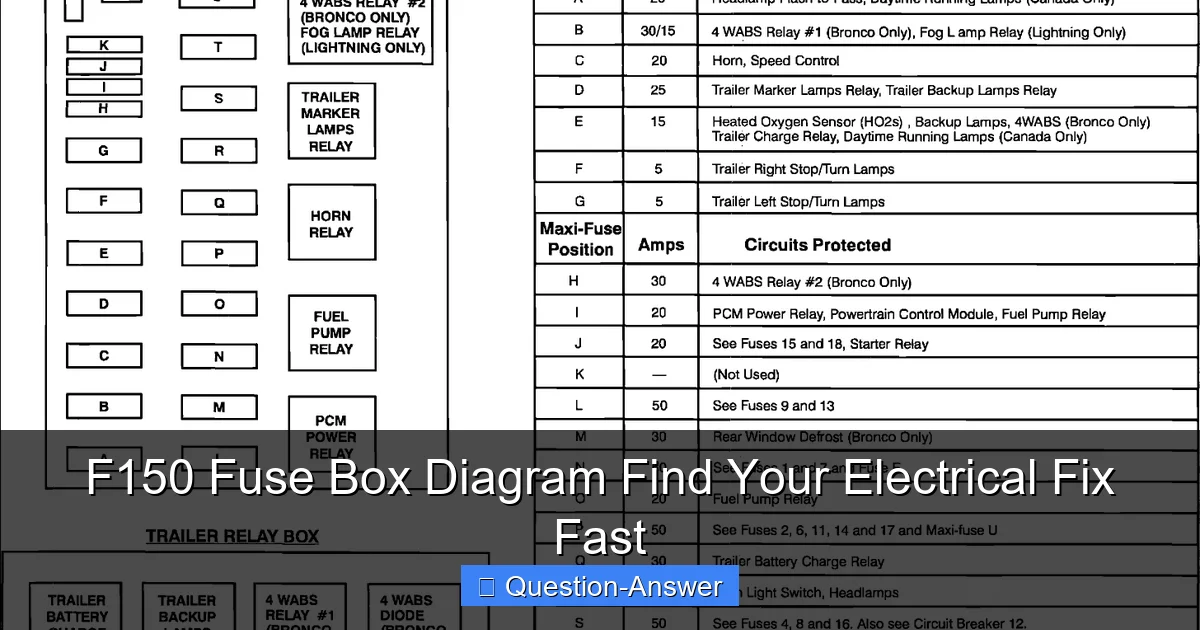
Locating your F150 fuse box diagram is essential for rapidly diagnosing and fixing any electrical problems. This invaluable resource, typically found in your owner’s manual or online, provides a clear map of every circuit, fuse, and relay, allowing you to quickly pinpoint the cause of malfunctioning components. Don’t let electrical glitches slow you down; utilize your diagram to achieve a fast, accurate electrical fix.
F150 Fuse Box Diagram Find Your Electrical Fix Fast
Hey there, fellow F150 owners! Ever had a light go out, your radio stop working, or a power outlet mysteriously die? It’s a real head-scratcher, right? Before you panic and call a mechanic, there’s a secret weapon every F150 owner should know about: your F150 fuse box diagram. Trust me, understanding this little map can save you a ton of time, money, and frustration. It’s like having a quick guide to solving those annoying electrical hiccups yourself.
Finding and understanding your F150 fuse box diagram is the first step to becoming your own roadside hero. It clearly shows you what each fuse does, making electrical troubleshooting surprisingly straightforward. Let’s dive in and demystify this essential tool!
Where can I find my F150 fuse box diagram and how do I use it to fix common electrical problems?
Alright, let’s get into the nitty-gritty of your F150 fuse box diagram. It’s truly your best friend when something electrical decides to take a day off. First off, it’s important to know that most F150s actually have two main fuse boxes, sometimes even a third for specific accessories.
One is usually located inside the cab, often on the passenger side kick panel, or sometimes behind a small access door near the glove box or under the steering wheel. This interior panel typically handles things like your radio, power windows, interior lights, and accessory outlets. The other main one lives under the hood, usually on the driver’s side, in a black plastic box. This one covers heavier-duty components like your engine control, ABS, headlights, and trailer connections. My own 2018 F150 has them right where you’d expect, and I’ve seen similar setups across many generations.
Now, finding the actual F150 fuse box diagram itself is crucial. Your absolute best resource is your truck’s owner’s manual. Seriously, don’t overlook it! It will have a detailed diagram for both the interior and under-hood fuse boxes, listing the fuse number, its amperage (e.g., 10A, 20A), and what circuit it protects (e.g., “Radio,” “Trailer Tow Relay,” “Cigar Lighter”). If your manual is missing, don’t fret! A quick search online for “[your F150 year] F150 fuse box diagram” will usually bring up a PDF version of the manual or dedicated automotive forums with clear images and explanations. Sometimes, there’s even a small sticker on the inside of the fuse box cover with a basic layout, but the manual is always more comprehensive.
Here’s how I approach troubleshooting using my F150 fuse box diagram, based on personal experience:
- Identify the Problem: Let’s say my 12V power outlet stopped working. First, I try to remember which circuit it belongs to.
- Consult the Diagram: I grab my owner’s manual (or pull it up on my phone) and look for “power outlet” or “accessory power.” The F150 fuse box diagram will point me to a specific fuse number and its location. For my truck, it was often fuse #23 for the console outlet.
- Locate the Fuse Box: The diagram also tells me if it’s an interior or under-hood fuse. For the power outlet, it’s usually inside.
- Safety First: Always turn off your F150 and remove the key before touching any fuses. This is super important to avoid electrical shocks or accidental shorts.
- Remove and Inspect: Use the small plastic fuse puller that often comes clipped inside the fuse box cover (or a pair of needle-nose pliers). Gently pull out the suspected fuse. A blown fuse will have a visible break in the wire inside the fuse, or it will look charred. If you can’t tell by looking, a fuse tester is a cheap and handy tool.
- Replace with Correct Amperage: This is critical! If the fuse is blown, replace it with a new fuse of the exact same amperage (e.g., replace a 15A with a 15A). Using a higher amperage fuse can lead to serious electrical damage or even a fire, because it won’t blow when it should. Using a lower one might just blow again immediately.
- Test: Pop the new fuse in, turn your F150 back on, and test the circuit. More often than not, this simple fix solves the problem! I once spent an hour trying to figure out why my trailer lights weren’t working, only to find a blown fuse in the under-hood F150 fuse box diagram that clearly showed it was for trailer tow power. Five-minute fix!
What if it’s not the fuse? If you replace a fuse and it blows again right away, or if replacing it doesn’t fix the problem, then you likely have a deeper issue. This could be a short circuit somewhere in the wiring, a faulty component, or a more complex electrical problem that might require a professional’s touch. But seriously, start with the fuses – it’s the easiest and most common culprit for many electrical woes.
So there you have it! Don’t let a simple electrical glitch ruin your day or drain your wallet. Your F150 fuse box diagram is a powerful tool, ready to guide you through many common troubleshooting scenarios. Get familiar with it, keep your owner’s manual handy, and you’ll be ready to tackle those minor electrical fixes with confidence. Happy driving!