F150 Rear Differential Ratio Choices Explained for Truck Owners
Figuring out f150 rear differential ratio options can seem tricky at first. It’s common to feel a little lost because there are many numbers and terms to sort through. Don’t worry, though! It’s actually not that hard once you break it down. We’re going to explore what these ratios mean and how to pick the right one for your Ford F150. This post makes it simple, so you can make a smart choice for your truck’s performance. Get ready to learn about how to pick the perfect one, so let’s start!
Key Takeaways
- Rear differential ratios affect your truck’s towing capability and fuel economy.
- Different ratios are better for different driving needs, from off-roading to highway cruising.
- Understanding your truck’s use is important for choosing the right ratio.
- Changing your rear differential ratio can improve your truck’s performance significantly.
- Proper maintenance is crucial for the longevity of your rear differential.
- You can upgrade the rear differential ratio with aftermarket parts.
Unpacking Rear Differential Ratios in Your F150
The rear differential is a key component in your F150, transferring power from the driveshaft to the rear wheels. It’s housed in the rear axle and plays a vital role in allowing the wheels to rotate at different speeds when you’re turning. The ratio is the relationship between the number of times the driveshaft turns and the number of times the wheels turn. It affects how your truck performs in various driving situations, from towing and hauling to fuel efficiency and acceleration. Selecting the right one for your needs is crucial, and it’s a decision that goes beyond just looking at numbers.
What is a Rear Differential Ratio?
The rear differential ratio is the numerical representation of how many times the driveshaft spins to make the wheels spin once. This ratio is expressed as two numbers separated by a colon, like 3.55:1 or 3.73:1. The first number represents the number of rotations the driveshaft makes, and the second number represents the number of rotations the wheels make. A lower number, like 3.15:1, means the driveshaft has to spin fewer times to turn the wheels once. This results in better fuel economy and a smoother ride. A higher number, like 4.10:1, means the driveshaft has to spin more times to turn the wheels once. This improves acceleration and towing ability but generally lowers fuel efficiency. Selecting a ratio that matches your driving style and the tasks you perform with your F150 ensures the best performance and efficiency.
-
Lower Ratio (e.g., 3.15:1 or 3.31:1): Lower ratios mean the driveshaft spins less for each wheel rotation. This is usually beneficial for highway driving, as it lowers engine RPMs, leading to better fuel economy and a quieter ride. Trucks with lower ratios tend to have less immediate acceleration and might not be ideal for heavy towing. Think of it like a bicycle with a higher gear.
A lower ratio is often favored for trucks used primarily for commuting or long-distance driving where fuel efficiency is a priority. These ratios are common in trucks that aren’t regularly used for towing heavy loads. They offer a balance that prioritizes highway performance and reduces engine wear during extended periods of constant speed.
-
Higher Ratio (e.g., 3.73:1 or 4.10:1): Higher ratios mean the driveshaft spins more for each wheel rotation. This results in quicker acceleration, stronger towing capacity, and better performance when hauling heavy loads. However, higher ratios usually result in lower fuel economy because the engine has to work harder at all speeds. Think of it like a bicycle with a lower gear.
A higher ratio is ideal if you frequently tow trailers, haul heavy cargo, or spend a lot of time off-roading. The increased torque at the wheels makes it easier to get moving from a stop and helps maintain speed while climbing hills or navigating difficult terrain. While the fuel economy might suffer, the added power is worth it for these kinds of tasks.
-
Mid-Range Ratio (e.g., 3.55:1): These ratios provide a good balance between towing capacity, acceleration, and fuel economy. They are a popular choice for all-around use, providing adequate power for most tasks without sacrificing too much fuel efficiency. It’s like a middle gear on your bike, suitable for various terrains and situations.
Mid-range ratios are a safe bet if your F150 is used for a variety of tasks, including daily driving, occasional towing, and light off-roading. They give a good blend of power and efficiency, making them a sensible option for drivers who need versatility in their truck’s performance.
Factors Influencing Ratio Choice
Several factors should influence your decision when choosing your f150 rear differential ratio options. Understanding these factors will help you make a smart decision. Your regular driving habits, typical load, and type of terrain you often encounter all play a role. If you are mainly driving on the highway, fuel economy might be your top priority. If you frequently tow, then more power might be better. Considering these aspects will help ensure that the ratio you choose enhances your truck’s performance and meets your needs. It’s about getting the right combination for how you drive your F150.
-
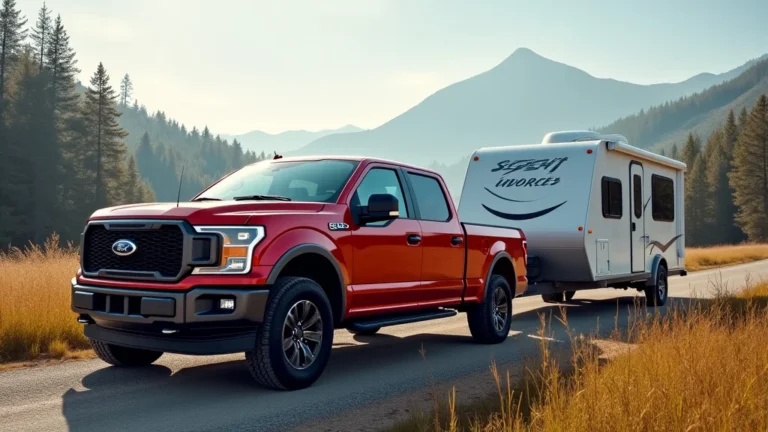
Towing Needs: If you frequently tow heavy trailers or haul large loads, a higher ratio is usually better. It provides increased torque to get the load moving and maintain speed, especially on inclines. This extra torque can significantly reduce strain on the engine and transmission.
For example, if your F150 regularly tows a boat, camper, or heavy construction equipment, a ratio like 3.73:1 or 4.10:1 would be suitable. The added power helps in smooth acceleration while preventing the engine from having to work too hard.
-
Driving Environment: The type of driving you mostly do impacts the best ratio. Highway driving benefits from a lower ratio for better fuel efficiency. If you primarily drive in city conditions with frequent stops and starts, you might prefer a ratio that provides quicker acceleration.
If you mainly drive on highways, a 3.31:1 or 3.55:1 ratio could be suitable, improving fuel consumption. If you drive in the city, the acceleration boost of a 3.73:1 ratio might feel more responsive and better suited for stop-and-go traffic.
-
Fuel Efficiency: Lower ratios generally improve fuel economy because the engine doesn’t have to work as hard to maintain speed. Higher ratios offer better towing capacity and quicker acceleration at the cost of fuel economy.
If fuel efficiency is your top priority, especially if you spend a lot of time on the highway, consider a lower ratio. You might see better MPG, reducing your fuel costs over time.
Identifying Your Current Differential Ratio
Before you decide to change your rear differential ratio, you need to know what you already have. There are several ways to find this information, and knowing your existing ratio is a key step in making a more informed decision. Being accurate is important, so you can select a more appropriate option. Once you’ve confirmed your current setup, you can then move on to evaluating your needs and picking the perfect ratio for your F150.
Decoding the Axle Code
One of the easiest ways to identify your current rear differential ratio is by looking at the axle code. This code is often found on a sticker located on the driver’s side door jamb or in the owner’s manual. The axle code is a set of letters and numbers that provides information about the axle type and the gear ratio. You can cross-reference the axle code with a chart or online resource to determine the specific ratio installed on your truck from the factory. This method is usually quick and precise, giving you a quick reference point.
-
Locating the Code: The axle code is typically found on the door jamb sticker. It might also be listed in your owner’s manual. This sticker includes important information, such as the VIN, tire size, and the axle specifications.
Look carefully at the sticker; the code is usually near the bottom. If you have trouble finding it, consult your owner’s manual, where the information should be explained and easily located.
-
Decoding the Code: You can use online resources or charts to figure out what the code means. These charts will have the codes with their corresponding ratio. Knowing the code lets you immediately identify your existing ratio.
For example, code “H9” might represent a 3.55:1 ratio. Find a reliable resource to accurately decode the code. This is important to ensure you understand your truck’s equipment.
-
Confirming with a Mechanic: If you are unsure or need additional assurance, consult a mechanic. A mechanic can inspect your truck’s components to verify the axle code’s accuracy and confirm the rear differential ratio.
A mechanic can provide an extra level of assurance and can confirm the ratio through a physical inspection of your truck’s rear axle and differential. This helps avoid any guesswork.
Physical Inspection Methods
Sometimes, the axle code might be missing or hard to find. In these situations, you can use other methods. Some methods include counting teeth, which involve counting the teeth on the ring and pinion gears. This gives a direct way to calculate the ratio. It can be useful to double-check information you already have or determine the ratio if you can’t find the original axle code. These methods will require some tools and a willingness to do a bit of work.
-
Counting Teeth: This method requires you to count the teeth on the ring gear (the large gear in the differential) and the pinion gear (the smaller gear). Then, divide the number of teeth on the ring gear by the number of teeth on the pinion gear to find the ratio.
For example, if the ring gear has 39 teeth and the pinion gear has 11 teeth, the ratio is 3.55:1 (39 divided by 11). This method needs you to open the differential, so it’s usually best left to experienced mechanics.
-
Spinning the Driveshaft: Lift the rear wheels off the ground and rotate one wheel. Count how many times the driveshaft turns for one full rotation of the wheel. This method can give you an estimate of the ratio.
For instance, if the driveshaft rotates 3.55 times for one wheel revolution, then the ratio is 3.55:1. This is a practical method, but it may not be as precise as counting teeth.
-
Seeking Professional Inspection: If you are not comfortable with either of these methods, a professional mechanic can quickly determine your current ratio. They have the expertise and the tools to assess the differential with precision.
Mechanics will also inspect the condition of your differential during this process, checking for any wear or damage. This can save you from potential issues in the future.
Upgrading Your F150’s Rear Differential
Upgrading your F150’s rear differential ratio can noticeably change your truck’s performance. It’s important to understand the procedures and costs associated with this type of upgrade. Whether you’re aiming for better towing, better acceleration, or improved fuel efficiency, changing your ratio can be a big step. This type of upgrade needs some technical know-how. It is usually best if a professional handles it. Preparing properly and understanding the process helps to make the process run smoothly.
The Installation Process
Replacing the rear differential gears involves several steps, from removing the old gears to setting up the new ones correctly. This work is complicated and requires specific tools and mechanical expertise. You’ll need to accurately measure gear backlash and contact patterns. You’ll need to properly tighten bolts. Improper installation can cause serious damage to your truck and void any warranties. This is why having it done professionally is often the smart choice.
-
Vehicle Preparation: Lift your truck and secure it on jack stands. Drain the old gear oil from the differential housing. This step is important to provide space and avoid spills during the gear replacement.
Make sure you have enough space to work. Choose a safe, level surface to raise your F150. Also, remove the wheels and ensure all safety precautions are in place before you start.
-
Removing the Old Gears: Remove the rear differential cover and then detach the carrier. Carefully remove the ring gear from the carrier and extract the pinion gear from the housing. This step requires careful handling to prevent damage to internal components.
Use the correct tools for these steps, such as impact wrenches and gear pullers. Take your time to avoid damage to your truck’s differential components. Inspect the inside of the housing for damage or wear while it’s open.
-
Installing the New Gears: Install the new ring gear on the carrier, and then insert the carrier into the housing. Place the new pinion gear in the housing. Set the gear backlash and contact pattern. This step is important for gear durability and performance.
Proper gear setup is important for the gears’ longevity and smooth function. You will use a dial indicator to measure backlash and check the contact pattern with marking compound, adjusting the shims as needed. This part of the process requires precision and experience.
-
Reassembly and Testing: Reinstall the rear differential cover with a new gasket, refill with the appropriate gear oil, and then install the wheels. Test the truck on the road to ensure that everything operates correctly and that there are no abnormal sounds or vibrations.
Check for any leaks and inspect the gear oil level. Take it slow to test the new setup. Check for any vibrations or noises that might indicate a problem. This step makes sure that the installation was successful and that your truck runs smoothly.
Cost and Compatibility Considerations
The cost to upgrade your F150’s rear differential ratio will change depending on different factors. Costs can change depending on the components, the amount of labor, and any added parts, such as new seals or bearings. It is important to know about compatibility with your truck’s existing setup. Make sure that you select components that fit correctly. Before you start, evaluate the entire project and weigh the costs against the performance benefits.
-
Gear Sets: The cost of a new rear differential gear set typically ranges from $200 to $600. The cost changes based on the brand, quality, and the materials used. The gear sets should be appropriate for your truck model and axle type.
Choose reliable brands that provide warranties to make sure that the parts meet your truck’s specifications. High-quality gear sets can improve the life of the differential. When selecting a gear set, be careful about the materials used, which is often a critical factor.
-
Installation Labor: Professional installation will add to your costs. The labor costs range from $300 to $800. The total installation time varies from shop to shop and the complexity of the project.
Consider the shop’s reputation and expertise. High-quality labor ensures that the job is done right. Always compare quotes from different shops to find the best value for your project.
-
Additional Components: You might need to buy new seals, bearings, or other related parts. These can add to your total costs. The cost for these parts can range from $50 to $150.
You should replace worn or damaged parts. These parts are important to ensure your differential’s reliability and to prevent future issues. Examine all the related parts while the differential is open and replace anything that looks worn.
-
Compatibility: Your new gear set needs to be compatible with your truck’s axle type and model. Check your axle specifications. Compatibility problems can happen and result in performance issues or damage to your components.
Always verify the specifications to ensure that the gears will fit. You should consult with a professional if you’re unsure, to avoid making a mistake. Proper compatibility ensures that your truck runs as expected.
Maintaining Your F150’s Rear Differential
Proper care of your F150’s rear differential is essential for its life and overall truck performance. Regular maintenance routines such as fluid changes and inspections can prevent costly repairs. These actions are very important. Ignoring these things can lead to major damage and expensive repairs down the road. You can help maintain the integrity of your rear differential with the proper level of care. You will ensure consistent performance and keep your truck working right.
Regular Fluid Changes
Regular fluid changes are among the easiest and most effective maintenance tasks. The rear differential’s fluid, or gear oil, lubricates the components inside, reducing friction and wear. Over time, the fluid breaks down and can become polluted with debris. Changing the fluid regularly helps keep the parts of the differential clean. Following these simple steps ensures that the internal components get the necessary lubrication.
-
Frequency: Gear oil changes are often needed every 30,000 to 60,000 miles. Driving conditions affect this. If you frequently tow, haul heavy loads, or drive in extreme conditions, you may have to change the gear oil more often.
Consult your truck’s owner’s manual for recommended intervals. Check your fluid levels regularly to monitor its condition. The frequency of changes helps with long-term reliability and performance.
-
Fluid Type: You must use the right type of gear oil for your F150. Gear oil specifications are important and specified by your vehicle manufacturer. Using the right oil ensures that your differential parts are correctly lubricated.
Check your owner’s manual or consult a mechanic. Synthetic gear oils are often recommended for their greater durability and ability to endure extreme conditions. The correct viscosity and API rating are important for performance.
-
Procedure: The process involves draining the old fluid and refilling the differential with new oil. This is often done by removing the fill plug, draining the oil, and then replacing the plug after filling. Some differentials may require the removal of the differential cover.
Make sure you have the right tools, including a drain pan and a fill pump. Proper preparation and tools are essential. Make sure the area is clean before you begin. Following the steps will ensure the oil change goes smoothly.
Inspections and Early Detection
Regular inspections and early detection of problems can prevent significant damage to your differential. These inspections involve checking for fluid leaks, unusual noises, and metal debris. Early detection of problems can prevent costly repairs. Performing regular inspections and promptly addressing issues helps to keep your differential running smoothly and maintains your truck’s performance.
-
Visual Inspection: Regularly examine the rear differential housing for leaks. Look for fluid stains under your truck. A small leak might be a sign of a larger issue.
Check the seals around the cover. Fluid leakage can indicate that a seal is failing or that there’s a problem with the housing. Catching leaks early can prevent the loss of gear oil and reduce internal damage.
-
Auditory Inspection: Listen for noises coming from the rear differential, such as whining, clunking, or grinding sounds. These sounds can signify problems with the gears or bearings.
Changes in sound can be a sign that something is wrong. Note any unusual noises while driving, especially at different speeds or during acceleration. If you hear anything, have it checked out by a mechanic.
-
Fluid Analysis: If you suspect a problem, you can take a sample of the gear oil and send it for analysis. A laboratory will check for metal particles and contamination. The debris might suggest wear or internal damage.
Fluid analysis can reveal the degree of wear happening inside the differential. It allows you to recognize potential problems before they lead to big failures. Regular fluid checks can help to identify issues early, and help save on repairs.
Frequently Asked Questions
Question: What’s the best rear differential ratio for towing with my F150?
Answer: Generally, a higher ratio like 3.73:1 or 4.10:1 is great for towing because it provides extra torque for getting loads moving and maintaining speed on hills.
Question: How can I tell if my F150’s rear differential needs to be replaced?
Answer: Signs include loud noises like whining or clunking, leaking gear oil, or metal shavings in the oil.
Question: Can I change the rear differential ratio myself, or should I take it to a mechanic?
Answer: While it’s possible to do it yourself, it’s a complicated job that needs special tools and expertise. It’s often safer and better to have a mechanic do it.
Question: Does changing the rear differential ratio affect fuel efficiency?
Answer: Yes, in general. Lower ratios tend to improve fuel economy, especially on the highway, while higher ratios can lower it, but they provide more power for towing and acceleration.
Question: What kind of gear oil does my F150 need for the rear differential?
Answer: Check your owner’s manual for the specific gear oil type and viscosity recommended for your truck. Using the correct oil is important for the differential’s proper function and longevity.
Final Thoughts
Making a decision about f150 rear differential ratio options depends on what you do with your truck. Choosing the right one is about matching the ratio to how you use your F150. Understand that a lower ratio can make for good gas mileage. A higher ratio gives you more towing power. Then you can find out what you have, and if you need a change, how to do it. You can see how easy it is to find the perfect rear differential for your needs. Always keep up with routine maintenance to get the best performance. Then your Ford F150 will be ready for any task.