Why Your F150 Rear End Clunks When Shifting Get Answers
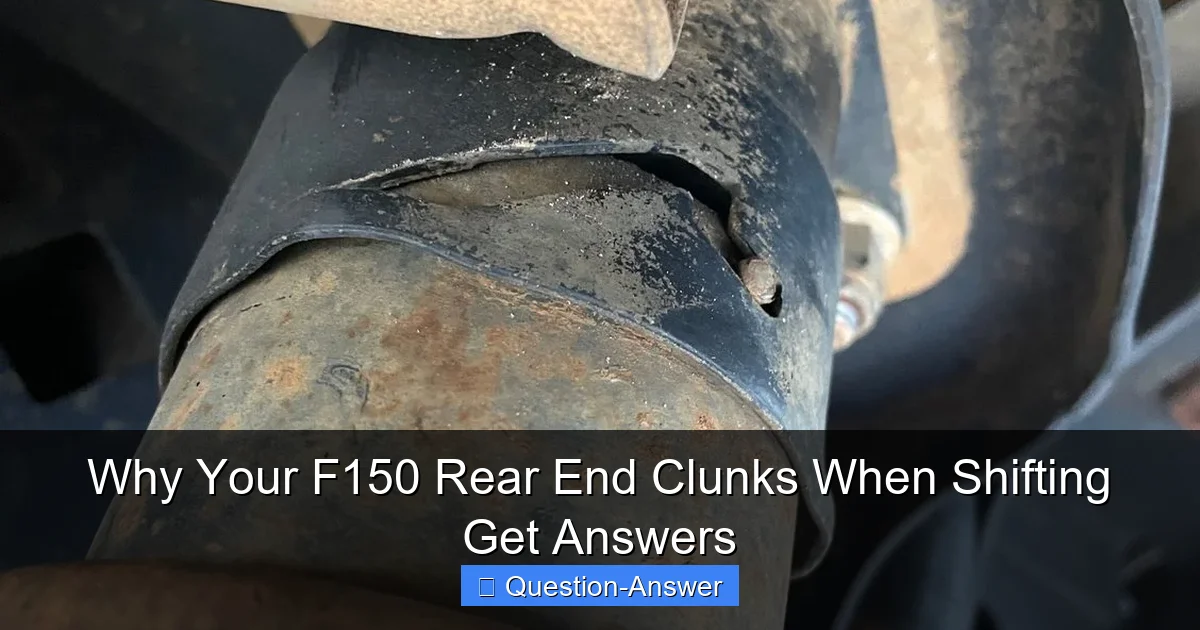
Featured image for f150 rear end clunk when shifting
Image source: cimg0.ibsrv.net
The common F150 rear end clunk when shifting typically points to driveline slack or worn components, which can be both annoying and concerning. Key culprits often include worn U-joints, a sticky slip yoke, or even internal differential issues, causing a noticeable thud during gear engagement. Prompt diagnosis and addressing the specific worn part, whether through lubrication or replacement, is essential to restore smooth operation and prevent potential future damage.
Why Your F150 Rear End Clunks When Shifting: Get Answers
Hey there, fellow F-150 owner! If you’ve ever felt that unsettling “thunk” or “clunk” from the back of your truck when you shift gears, especially from park to drive or when coming to a stop and then accelerating, you’re definitely not alone. It’s a surprisingly common issue that many of us F-150 enthusiasts have experienced. That distinctive F150 rear end clunk when shifting can be a little unnerving, making you wonder if something serious is about to give out.
I know that feeling firsthand! It’s that moment of hesitation, wondering “What was that?” The good news is, while it sounds alarming, this clunk is often a sign of a few well-known, and usually fixable, issues within your truck’s driveline. Let’s dive into what’s likely causing your F150 rear end clunk when shifting and how you can tackle it.
So, What’s Really Going On When My F150 Rear End Clunks When Shifting, and How Can I Fix It?
Alright, let’s get down to the nitty-gritty of that pesky clunk. Most often, when you hear your F150 rear end clunk when shifting, it points to some slack or wear in your truck’s driveline. Think of it like a chain with a bit too much play – when tension is applied, it snaps taut, causing a sound. Here are the main culprits and what you can do about them:
The Most Common Culprit: Driveshaft Slip Yoke Lubrication or Wear
This is by far the biggest offender for many F-150 owners, myself included. Your driveshaft has a “slip yoke” that allows it to shorten and lengthen as your suspension moves. Over time, the grease inside this slip yoke can dry out, or the splines themselves can wear. When this happens, the driveshaft doesn’t slide smoothly. Instead, it “sticks” for a moment, then releases with a clunk when torque is applied (like when you shift or accelerate).
- My Experience: I first noticed this on my 2008 F-150. It sounded like someone tapped the undercarriage with a hammer every time I pulled away from a stop sign. A quick trip to my trusted mechanic, and he immediately suggested lubricating the slip yoke. It worked wonders!
- The Fix: The common solution here is to lubricate the slip yoke. You’ll need to drop the driveshaft, clean the old grease, and apply a specialized grease, often a PTFE-based grease, to the splines. Ford even has a specific part number for it. If the splines are significantly worn, replacing the slip yoke (or even the entire driveshaft if it’s a non-serviceable type) might be necessary.
Worn Universal Joints (U-joints)
U-joints connect different sections of your driveshaft and allow it to flex. They contain needle bearings that, over time, can wear out or lose their lubrication. When a U-joint is worn, it develops play, causing that distinctive F150 rear end clunk when shifting as the slack is taken up. You might also notice vibrations at certain speeds.
- What to Look For: You can often check these yourself. With the truck safely parked and wheels chocked, try to rotate the driveshaft by hand. If there’s any noticeable play or “give” in the U-joints, they’re likely past their prime.
- The Fix: Replacing worn U-joints is a pretty straightforward job for a mechanic, or a capable DIYer. It’s often recommended to replace all U-joints on a driveshaft if one is found to be bad.
Rear Differential Issues
While less common for a simple “clunk” when shifting, internal differential issues can also cause noises. This could be anything from worn gears (like spider gears) to improper backlash (the space between gear teeth) or even low or contaminated differential fluid. A differential problem might also manifest as a whining noise, especially when turning.
- When to Suspect It: If the clunk is accompanied by other unusual noises (whining, grinding) or if the U-joints and slip yoke are ruled out, it’s time to look at the differential.
- The Fix: Check your differential fluid levels and condition. If it’s low or looks sludgy, a fluid change might help. For internal wear, a professional differential repair shop is your best bet.
Worn Leaf Spring Bushings or Shackles
Sometimes, the clunk isn’t directly from the driveline but from the suspension. Worn bushings in your leaf springs or their shackles can allow the rear axle to shift slightly when torque is applied, mimicking a driveline clunk. This usually presents as a softer, duller thud rather than a sharp metallic clunk.
- My Friend’s Story: My buddy had a similar clunk on his older F-150, and after chasing the driveline for ages, it turned out to be severely worn leaf spring bushings. Once replaced, his truck felt solid again.
- The Fix: Inspect the rubber bushings around your leaf springs and shackles for cracks or excessive wear. Replacing these can tighten up the rear suspension.
Final Thoughts & Actionable Steps:
When you experience that F150 rear end clunk when shifting, start with the easiest and most common fixes. First, have your slip yoke inspected and lubricated. Then, check your U-joints for any play. These two steps resolve the vast majority of clunking issues. If those don’t fix it, then consider the differential or suspension components. Don’t let that clunk linger too long, as addressing it promptly can prevent more significant and costly repairs down the road.
Remember, regular maintenance, like greasing fittings (if your truck has them) and keeping an eye on fluid levels, goes a long way in preventing these kinds of issues. Your F-150 is a workhorse, and a little attention can keep it running smoothly and quietly for years to come!