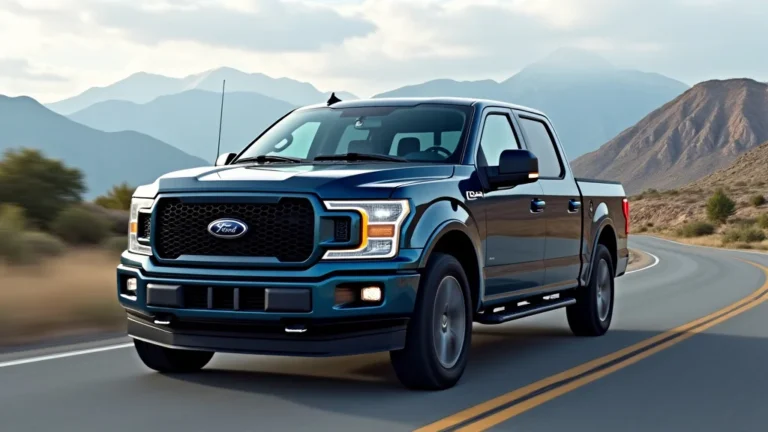
Is F150 Good in Deep Snow? Answering Your Winter Questions
Figuring out if a vehicle like the Ford F150 is a good choice for winter driving and is f150 good in deep snow can be tricky. Many folks wonder about this, especially new drivers or those living where snow is common. You might be unsure about things like ground clearance, tire choices, and the type of four-wheel drive. Don’t worry, we’ll break it down so you know exactly what to look for and what to expect. Get ready to explore how an F150 handles the snow and what makes it a good or not-so-good choice. Let’s see how this truck really performs in winter conditions!
Evaluating the F150’s Capabilities in Snowy Conditions
The F150, a popular pickup truck, boasts many features that can influence its performance when dealing with winter weather and snowy roads. Evaluating its ability to handle snow involves exploring aspects such as its design, the presence of specific driving modes, and how the vehicle’s standard features assist in tough driving conditions. We can consider how these elements come together to influence the truck’s overall performance. This helps people make informed choices about whether the F150 suits their winter driving needs. It is important to know about its engine, suspension, and overall design. These all play a role in its snow performance.
Examining F150’s Four-Wheel Drive (4WD) System
A central feature of the F150’s snow capability is its four-wheel drive (4WD) system. This system transfers power from the engine to all four wheels, which is important for traction. It helps the truck maintain control on slippery surfaces such as ice and snow. The F150 typically comes with a part-time or a full-time 4WD system, which changes how the system works. Learning about these various setups helps you learn how the truck behaves on snowy terrain. Some systems offer different modes that you can switch between depending on the current road conditions.
- Part-Time 4WD: This system demands manual engagement. The driver needs to switch it on when more traction is needed, such as when driving on snow or off-road. It’s often found in base model F150s.
- Automatic 4WD: Some F150 models come with an automatic 4WD system. The system can automatically switch between two-wheel drive and four-wheel drive depending on road conditions. It does this using sensors that detect wheel slippage.
- Full-Time 4WD: More advanced 4WD systems offer a full-time option. This system is always engaged and actively distributes power between the front and rear wheels. This creates continuous traction.
With a part-time system, the front and rear axles are locked together when 4WD is activated. This means the front and rear wheels turn at the same speed. It offers better traction in slippery conditions. However, the system shouldn’t be used on dry pavement. If you do, it could cause the drivetrain to bind and could lead to damage.
This system delivers a simplified experience for the driver. It provides improved traction when needed and automatically adjusts to changing road conditions. It is a good option for drivers who want a hands-off approach. It makes driving easier in unpredictable weather.
Full-time 4WD is ideal for those who frequently drive in winter conditions or on surfaces with changing traction. The driver doesn’t need to manually switch modes. It delivers extra stability and control.
Ground Clearance and Its Impact on Snow Performance
Ground clearance is how much space there is between the lowest point of the truck (like the axles) and the ground. It is an important factor in handling snow. A vehicle with more ground clearance can drive through deeper snow without getting stuck. The F150 generally offers a good amount of ground clearance, which changes depending on the trim level and any modifications. This is important for driving on snowy roads.
- Base Models: The base model F150s have a standard ground clearance suitable for everyday driving. They will handle light to moderate snow conditions without any issues.
- Off-Road Packages (FX4): F150s with the FX4 off-road package come with increased ground clearance. This is due to enhanced suspension systems, such as upgraded shocks and springs. These setups make them ready to drive on rough terrain, including snow.
- Specialty Models (Raptor): High-performance off-road models like the F150 Raptor are designed for the most extreme conditions. They come with the highest ground clearance and have features like long-travel suspension.
These models will still need a cautious approach in deeper snow. The available clearance may be limited.
The FX4 models typically deliver increased snow performance and are better suited for driving in deep snow compared to the base models.
The Raptor is well-equipped to handle the deepest snow. It delivers superior off-road capability. This makes them ideal for drivers in areas that experience heavy snowfalls.
Tires and Their Influence on Winter Driving
The tires you use on your F150 have a big impact on how well it drives in snowy conditions. Choosing the right tires is a key step to improving performance and safety. Standard tires may be suitable for dry roads, but they do not always perform well on snow and ice. Winter tires, also known as snow tires, are specially designed to handle cold and snowy conditions. They deliver enhanced grip and control in the winter.
- All-Season Tires: These are the standard tires that come with many F150s. They provide a balance between handling in all weather conditions. However, they may not offer the best grip on ice and deep snow.
- Winter Tires: These tires are made of a special rubber compound that remains flexible in cold temperatures. They feature a unique tread pattern with many sipes, which are small slits. They improve grip on ice and snow.
- Tire Pressure: It is important to maintain the right tire pressure, especially during winter. Underinflated tires can reduce fuel efficiency and make handling worse. Overinflated tires can reduce grip.
- Tire Tread Depth: Make sure your tires have enough tread depth. The tread removes snow and water. The deeper the tread, the better the grip, especially on snowy surfaces.
All-season tires are a good general choice. But they might not be the best if you live in an area with heavy winter weather.
Winter tires are highly recommended for driving in areas with frequent snowfall. They dramatically improve your vehicle’s stopping and turning performance.
Regularly check and adjust your tire pressure. This helps to make sure you have the best possible performance.
Check your tires frequently. Replace them when they have worn down to the minimum tread depth.
Comparing F150 to Other Trucks in Snow
To fully grasp how the F150 does in snow, it’s beneficial to compare it with other trucks and evaluate their features. This comparison offers an understanding of the strengths and weaknesses of each vehicle when faced with winter driving challenges. Key aspects to compare include 4WD systems, ground clearance, tire options, and available technology features.
Comparing the F150’s 4WD System to Rivals
The 4WD systems in the F150 are similar to those in its rivals. It can be found in a range of configurations. We can compare the 4WD system of the F150 to that of other popular trucks, such as the Chevrolet Silverado and the Ram 1500. This reveals any differences in operation, effectiveness, and technology. They will have similar advantages and disadvantages. These will depend on the system design, features, and how the driver uses them. The 4WD system is an essential part of snow performance.
| Truck Model | 4WD System | Key Features |
|---|---|---|
| Ford F150 | Part-time, Automatic, Full-Time (depending on trim) | Selectable drive modes, electronic locking rear differential (optional) |
| Chevrolet Silverado | Part-time, Automatic | AutoTrac (automatic 4WD), electronic locking rear differential (optional) |
| Ram 1500 | Part-time, Automatic, Full-Time | Active 4WD transfer case, electronic locking rear differential (optional) |
The F150 provides a versatile selection of 4WD systems, matching the setups found in both the Silverado and the Ram 1500. Each model also provides electronic locking rear differentials as an optional feature. This is useful for increasing traction in challenging situations. The Silverado and Ram 1500 have similar 4WD options. They both have a reputation for providing capable and reliable winter performance. These rivals offer excellent handling in snow, but the actual performance varies depending on the specific model, configuration, and driving conditions.
Assessing Ground Clearance Comparisons
Ground clearance greatly impacts a truck’s capacity to navigate through snow. Comparing the F150’s ground clearance to that of its competitors helps illustrate its snow capabilities. Both the Chevrolet Silverado and Ram 1500 provide different ground clearance options depending on the model and any special packages. Let’s compare the base models and off-road packages to see how they perform in winter.
- F150 (Base): Typically has around 8.9 inches of ground clearance.
- Silverado (Base): Commonly provides approximately 8 to 9 inches of ground clearance.
- Ram 1500 (Base): Generally offers around 8.3 to 8.6 inches of ground clearance.
- F150 (FX4): The FX4 package on the F150 provides increased ground clearance, often exceeding 9.5 inches. This leads to better performance in deeper snow.
- Silverado (Z71): The Z71 package on the Silverado also increases ground clearance. The typical ground clearance is around 9.1 inches or more.
- Ram 1500 (Off-Road Package): Ram offers off-road packages that raise the ground clearance, often above 9.5 inches. This helps handling in deeper snow.
This is suitable for light to moderate snow conditions.
It performs similarly to the F150 in light snow, which is an advantage.
The Ram 1500 is close to the F150 and Silverado, with a comparable performance in snow.
The FX4 is well-equipped for deeper snow, providing a significant advantage.
The Z71 improves snow performance, but it may not be as high as the FX4.
Off-road packages on the Ram 1500 provide a competitive performance in snow.
Analyzing Tire and Technology Features
Along with 4WD and ground clearance, tires and technology features are important when evaluating the performance of trucks in winter. All the trucks use similar tire options, from all-season tires to winter tires. The best tire for snow is a winter tire. Technology features can enhance driver safety and control, making the trucks safer in snowy conditions.
- Traction Control: All three trucks come with traction control as a standard feature.
- Stability Control: Stability control systems are standard and help the vehicle maintain control.
- Electronic Locking Differentials: All three trucks offer electronic locking differentials.
- Hill Descent Control: These features help control the truck’s speed when driving downhill on snowy or icy surfaces.
- Advanced Driver-Assistance Systems (ADAS): Many models include ADAS features such as adaptive cruise control and lane-keeping assist. These can improve safety in winter driving.
Traction control prevents wheel spin and enhances stability on slippery surfaces.
They can help prevent skidding and loss of control in snow.
This feature locks the axles to increase traction in challenging situations.
Hill descent control makes it easier and safer to go down steep hills in winter.
These features help drivers stay safe and in control on snowy roads.
Tips for Driving an F150 in Deep Snow
Driving an F150 in deep snow needs a strategic approach. Using the correct techniques and making sure the truck is well-prepared makes driving safer and more effective. You can improve your driving skills and handle snowy conditions easily by following these tips.
Pre-Trip Preparations
Getting your F150 ready before winter driving is crucial. A bit of preparation can make a big difference in how your truck handles snow. Planning your trip can improve safety and ensure a smoother drive. Checking your truck before you leave is an essential part of safe winter driving.
- Inspect Tires: Examine your tires for adequate tread depth. Make sure they are correctly inflated.
- Check Fluids: Top off all fluids like engine oil, coolant, and windshield washer fluid. Make sure they are suitable for winter temperatures.
- Test the Battery: Cold weather can reduce battery performance. Have your battery tested and replace it if necessary.
- Review the Weather: Before driving, check the weather forecast. Check the road conditions to plan your route.
- Pack an Emergency Kit: Keep an emergency kit inside your truck. It should include blankets, a first-aid kit, jumper cables, a flashlight, and extra food and water.
Tires are the main contact point with the road, so make sure they are in good condition.
Use antifreeze to prevent the engine from freezing. Use washer fluid designed to prevent freezing to ensure a clear view.
If your battery is not working correctly, your vehicle might not start in cold weather.
Knowing the conditions helps you choose the best routes and driving times.
This kit will help in case you get stuck or stranded.
Driving Techniques
How you drive in deep snow is important. Certain driving techniques can make a big difference in the truck’s performance. Knowing how to use the truck’s features correctly, and adjusting your driving style, are key to staying safe on snowy roads. Always drive at a safe speed, and allow for a larger following distance.
- Engage 4WD: Activate your four-wheel drive system before you get into deep snow. This helps provide better traction and control.
- Drive Slowly: Reduce your speed. Slow down when driving in snow. Doing so gives you more time to react to any hazards.
- Accelerate and Brake Gently: Avoid sudden movements. Accelerate and brake smoothly to keep control.
- Steer Smoothly: Make smooth steering corrections. This prevents the tires from losing traction and sliding.
- Maintain Distance: Increase your following distance. Give yourself more space to stop safely.
Engage the 4WD system on the F150 using the appropriate settings, depending on the conditions.
Driving too fast leads to less control and greater risk of losing control.
Sudden movements cause wheel spin and loss of control on slippery surfaces.
Sudden steering can cause the truck to slide, making it hard to handle.
Increased stopping distances are typical in snowy conditions.
How to Handle Common Problems
Even with careful preparation and driving skills, you could encounter issues while driving in snow. Knowing how to handle these situations can improve safety and get you moving again. Common problems include getting stuck, sliding, and dealing with reduced visibility. You should know what to do if you encounter any of these problems.
- If You Get Stuck: If your truck gets stuck in the snow, don’t keep accelerating. Try rocking the vehicle. Shift between drive and reverse, and use gentle acceleration. If needed, use a shovel or traction mats.
- Dealing with a Skid: If your truck starts to slide, steer in the direction you want to go. Don’t slam on the brakes. Gently ease off the accelerator.
- Handling Reduced Visibility: If visibility is low due to heavy snowfall, turn on your headlights and fog lights. Reduce your speed and use your windshield wipers.
- Knowing When to Stop: Recognize when it is safer to stop driving. If the snow is too deep or the conditions are too dangerous, find a safe place to stop until the weather clears.
Don’t spin the wheels, as it can dig the truck deeper.
Look where you want to go and steer there to regain control.
Use your headlights so that others can see you. Drive slowly and carefully in poor visibility.
Avoid taking unnecessary risks. It is okay to wait for the conditions to improve.
Frequently Asked Questions
Question: Does the F150 come with winter tires?
Answer: The F150 does not come with winter tires. You’ll need to purchase and install them separately for enhanced performance in snowy conditions.
Question: Can I use 4WD on dry pavement?
Answer: It’s generally not recommended to use part-time 4WD on dry pavement because it can cause mechanical binding and damage to the drivetrain. However, automatic or full-time 4WD systems are designed for use on various road surfaces.
Question: How important is ground clearance when driving in snow?
Answer: Ground clearance is important. Higher ground clearance allows you to drive through deeper snow without getting stuck.
Question: What’s the best way to handle a skid in the F150?
Answer: If you start to skid, steer in the direction you want to go. Avoid slamming on the brakes. Gently ease off the accelerator to regain control.
Question: What should I do if I get stuck in the snow?
Answer: If you get stuck, try rocking the vehicle by shifting between drive and reverse, using gentle acceleration. You can also use a shovel to clear snow or use traction mats to help.
Final Thoughts
Driving a Ford F150 in deep snow requires a blend of knowledge and preparation. This guide explored the truck’s capabilities, from its 4WD systems and ground clearance to the impact of tire selection and driving techniques. The F150, when correctly set up with suitable tires and when operated with careful driving habits, can handle snowy conditions. The use of 4WD systems, combined with suitable tires, offers a significant improvement in traction and control on icy or snow-covered surfaces. But, it is important to remember that safety depends on many things. Always prepare your truck for winter, adapt your driving to the weather, and be ready for unexpected situations. With the right strategies and a cautious approach, you can enhance your safety. Be prepared to enjoy a safe and confident winter driving experience.