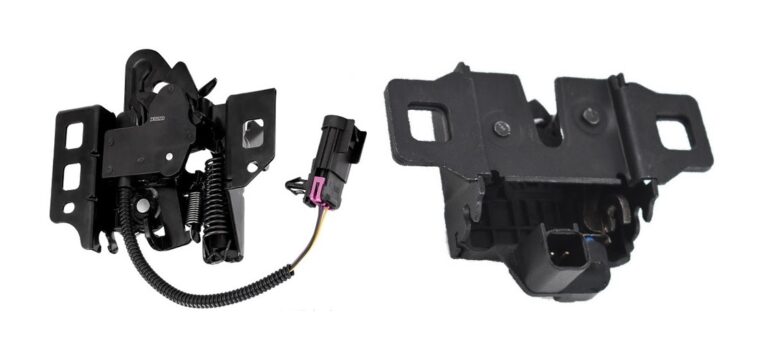
Where Is the Hood Latch Sensor on Chevy Cruze? Location Guide
If your Chevy Cruze keeps showing a “Hood Open” or “Hood Ajar” warning even though the hood is fully closed, the hood latch sensor is one of the first components to check. The sensor tells the vehicle’s electronics whether the hood is open or securely latched.
On most Chevrolet Cruze models, you will not find a separate hood sensor mounted somewhere else in the engine compartment. The hood-ajar switch is associated with—and on many Cruze models integrated into—the hood latch assembly at the front center of the engine bay.
That means finding the sensor is usually as simple as finding the hood latch. Open the hood, look toward the center of the radiator support where the hood striker locks into place, and locate the electrical connector attached to the latch assembly.
The exact latch design varies between the first-generation Cruze and the redesigned second-generation Cruze, so knowing your model year is helpful. This guide explains where is the hood latch sensor on Chevy Cruze, how to recognize it, how it works, common failure symptoms, and what to inspect before replacing parts.
Where Is the Hood Latch Sensor on Chevy Cruze?
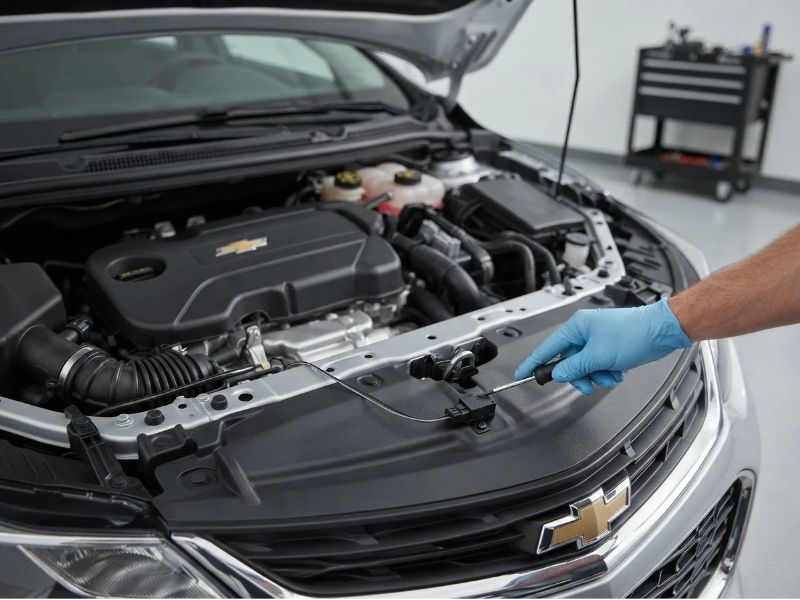
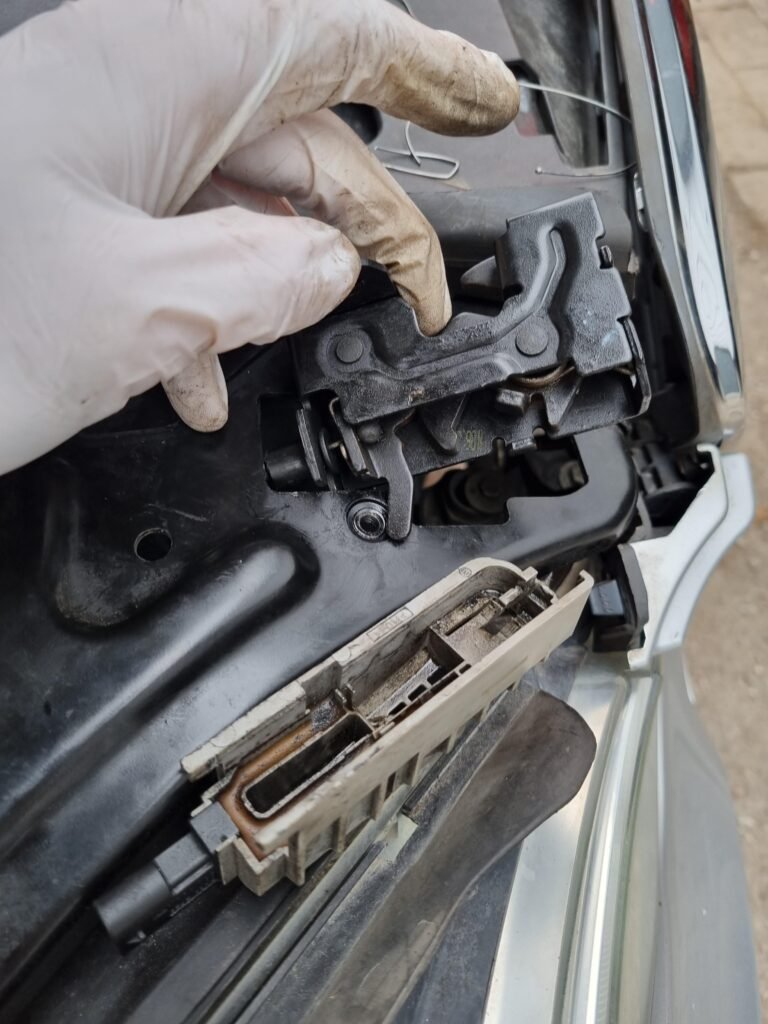
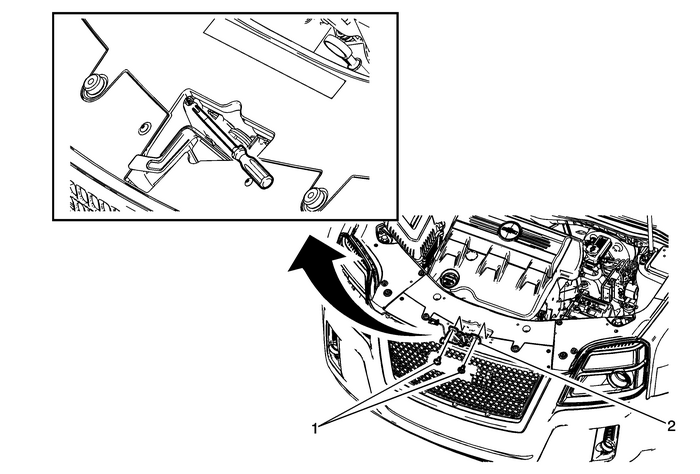
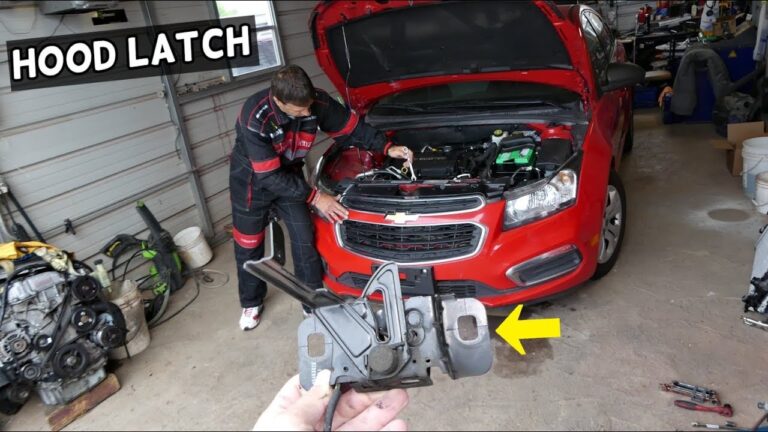
The hood latch sensor on a Chevy Cruze is located at the front center of the engine compartment, as part of or directly attached to the hood latch assembly. The latch is mounted on the upper radiator support behind the front grille area.
When you lower the hood, a metal striker on the underside of the hood enters this latch. As the latch locks, the hood-ajar switch changes state and tells the Body Control Module (BCM) that the hood is closed.
To find it:
- Park the Cruze on a level surface and turn the engine off.
- Open the hood.
- Stand directly in front of the vehicle.
- Look down at the center of the front radiator support.
- Find the metal mechanism that catches the hood striker.
- Look for a small electrical connector and wiring attached to the latch.
That electrical connection is a strong indication that you have located the hood latch assembly containing the hood-position switch.
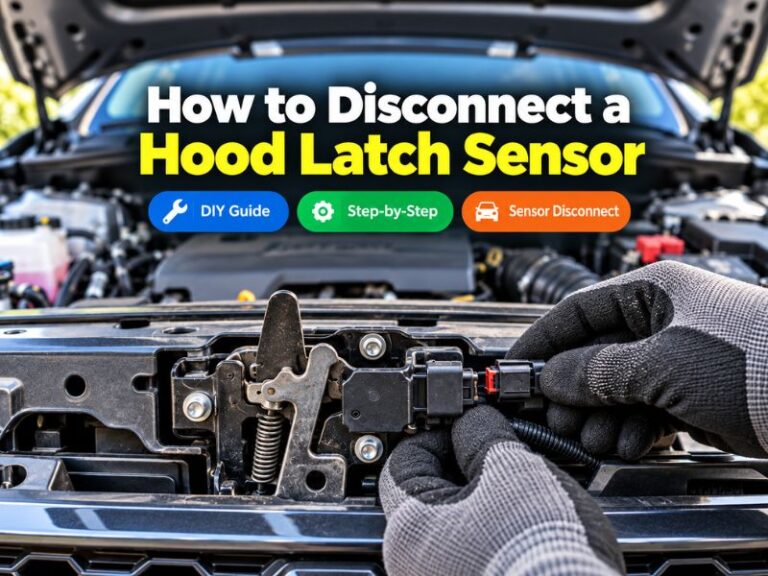
The sensor may not look like a traditional standalone sensor because it can be built into the latch rather than mounted separately.
Hood Latch Sensor Location by Chevy Cruze Generation
Chevrolet produced two main generations of the Cruze in the United States, and their hood-release systems are not identical.
2011–2015 Chevy Cruze
On the first-generation 2011–2015 Chevrolet Cruze, the hood-ajar switch is integrated into the hood latch assembly.
The latch is positioned near the center of the upper radiator support at the front of the vehicle.
You should see:
- The metal hood latch
- Hood release cable
- Electrical connector for the hood switch
- Wiring leading away from the latch
If the switch itself fails, replacement commonly involves replacing the latch assembly rather than simply unscrewing a separate sensor.
2016 Chevy Cruze Limited
The 2016 Cruze Limited is essentially a continuation of the earlier first-generation Cruze design.
Its hood latch sensor arrangement is therefore similar to the 2011–2015 Cruze. The hood-position switch is associated with the front-center hood latch assembly.
Be careful when ordering parts for a 2016 Cruze because the 2016 Cruze Limited and redesigned 2016 Cruze are different vehicles and can use different latch assemblies.
2016–2019 Chevy Cruze
The redesigned second-generation Cruze also uses a hood latch assembly mounted around the front-center radiator support area.
An electrical connector is attached to the latch assembly for hood-status monitoring.
One noticeable difference is the hood-release design. On many second-generation Cruze models, the interior hood release handle is pulled twice to release the hood completely rather than using the traditional secondary release lever under the front edge of the hood.
The physical design may be different, but when looking for the hood-position sensor, the main place to inspect remains the hood latch assembly itself.
What Does the Chevy Cruze Hood Latch Sensor Look Like?
Do not expect to see a large device labeled “hood sensor.”
The actual switch is generally small and incorporated into the latch mechanism. Depending on the model year and latch design, much of the sensor may be enclosed within the latch assembly.
The easiest feature to identify is usually the electrical connector.
A purely mechanical hood latch would only need the latch mechanism and release cable. The wiring connected to the Cruze latch allows the vehicle to determine whether the hood is open or closed.
If you are looking at the center latch and see an electrical plug entering it, you have found the hood-status sensing portion of the system.
How Does the Chevy Cruze Hood Sensor Work?
The hood sensor is essentially a position switch.
Closing the hood moves the latch mechanism into its locked position. That movement changes the electrical state of the hood-ajar switch.
The signal is sent to the Body Control Module, which uses that information to determine whether the hood is securely closed.
The hood-status signal can affect several vehicle functions.
For example, the system may use hood position for:
- Hood-open warnings
- Remote-start authorization
- Vehicle security functions
- Body-control diagnostics
Remote start is particularly important. The vehicle should not automatically start the engine while someone may be working under the hood. For that reason, a Cruze that believes its hood is open may refuse to remote start.
Symptoms of a Bad Chevy Cruze Hood Latch Sensor
A malfunctioning hood sensor often causes electrical symptoms rather than preventing the hood from physically closing.
Hood Open Warning With the Hood Closed
One of the clearest symptoms is a Hood Open or Hood Ajar message that remains displayed after you firmly close the hood.
Before assuming the sensor is defective, make sure the hood is actually fully latched.
A slightly misaligned or partially engaged latch can produce the same warning.
Remote Start Stops Working
A false hood-open signal can prevent remote start from operating.
If remote start suddenly stops working at the same time a hood warning appears, inspect the hood latch, sensor circuit, connector, and wiring.
The vehicle may simply be blocking remote start because the BCM believes the hood is open.
Warning Comes and Goes
An intermittent hood warning can result from:
- A worn switch
- Loose electrical connection
- Dirty connector
- Damaged wiring
- Corrosion
- Latch movement or misalignment
If the warning changes when you press down gently on the closed hood, latch adjustment or mechanical wear may also be involved.
Alarm or Security Problems
Because hood position can be part of the vehicle security system, an incorrect hood signal may sometimes contribute to security-system behavior.
However, do not automatically blame every alarm problem on the hood switch. Door switches, wiring, battery voltage, modules, and other components can cause similar symptoms.
How to Locate the Sensor Yourself
You normally do not need to remove major engine components just to locate the sensor.
Step 1: Open the Hood
Use the normal hood release procedure for your Cruze model.
Secure the hood properly before placing your hands near the latch.
Step 2: Find the Hood Striker
Look at the underside of the hood around the center.
You should see a metal striker that enters the latch when the hood closes.
Follow its position straight down toward the vehicle.
Step 3: Find the Latch Assembly
Directly below the striker is the hood latch mechanism mounted to the front structural support.
This is the component that physically holds the hood closed.
Step 4: Find the Electrical Connector
Inspect the latch for a wiring harness and plug.
The hood-ajar switch uses this electrical connection to communicate hood position to the vehicle.
Depending on your Cruze model, the actual microswitch may not be externally visible because it is incorporated into the latch.
Is the Hood Latch Sensor Separate From the Hood Latch?
On many Chevy Cruze applications, the hood-ajar switch is integrated into the hood latch assembly rather than being a separate easily replaceable sensor.
This distinction matters when you shop for replacement parts.
You may search for a:
- Hood latch
- Hood latch assembly
- Hood lock
- Hood latch with switch
- Hood-ajar switch
and find that the replacement component is sold as a complete latch assembly.
Always verify compatibility using the exact model year, trim, body style, and vehicle identification information before buying a replacement.
This is especially important for 2016 models because a 2016 Cruze Limited is not the same design as the redesigned 2016 Cruze.
What Should You Check Before Replacing the Hood Latch?
A hood-open warning does not automatically mean the internal switch has failed.
Several simpler problems can produce the same symptom.
Check That the Hood Is Fully Latched
Close the hood normally and verify that both sides sit correctly.
Never assume the hood is secure simply because it looks closed.
After closing it, gently pull upward at the front edge without operating the release. The hood should remain securely latched.
Inspect the Latch for Dirt
The latch is exposed to water, road dirt, dust, and debris.
Heavy contamination can interfere with smooth latch movement.
Inspect the mechanism and make sure it moves freely.
Inspect the Electrical Connector
Look for:
- Loose connector
- Broken locking tab
- Bent terminals
- Moisture
- Corrosion
- Damaged wiring insulation
- Wires pulled tight near the latch
A wiring problem can make a good sensor appear defective.
Check Latch Alignment
If the hood must be slammed unusually hard before the warning disappears, the latch or striker could be out of adjustment.
A misaligned hood may not move the latch far enough for the switch to consistently register the closed position.
Scan the Vehicle When Necessary
A capable diagnostic scan tool can help a technician inspect BCM data and determine whether the computer is seeing the hood as open or closed.
This can be especially useful when the problem is intermittent.
Can You Test the Chevy Cruze Hood Latch Sensor?
Yes. The hood-position circuit can be tested, although the best method depends on the model year and available tools.
A technician may check the hood-open/closed status with a scan tool while manually operating the latch.
Electrical testing may also be possible by checking the switch circuit and wiring according to the correct service information for that model.
Avoid randomly jumping terminals in the connector. The switch communicates with vehicle electronics, and connecting the wrong wires can cause additional electrical problems.
If you use a multimeter, obtain the correct wiring diagram and terminal information for your specific Cruze first.
Can You Clean the Hood Latch Sensor?
You can clean dirt around the hood latch, but cleaning cannot repair an electrically failed internal switch.
If debris is preventing the latch from moving properly, careful cleaning may help.
The mechanical pivot points may also benefit from an appropriate automotive latch lubricant after cleaning.
However, avoid flooding the electrical connector or internal switch area with unsuitable chemicals.
If the switch inside the latch has worn out or developed an internal electrical fault, the normal repair is replacement of the affected latch assembly.
Can a Bad Hood Latch Sensor Prevent a Chevy Cruze From Starting?
A bad hood latch sensor generally does not prevent normal key or push-button starting simply because the system thinks the hood is open.
However, it can prevent remote start from operating.
Remote-start systems use hood status as a safety input. If the vehicle detects—or falsely detects—that the hood is open, remote starting may be disabled.
If your Cruze will not start normally from inside the vehicle, investigate the battery, starter system, ignition system, immobilizer, transmission range input, and other possible causes rather than assuming the hood sensor is responsible.
Can You Drive With a Bad Hood Latch Sensor?
A failed electrical sensor is different from a failed mechanical hood latch.
If the hood is physically securely latched but the switch is incorrectly reporting that it is open, the problem may primarily affect warnings, remote start, or related body-control functions.
If the hood itself will not latch securely, do not drive the vehicle.
A hood that releases while driving can rise into the windshield area and block the driver’s view.
Always separate these two problems:
Sensor problem: The hood is mechanically secure, but the vehicle reports the wrong status.
Latch problem: The hood cannot be confirmed as mechanically locked.
A mechanical latch problem should be repaired before driving.
Hood Sensor vs. Hood Release Cable
The hood latch sensor and hood release cable perform completely different jobs.
The release cable transfers movement from the interior hood-release handle to the latch so you can open the hood.
The hood sensor is electrical. It reports whether the latch indicates that the hood is open or closed.
A damaged release cable may prevent the hood from opening even when the sensor works correctly.
A failed hood sensor can cause a hood-open warning even when the release cable and mechanical latch work normally.
When Should the Hood Latch Assembly Be Replaced?
Replacement may be appropriate when testing shows that the sensor inside the latch no longer changes state correctly.
You may also need a replacement if the latch has:
- Significant corrosion
- Mechanical damage
- Excessive wear
- Broken electrical connections
- Internal switch failure
- Difficulty engaging or releasing properly
Do not replace the latch solely because a dashboard warning appears without first checking the connector, wiring, hood alignment, and physical latch operation.
FAQs About Where Is the Hood Latch Sensor on Chevy Cruze
Is the Chevy Cruze hood sensor inside the latch?
On many Chevrolet Cruze models, yes. The hood-ajar switch is integrated into or forms part of the hood latch assembly at the front center of the vehicle rather than being a separate sensor mounted elsewhere under the hood.
Where is the hood switch on a 2011 Chevy Cruze?
On a 2011 Chevy Cruze, the hood-ajar switch is associated with the hood latch assembly located near the front center of the radiator support. Look for the electrical connector attached to the latch.
Where is the hood latch sensor on a 2014 Chevy Cruze?
The 2014 Cruze uses the first-generation arrangement. Look at the center hood latch where the hood striker locks into the car. The hood-position switch is integrated with the latch assembly.
Where is the hood latch sensor on a 2016 Chevy Cruze?
It depends on which 2016 Cruze you have. The 2016 Cruze Limited continues the older first-generation design, while the redesigned 2016 Cruze uses the second-generation arrangement.
In both cases, the hood-status sensing system is associated with the latch at the front of the vehicle, but the latch assembly and release mechanism differ. Verify which model you own before ordering parts.
Why does my Chevy Cruze say the hood is open when it is closed?
Possible causes include a faulty hood-ajar switch, damaged wiring, a loose connector, corrosion, a dirty or sticking latch, or latch misalignment.
First verify that the hood is mechanically secure. Then inspect the latch and electrical connection.
Can a bad hood latch sensor disable remote start?
Yes. A false hood-open signal can cause the vehicle to disable remote start as a safety measure because the system should not start the engine remotely when the hood is open.
Do I need to replace the entire latch if the sensor fails?
On Cruze versions where the switch is integrated into the latch and not serviced separately, replacing the complete hood latch assembly is usually the practical repair.
Check the parts listing for your exact year and model before buying anything.
How do I know whether the latch or sensor is bad?
If the hood physically locks securely but the dashboard still reports it open, suspect the switch, wiring, connector, or latch adjustment.
If the hood will not securely lock into place, there is a mechanical latch, striker, cable, alignment, or related hardware problem that should be addressed before driving.
Conclusion
If you are trying to find where is the hood latch sensor on Chevy Cruze, start at the hood latch itself. On most Cruze models, the hood-ajar switch is built into or directly associated with the latch assembly at the front center of the radiator support, and an electrical connector attached to the latch carries the hood-position signal to the vehicle.
A persistent Hood Open warning can result from the internal switch, connector, wiring, dirt, corrosion, or latch misalignment. Before replacing the latch, verify that the hood is securely closing and inspect the electrical connection. Most importantly, if the mechanical latch cannot hold the hood securely closed, repair that problem before driving the vehicle.