How to Fix Hood Latch Sensor on Volvo XC60: DIY Guide
A faulty hood latch sensor on a Volvo XC60 can cause a persistent hood open warning, alarm problems, or a dashboard message even when the hood is fully closed. In many cases, the problem is not the hood itself. The issue is usually a dirty or sticking latch, a misaligned hood striker, damaged wiring, or a failed microswitch inside the hood latch assembly.
Learning how to fix hood latch sensor on Volvo XC60 starts with determining whether the hood is actually failing to latch or whether the vehicle is simply receiving the wrong electrical signal.
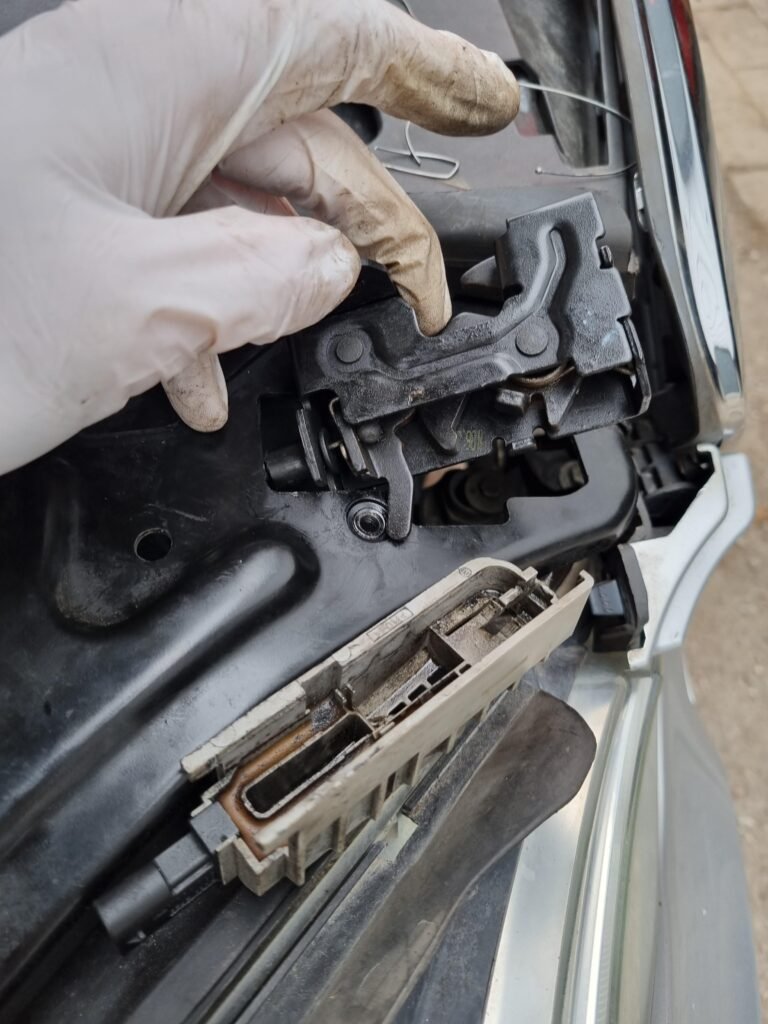
Depending on the XC60 model year, the hood-position switch may be built directly into the latch rather than installed as a separate replaceable sensor. That means some XC60s require replacement of the complete hood latch assembly if the internal switch fails.
This guide explains how the system works, what commonly causes the warning, how to diagnose the problem, and when the latch may need to be replaced.
How to Fix Hood Latch Sensor on Volvo XC60
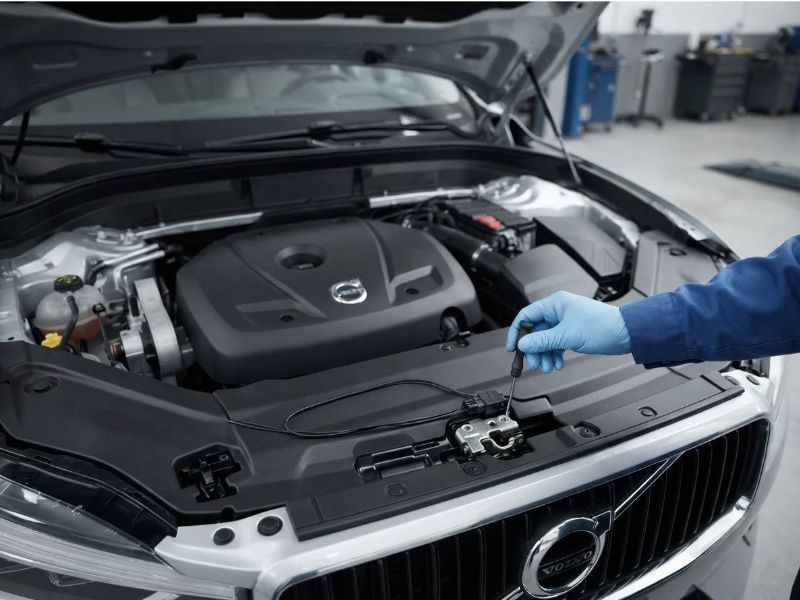
The simplest way to fix a Volvo XC60 hood latch sensor problem is to first clean and inspect the hood latch, verify that the hood closes completely, check the electrical connector and wiring, and test whether the hood-open warning changes when the latch is manually operated.
If the warning remains even though the latch and wiring are working correctly, the hood latch microswitch may have failed. On many XC60 models, replacing the complete hood latch assembly is the practical repair.
The basic troubleshooting process is:
- Confirm that the hood is fully closing.
- Inspect the latch for dirt, corrosion, or mechanical sticking.
- Clean and lubricate the latch.
- Check hood alignment and the striker position.
- Inspect the latch electrical connector.
- Check wiring for damage or corrosion.
- Test the latch switch operation.
- Replace the latch assembly if the internal sensor has failed.
- Verify that the warning disappears after the repair.
Do not replace parts immediately. A latch that is simply dirty or slightly misaligned can sometimes produce the same symptoms as a failed sensor.
What Does the Volvo XC60 Hood Latch Sensor Do?
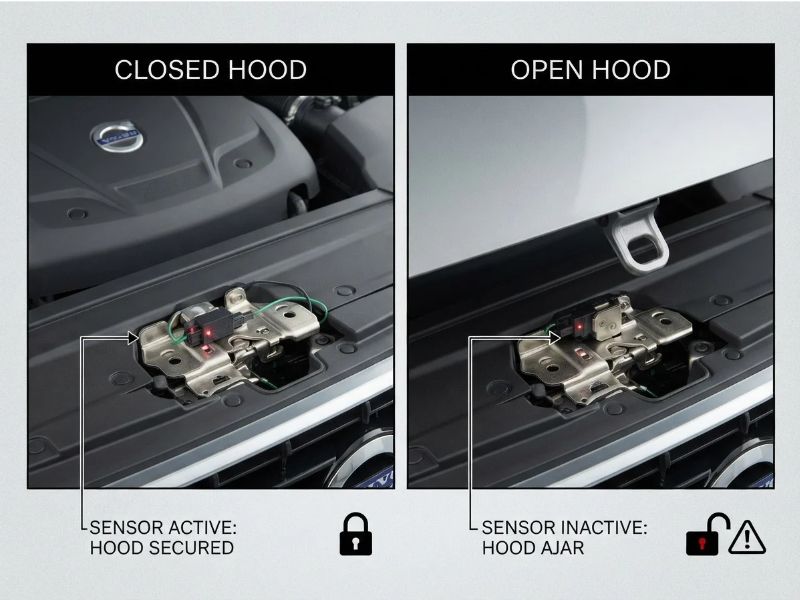
The hood latch sensor tells the vehicle’s electronic control system whether the hood is open or closed.
A small electrical switch, often called a microswitch, is typically activated when the hood latch reaches its fully closed position.
When the hood closes correctly, the switch sends the expected signal to the vehicle. When the hood opens, the switch changes state and the vehicle recognizes that the hood is no longer secured.
The signal may be used for several functions, including:
- Hood-open warnings on the instrument display
- Vehicle alarm monitoring
- Security-system operation
- Certain locking or convenience functions
If the switch sticks or fails electrically, the XC60 may think the hood is open even though it is physically latched.
Common Symptoms of a Bad Volvo XC60 Hood Latch Sensor
The most obvious symptom is a hood-open warning that refuses to disappear after the hood has been closed.
Other symptoms may include:
- Hood-open message on the dashboard
- Hood warning appearing intermittently while driving
- Vehicle alarm activating unexpectedly
- Warning disappearing when you press down on the hood
- Warning changing when the latch is moved manually
- Hood requiring excessive force to close
- Corrosion or moisture around the latch connector
- Warning appearing after washing the vehicle or driving in heavy rain
A warning that changes when you push down on the front edge of the hood often points toward latch adjustment, striker alignment, or incomplete latch engagement rather than an electronic failure.
Why Does the Volvo XC60 Say the Hood Is Open When It Is Closed?
Several different problems can make the XC60 report that the hood is open.
Dirty or Sticking Hood Latch
Road grime, old grease, dust, and corrosion can prevent the latch mechanism from moving through its full range.
The hood may appear closed, but the internal switch may not reach the position required to register the hood as fully latched.
This is one of the easiest problems to check before replacing anything.
Failed Microswitch Inside the Latch
The internal hood-position switch can wear out.
If the mechanical latch still works normally but the vehicle continuously reports that the hood is open, the switch inside the latch may no longer be changing electrical state.
On XC60 versions where the switch is integrated into the latch, replacing the complete latch assembly may be necessary.
Hood Striker Misalignment
The hood striker is the metal loop or pin that enters the latch when the hood closes.
If the striker is slightly out of alignment, the latch may catch without moving far enough to activate the sensor properly.
Misalignment may occur after:
- Front-end body repairs
- Hood adjustment
- Minor collision damage
- Latch replacement
- Repeated forceful hood closing
Damaged Wiring
The latch sensor relies on wiring between the latch and the vehicle’s electrical system.
A broken wire, damaged insulation, loose terminal, or corroded connector can interrupt the signal.
Wiring damage should be considered especially when the warning is intermittent.
Moisture or Connector Corrosion
The hood latch sits at the front of the vehicle, where it can be exposed to water, road salt, and dirt.
Moisture can enter the connector or damage the terminals over time.
Corrosion increases electrical resistance and can create an unreliable sensor signal.
Start by Checking Whether the Hood Is Actually Latched
Before diagnosing the sensor, confirm that the mechanical latch is working properly.
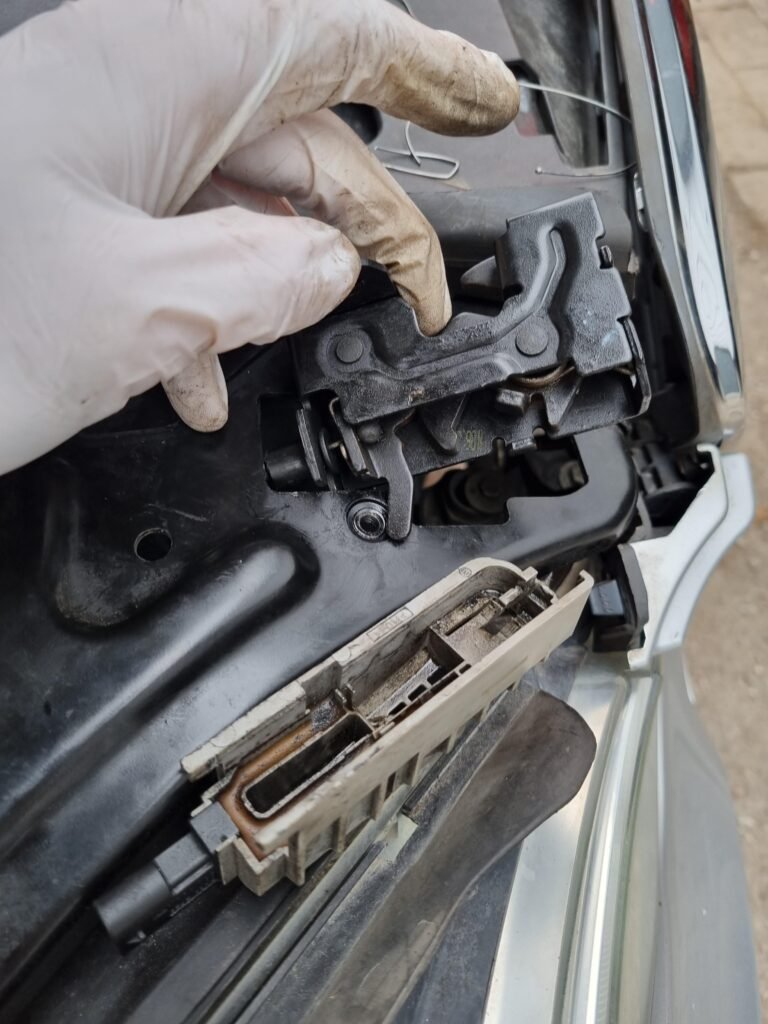
Open the hood and inspect the latch assembly.
Look for:
- Heavy dirt
- Rust
- Bent components
- Damaged springs
- Loose mounting bolts
- A striker that does not line up with the latch
- Excessive old grease mixed with dirt
Close the hood normally.
The hood should sit evenly with the surrounding body panels and should not lift when gently pulled upward.
If the hood is not securely latched, repair the mechanical problem before troubleshooting the sensor.
A hood that can open while driving is a serious safety problem.
Clean the Volvo XC60 Hood Latch
Cleaning the latch is a good first repair because contamination can keep the latch mechanism from reaching its fully closed position.
With the hood open, remove loose dirt around the latch using a brush or compressed air if available.
Apply an appropriate automotive cleaner to the moving parts of the latch. Avoid soaking electrical connectors unnecessarily.
Move the latch mechanism carefully so the cleaner can loosen old grease and debris.
After the latch is clean and dry, apply a small amount of suitable latch lubricant or light automotive grease to the mechanical pivot points.
Do not pack the latch with excessive grease. Thick grease can collect dirt and eventually make the mechanism sticky again.
Close and reopen the hood several times, then check whether the warning disappears.
Test the Latch Mechanism Manually
You can often learn a lot about the problem by manually moving the latch while the hood is open.
Use a suitable screwdriver to carefully simulate the striker entering the latch.
Push the latch mechanism into its closed position.
Watch the instrument display or have another person observe whether the hood-open warning changes.
If the warning disappears when the latch is manually closed, the electrical sensor may be working correctly.
The problem may instead involve:
- Hood alignment
- Striker position
- Latch mounting position
- Hood height adjustment
If the warning remains even with the latch fully closed, investigate the electrical switch and wiring.
Before closing the hood again, make sure to release the latch back to its open position using the hood release mechanism. Never slam the hood onto a latch that is already manually locked.
Check Hood and Striker Alignment
A correctly adjusted hood should push the latch far enough to completely engage both the mechanical lock and sensor switch.
Look at the striker and latch from above.
The striker should enter near the center of the latch without rubbing heavily against one side.
You can often see wear marks that show whether the striker is entering off-center.
Some vehicles also have adjustable rubber hood stops. If these stops are positioned too high, they can prevent the hood from pressing fully into the latch.
Small alignment changes can make a significant difference.
Do not make large adjustments without marking the original position first.
If the hood has recently been repaired or replaced, professional alignment may be the safer option.
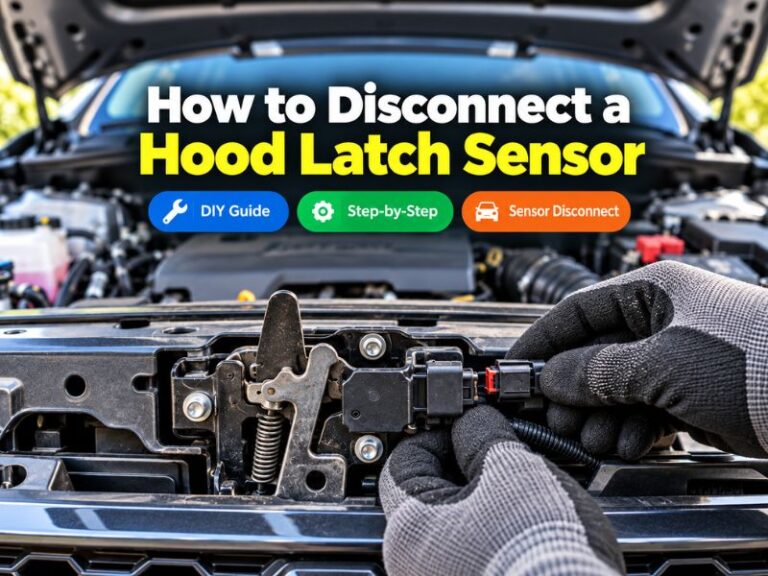
Inspect the Hood Latch Electrical Connector
Locate the electrical connector attached to the hood latch assembly.
The exact connector design and wire count can vary depending on XC60 model year and equipment.
With the ignition off, inspect the connector carefully.
Look for:
- Loose connection
- Broken locking tab
- Bent terminals
- Green or white corrosion
- Moisture
- Damaged insulation
- Wires pulled tightly near the connector
Disconnect the plug only if you can do so without damaging the locking tab.
If you find minor corrosion, use a proper electrical contact cleaner designed for automotive connectors.
Allow the connector to dry completely before reconnecting it.
Do not apply ordinary penetrating oil inside electrical connectors.
Check the Wiring Near the Latch
Follow the hood latch wiring as far as you can easily access it.
Pay particular attention to places where the harness:
- Bends sharply
- Passes near metal edges
- Is secured with clips
- Has previously been repaired
- Can be exposed to water
Gently move the harness while watching the hood-warning display.
If the warning suddenly changes, you may have a damaged wire or poor electrical connection.
Avoid piercing wire insulation unnecessarily during diagnosis. Pierced insulation can allow moisture into the conductor and cause corrosion later.
How to Test the Volvo XC60 Hood Latch Sensor
Electrical testing can help distinguish between a failed switch and damaged wiring.
A digital multimeter is commonly used for this test.
The exact testing method depends on the model year and connector configuration, so a Volvo wiring diagram is useful.
In a basic switch circuit, you may be able to disconnect the latch connector and check for continuity across the switch terminals.
The electrical state should change when the latch moves between open and closed positions.
For example, a functioning switch may show continuity in one position and an open circuit in the other.
The important point is not which state occurs first. The important point is that the switch should change state consistently as the latch operates.
If there is no change, the internal microswitch may be defective.
Do not apply battery voltage directly to unknown hood-latch terminals. Some circuits communicate with electronic modules and can be damaged by incorrect testing.
Can You Bypass the Volvo XC60 Hood Latch Sensor?
Although it may be technically possible to manipulate certain switch circuits, permanently bypassing the hood latch sensor is generally not the best repair.
The sensor may be part of the vehicle’s security and alarm system.
Bypassing it can create unexpected problems, including incorrect hood status or reduced alarm functionality.
Repair the connector, wiring, alignment, or failed latch rather than permanently defeating the sensor.
A temporary diagnostic jumper should only be used when the circuit design is known and the proper wiring information is available.
When Should You Replace the Hood Latch?
Replacement is reasonable when the latch is mechanically damaged or when the integrated switch has failed.
Consider replacing the latch assembly if:
- Cleaning does not fix the warning
- The latch sticks after lubrication
- The internal switch fails electrical testing
- The latch is heavily corroded
- The electrical connector on the latch is damaged
- The hood does not latch consistently
- The warning remains despite correct alignment and good wiring
Because Volvo changed components across XC60 generations and model years, confirm the correct replacement part using the vehicle identification number before ordering a latch.
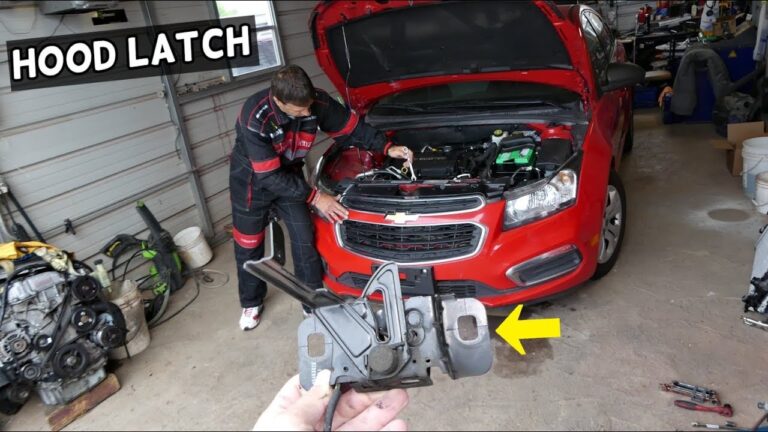
How to Replace a Volvo XC60 Hood Latch Assembly
The exact procedure varies by model year, but the general process is similar.
1. Open the Hood
Park the vehicle on a level surface, switch off the ignition, and make sure the hood is securely supported.
2. Photograph the Original Latch Position
Before loosening anything, take a picture or mark around the latch mounting points.
This gives you a reference for alignment during reassembly.
3. Remove Necessary Trim
Some XC60 models may have plastic trim or covers that limit access to the latch mounting bolts and connector.
Remove only what is necessary to reach the assembly.
4. Disconnect the Electrical Connector
Release the locking tab carefully and unplug the latch connector.
Do not pull directly on the wires.
5. Disconnect the Hood Release Cable
Depending on the latch design, you may need to release the mechanical hood-release cable from the latch.
Observe its routing before removal.
6. Remove the Latch Bolts
Support the latch while removing its mounting fasteners.
Do not allow the latch to twist or pull against the cable.
7. Install the Replacement Latch
Position the new latch using the original marks as a guide.
Reconnect the hood-release cable and electrical connector.
8. Test Before Fully Closing the Hood
Operate the latch manually and verify that the release cable works.
Make sure the latch returns to the open position.
9. Close the Hood Carefully
Lower the hood slowly at first to confirm that the striker aligns with the latch.
Do not immediately slam the hood if the replacement latch position has changed.
10. Verify the Warning
Start the vehicle or switch the ignition to the appropriate mode and verify that the hood-open message is gone.
Also confirm that the hood opens normally from the interior release handle.
What If a New Hood Latch Does Not Fix the Warning?
A new latch does not guarantee that the problem is solved.
If the warning remains after replacing the latch, possible causes include:
- Broken wiring
- Poor ground or circuit connection
- Corroded connector terminals
- Incorrect latch part
- Hood alignment problem
- Fault in another part of the hood-status circuit
- Control-module or software-related issue
At that point, diagnosis using a Volvo-compatible scan tool can be helpful.
A capable diagnostic scanner may allow a technician to view live data showing whether the vehicle believes the hood switch is open or closed.
If the physical switch changes correctly but the electronic module continues to report the wrong status, circuit testing may be required.
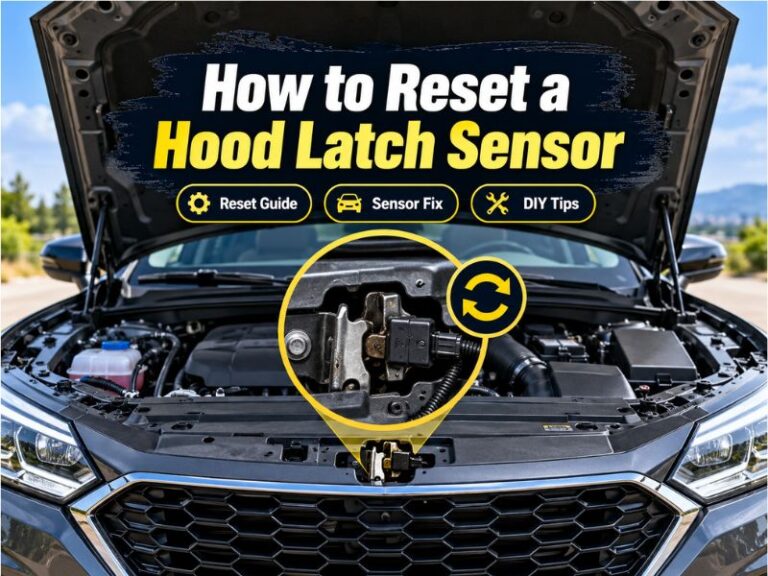
Does the Hood Latch Sensor Need Calibration?
A simple mechanical hood latch switch normally does not require a traditional calibration procedure after replacement.
However, XC60 electrical architecture varies by generation and model year.
If the vehicle still reports an incorrect hood status after proper installation, scan-tool diagnosis may be necessary.
Do not assume the vehicle simply needs a reset if the warning remains. Confirm that the latch switch signal is actually reaching the vehicle electronics.
Can Disconnecting the Battery Reset the Hood Latch Warning?
Disconnecting the battery may temporarily reset some electronic conditions, but it will not repair a defective hood latch sensor, damaged wire, or misaligned latch.
If the switch continues sending an incorrect signal, the warning will normally return.
Battery disconnection can also affect stored settings and electrical systems, so it should not be used as the first troubleshooting method.
Fix the underlying cause instead.
Is It Safe to Drive With a Hood Latch Sensor Warning?
If the hood is mechanically secure and only the sensor is faulty, the vehicle may still be physically drivable.
However, you should confirm that the hood is genuinely latched before driving.
Never assume the warning is only electrical.
Pull gently upward on the front edge of the hood after closing it. The hood should remain firmly locked.
Do not drive if:
- The hood does not latch securely
- The latch releases unexpectedly
- The hood moves excessively
- The secondary safety catch is damaged
- The latch or striker is visibly broken
A hood opening at highway speed can block the driver’s view and cause a serious accident.
Common Mistakes When Repairing a Volvo XC60 Hood Latch Sensor
One common mistake is replacing the latch before checking alignment and contamination.
Another is adjusting the hood aggressively when the actual problem is electrical.
Avoid these common errors:
- Slamming the hood repeatedly to clear the warning
- Spraying excessive lubricant into the electrical connector
- Bypassing the switch permanently
- Ordering a latch without checking model-year compatibility
- Closing the hood before confirming the replacement latch is properly aligned
- Ignoring damaged wiring near the connector
- Assuming every hood-open warning means the sensor itself has failed
Systematic diagnosis is usually faster and cheaper than replacing parts at random.
FAQs About how to fix hood latch sensor on volvo xc60
Why does my Volvo XC60 keep saying the hood is open?
A Volvo XC60 may continue displaying a hood-open warning because the latch is dirty, the hood is misaligned, the internal microswitch has failed, or the latch wiring or connector is damaged.
Start by confirming that the hood is fully latched and then inspect the latch and electrical connection.
Is the Volvo XC60 hood sensor separate from the latch?
On many XC60 configurations, the hood-position switch is integrated into the latch assembly.
That means the sensor may not be available as a separate serviceable part. The complete latch may need to be replaced if the internal switch fails.
The exact design depends on the vehicle’s model year and equipment.
Can I clean the hood latch sensor?
You can clean the mechanical latch and the electrical connector, but the internal microswitch itself may be sealed inside the latch.
Cleaning dirt and old grease from the mechanism can help if the latch is not moving far enough to activate the switch.
Electrical contact cleaner can also be used on accessible connector terminals when appropriate.
Why does the hood warning disappear when I press down on the hood?
If pressing down on the hood makes the warning disappear, the latch may not be reaching its fully closed position.
Possible causes include a misaligned striker, latch position, hood adjustment, or rubber hood stops that are set too high.
This symptom often points more toward mechanical adjustment than a completely failed sensor.
Can a bad hood latch sensor trigger the Volvo alarm?
Yes. If the security system receives a signal indicating that the hood has opened, a faulty or intermittent hood switch can contribute to unwanted alarm activation.
Other alarm-system faults can cause similar symptoms, so the hood switch should be confirmed before replacing parts.
How do I know if the hood latch switch itself is bad?
If the hood is aligned correctly, the latch is clean and fully closing, and the wiring is intact, test whether the switch changes electrical state as the latch opens and closes.
A switch that does not change state consistently may have failed.
A diagnostic scan tool that displays hood-switch live data can provide additional confirmation.
Will replacing the hood latch clear the warning immediately?
If the faulty latch switch was the actual cause, the warning will often disappear once the new latch is installed and the vehicle recognizes the correct hood-closed signal.
If the warning remains, inspect the wiring, connector, alignment, and electronic fault codes.
Can I replace a Volvo XC60 hood latch myself?
A mechanically experienced DIYer may be able to replace the latch using basic hand tools, but careful alignment is important.
If the hood will not latch securely after replacement, do not drive the vehicle until the adjustment is corrected.
Electrical diagnosis may also require a multimeter, wiring information, or a Volvo-compatible scan tool.
Conclusion
The best way to approach how to fix hood latch sensor on Volvo XC60 is to diagnose the mechanical and electrical sides of the system before replacing parts. Start by confirming that the hood closes securely, clean and lubricate the latch, check striker alignment, and inspect the connector and wiring.
If the latch operates normally but the hood status never changes, the integrated hood latch microswitch may have failed. On many XC60 models, replacing the complete latch assembly is the practical solution.
After any repair, confirm both that the dashboard warning is gone and that the hood is mechanically secure. If the warning remains despite a known-good latch and wiring, a Volvo-compatible diagnostic scan is the next logical step.