How to Open Hood Without Release Cable: Safe Methods Explained
A broken or disconnected hood release cable can leave the hood completely stuck, even when the latch itself still works. If you need access to the battery, engine oil, coolant, or another under-hood component, the first challenge is getting the latch to release without damaging the grille, radiator, or hood.
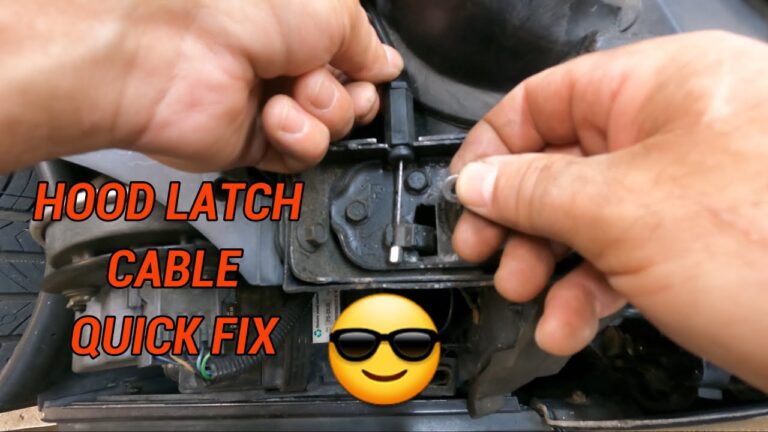
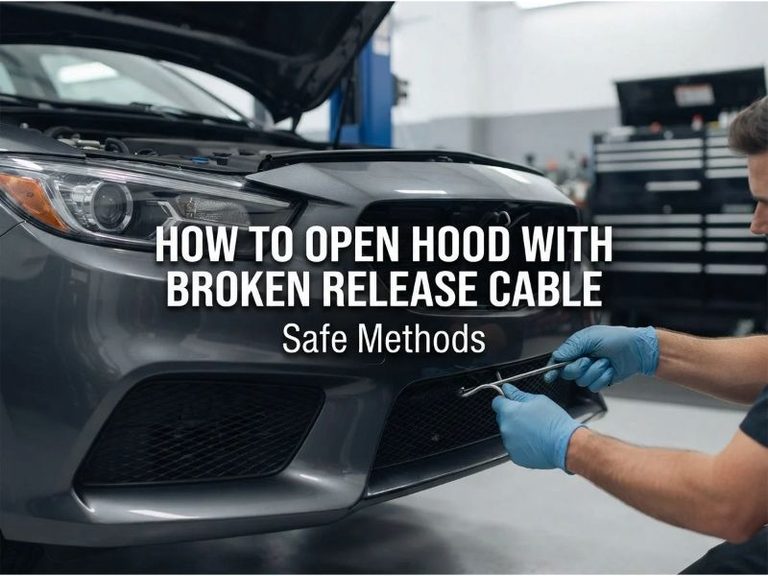
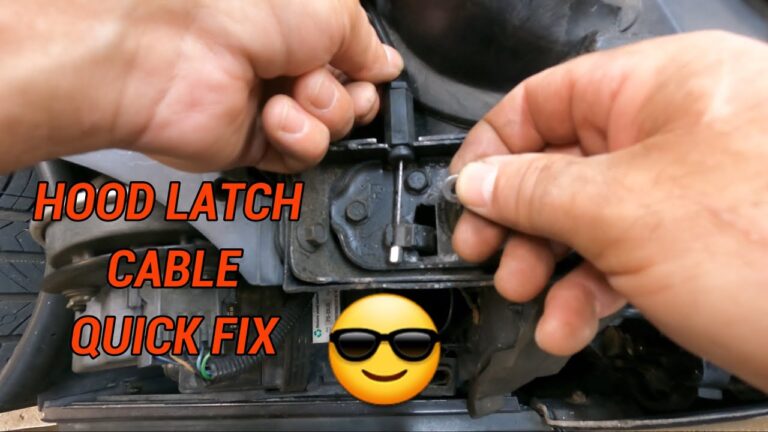
The basic idea behind how to open hood without release cable is to operate the hood latch manually. Depending on the vehicle, you may be able to reach the latch from underneath the front bumper, through the grille, behind a wheel-well liner, or by pulling the remaining section of cable with pliers.
The exact method varies widely by vehicle design. Some cars provide relatively easy access to the latch, while others make it difficult enough that removing trim panels or getting professional help is the safer option.
Before forcing anything, confirm whether the cable is actually broken, disconnected, stretched, or simply not pulling far enough. A few minutes of diagnosis can prevent unnecessary damage.
How to Open Hood Without Release Cable
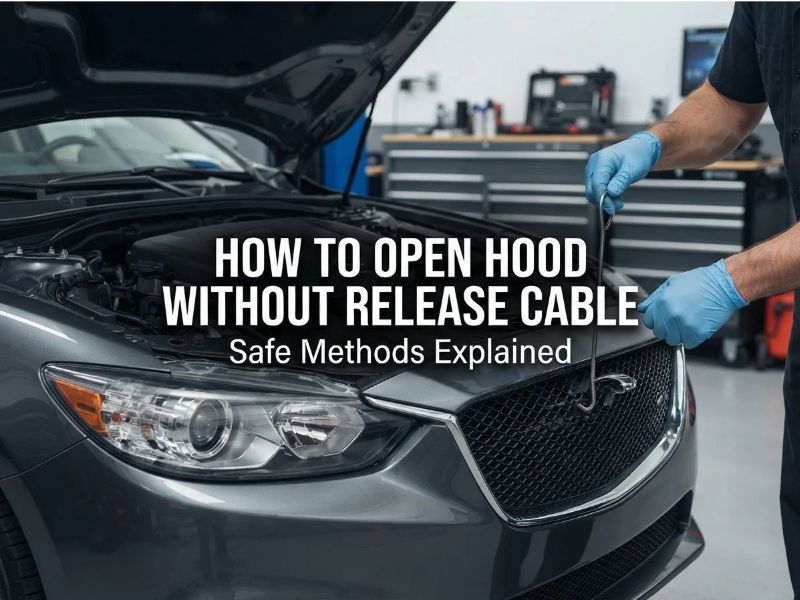
To open hood without release cable, you need to manually move the same latch lever that the cable normally pulls.
The safest methods, from easiest to more involved, are:
- Pull the exposed cable with pliers if it is still accessible.
- Reach the latch through the grille.
- Access the latch from underneath the vehicle.
- Reach the latch through a wheel-well or splash shield opening.
- Remove limited trim only when necessary to reach the release mechanism.
Do not pry the hood upward while it is still latched. The hood latch is designed to hold the hood securely, and forcing the hood can bend the hood, damage the latch support, crack the grille, or damage nearby cooling-system components.
First Determine What Actually Failed
Before trying to bypass the release cable, check the interior hood release handle.
The Handle Feels Completely Loose
If the handle suddenly moves with almost no resistance, the cable may have:
- Broken
- Disconnected from the handle
- Come out of its retaining bracket
- Detached from the latch
If the cable end is still visible behind the handle, you may be able to grab it directly.
The Handle Still Has Some Resistance
If the handle still feels connected but the hood does not pop up, the cable may be:
- Stretched
- Partially broken
- Moving inside a loose outer housing
- Not pulling the latch far enough
A stiff or misaligned latch can create the same symptom.
The Handle Is Extremely Hard to Pull
Do not keep pulling harder.
A stiff handle often means the hood latch or cable is binding. Excessive force can break the release handle or snap a cable that is still partly functional.
Try having someone gently press down on the front of the hood while you pull the release handle. This can sometimes remove tension from a binding latch and allow it to release.
Method 1: Pull the Cable Directly With Pliers
If the release handle or interior cable connection has broken, this is usually the easiest method.
How to Do It
Remove or move aside the trim around the hood release handle if necessary.
Look for the inner metal cable.
If you can see enough of the cable to grip safely:
- Hold the outer cable housing firmly.
- Grab the exposed inner cable with locking pliers or regular pliers.
- Pull the inner cable in the same direction the original handle would have pulled it.
- Have another person gently lift the hood if necessary.
If the hood pops up, use the secondary safety release normally, if your vehicle has one.
Why This Works
The interior handle does not directly open the hood.
It simply pulls an inner steel cable, and that cable moves the release lever on the hood latch.
Pulling the cable manually reproduces the same action.
Method 2: Reach the Hood Latch Through the Grille
On some vehicles, the hood latch is visible or partially accessible through the front grille.
This method works best when the latch sits near the center and there is enough room to reach it without damaging the grille.
What You Are Looking For
The latch usually sits behind the grille near the center of the radiator support.
You need to locate the release lever where the hood cable attaches.
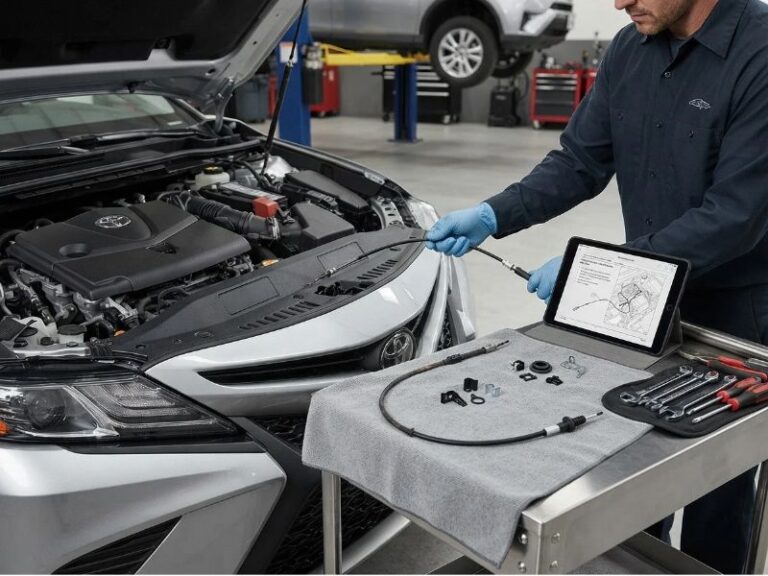
Moving the wrong metal part may not release the latch, so compare what you see with a replacement latch photo or a vehicle-specific repair diagram if possible.
Basic Procedure
Use a flashlight to look through the grille.
Locate the latch and cable attachment point.
If there is enough access, use a long screwdriver, hook tool, or long-nose pliers to move the release lever in the same direction the cable normally pulls it.
Apply only enough force to move the latch mechanism.
If the lever moves correctly, the hood should release from the primary latch.
Be Careful Around the Radiator
The radiator and air-conditioning condenser may sit directly behind the grille.
Do not push a screwdriver deeply into areas you cannot see.
A punctured radiator or condenser can turn a simple cable repair into a much more expensive job.
Method 3: Open the Hood From Underneath the Vehicle
If grille access is blocked, the latch may be reachable from below.
This method varies considerably depending on the engine splash shield, bumper design, radiator position, and latch construction.
Safety Comes First
Never crawl under a vehicle supported only by a jack.
If the vehicle must be raised, use:
- Proper lifting points
- Suitable jack stands
- A level, solid surface
Wheel ramps may also work for some vehicles when used correctly.
Accessing the Latch
Look upward behind the front bumper and radiator support.
You may need to remove an engine splash shield or lower plastic cover.
Once you can see the latch, identify the lever connected to the hood release cable.
Use a suitable long tool to move that lever.
Another person can gently lift the hood as you operate the latch.
Method 4: Access the Cable or Latch Through the Wheel Well
Some vehicles route the hood release cable along one side of the engine compartment.
That may make it possible to reach the cable by removing or partially loosening a front wheel-well liner.
This is not universal, but it can be useful when the cable breaks somewhere between the passenger compartment and the hood latch.
What to Look For
After moving the liner aside, you may find:
- Hood release cable housing
- Cable retaining clips
- A damaged or exposed section of cable
If you can safely grip the inner cable, pulling it may release the hood.
Avoid cutting into a cable unless you are certain it is already being replaced and you understand where the inner cable runs.
Method 5: Pull the Cable Housing While Someone Operates the Handle
Sometimes the cable is not actually broken.
The outer housing may have slipped out of its bracket near the latch or interior handle.
A Bowden-style cable works correctly only when the outer housing stays fixed while the inner cable moves.
If the housing moves together with the inner cable, the latch may not receive enough movement.
One person may be able to hold the cable housing firmly in position while another pulls the hood release handle.
If the hood opens, inspect the retaining clips and mounting brackets before assuming you need an entirely new cable.
What If the Hood Is Stuck Because of a Bad Latch?
A cable problem is not the only reason a hood refuses to open.
The hood latch itself can become dry, dirty, corroded, bent, or misaligned.
In that situation, manually pulling the cable may not be enough.
Try having one person apply gentle downward pressure directly above the latch while the other operates the release.
This can reduce pressure between the hood striker and latch.
Do not bounce heavily on the hood or strike it with tools.
If the latch is severely seized, forcing it can bend the hood striker or mounting bracket.
Can You Open the Hood by Pulling the Cable From Inside the Car?
Yes, if the cable itself is still intact and accessible.
This is especially common when the plastic hood release handle breaks but the cable remains functional.
Remove enough trim to expose the cable end, then pull the cable with pliers.
If the inner cable slides freely without noticeable resistance, it may be broken farther forward.
If the cable is intact, you should normally feel spring resistance from the hood latch.
Can You Open the Hood Through the Front Grille?
Sometimes.
Whether this works depends entirely on the vehicle.
Some vehicles have open grille areas that provide direct access to the hood latch. Others use:
- Closed grille panels
- Active grille shutters
- Radiator covers
- Structural braces
- Deeply recessed hood latches
Do not break grille slats simply to create access.
If the latch cannot be reached without damaging parts, accessing it from underneath may be safer.
Can You Use a Screwdriver to Open the Hood Latch?
A screwdriver can sometimes be used to move the latch release lever, but it should be used carefully.
The screwdriver should operate the release mechanism, not pry the hood open.
Avoid placing a screwdriver between painted hood and body panels. Doing so can damage paint, bend sheet metal, and create corrosion problems later.
A long screwdriver is most useful when the actual latch lever is visible and can be reached through the grille or from below.
What If the Hood Cable Is Broken Near the Latch?
A cable that breaks close to the hood latch can be more difficult to access because there may be nothing available to pull from inside the cabin.
In this situation, you generally need to reach the latch release lever directly.
Depending on the vehicle, the best access may be:
- Through the grille
- From underneath
- Behind the bumper cover
- Through a wheel-well opening
Once the hood is open, replace the cable and inspect the latch before closing the hood again.
What If the Hood Cable Is Broken Inside the Cabin?
This is usually easier to deal with.
If the cable breaks or disconnects at the release handle, remove the handle trim and inspect the cable.
If the inner cable is visible, use pliers to pull it.
If this opens the hood normally, the actual problem may be only:
- Broken release handle
- Disconnected cable end
- Damaged mounting bracket
Replacing the entire hood release cable may not be necessary.
Should You Remove the Grille to Open the Hood?
Only if the grille can be removed without damaging surrounding components and the vehicle design allows access to its fasteners while the hood is closed.
On many vehicles, some grille fasteners are accessible only after opening the hood.
Trying to forcibly remove the grille can break:
- Plastic clips
- Mounting tabs
- Trim pieces
- Camera or sensor mounts
If grille removal would require breaking parts, consider underside access or professional assistance instead.
What Not to Do When the Hood Release Cable Breaks
Several shortcuts can cause expensive damage.
Do Not Pry the Hood Open
The primary latch is strong.
Prying against the hood edge can bend thin sheet metal long before the latch releases.
Do Not Cut Randomly Through the Grille
You may damage the radiator, condenser, wiring, sensors, or grille unnecessarily.
Do Not Pull the Interior Handle Excessively
If the handle is already difficult to move, repeated force can break the handle or worsen cable damage.
Do Not Crawl Under an Unsupported Vehicle
A hydraulic jack alone is not a safe support.
Always use appropriate stands or another safe lifting method.
Do Not Close the Hood Until the Problem Is Fixed
Once you manage to open the hood, avoid closing it completely until you know the release system works.
Otherwise, you may lock yourself out again.
What to Check After You Get the Hood Open
Once the hood is open, inspect the full release system before installing new parts.
Inspect the Interior Handle
Check for cracks around the cable attachment point.
Plastic release handles can break while the cable remains usable.
Inspect the Cable
Look for:
- Frayed wire
- Rust
- Kinks
- Damaged housing
- Stretched sections
- Broken retaining clips
A damaged cable should normally be replaced rather than patched.
Check the Hood Latch
Move the latch by hand with the hood open.
The mechanism should move smoothly and return under spring tension.
If it feels stiff, clean and lubricate the mechanical pivot points with an appropriate automotive latch lubricant.
Check the Striker Alignment
The metal striker on the hood should enter the latch cleanly.
Visible wear marks on one side may indicate misalignment.
Test Before Closing the Hood
Use a screwdriver or similar tool to simulate the hood striker and move the latch into the closed position while the hood remains open.
Then pull the interior release handle.
The latch should release smoothly.
Reset the latch to the open position before closing the actual hood.
Do You Need to Replace the Hood Release Cable?
Replacement is usually appropriate when the cable is:
- Broken
- Frayed
- Severely stretched
- Rusted
- Kinked
- Binding inside its housing
You may not need a new cable if it has only disconnected from a bracket or handle and remains in good condition.
The latch should also be repaired if it is unusually stiff, because a binding latch can put excessive load on a new cable.
Can a Mechanic Open a Hood With a Broken Cable?
Yes. Automotive technicians deal with broken hood release systems regularly.
A mechanic may access the latch from underneath, through the grille, or by removing specific trim components.
Professional help is especially worthwhile when:
- The latch is completely inaccessible.
- The grille is expensive or fragile.
- The vehicle has active grille shutters.
- Front cameras or sensors are nearby.
- The hood latch itself appears damaged.
- You cannot safely raise the vehicle.
Paying for labor can be cheaper than replacing a damaged grille, radiator, condenser, or painted hood.
How Much Does It Cost to Fix After Opening the Hood?
A professional hood release cable replacement often falls around $150 to $350, though vehicle design and local labor rates can move the cost above or below that range.
The cost can increase if:
- The hood is difficult to open.
- The latch also needs replacement.
- Interior trim requires significant removal.
- OEM parts are expensive.
- Additional broken clips or handles need repair.
If only the interior release handle or retaining clip has failed, the repair may be much cheaper.
FAQs About How to Open Hood Without Release Cable
How do you pop a hood when the cable is broken?
The hood must usually be released by manually moving the hood latch lever. Depending on the vehicle, you may reach it through the grille, from underneath, or by pulling an accessible section of the remaining cable with pliers.
Can I pull the hood release cable with pliers?
Yes, if the inner cable is exposed and still connected to the latch.
Grip the inner cable securely and pull it in the same direction the release handle normally pulls it.
Can I open a hood from underneath the car?
On some vehicles, yes.
Removing a lower splash shield may provide access to the latch release lever. Never work beneath a vehicle supported only by a jack.
Why does my hood release handle feel loose?
A completely loose handle often indicates that the cable has broken or become disconnected from the handle or latch.
Inspect the cable attachment behind the interior handle first.
Why does the hood not open even though the cable moves?
The latch may be binding, the cable may be stretched, or the cable housing may have slipped from its mounting bracket.
Having someone press gently downward on the hood while the handle is pulled may help release tension on the latch.
Can I drive with a broken hood release cable?
The broken release cable itself does not normally cause the hood to open while driving, but you should repair it soon because you may need access to the engine compartment unexpectedly.
If the hood latch does not securely hold the hood closed, do not drive the vehicle.
Should I lubricate the hood latch after opening it?
If the latch is dry or stiff, cleaning and applying an appropriate automotive latch lubricant can help.
Lubrication will not repair a damaged, badly corroded, or mechanically broken latch.
Can I close the hood before replacing the cable?
It is safer not to fully latch the hood until the release system has been repaired and tested.
Otherwise, you may have to repeat the manual opening procedure.
Conclusion
Learning how to open hood without release cable comes down to reaching and operating the hood latch manually. Start with the easiest option: check whether the remaining cable can be pulled with pliers. If that is not possible, the latch may be accessible through the grille, from underneath the vehicle, or through another service opening.
Avoid prying the hood or blindly forcing tools around the radiator and condenser. Once the hood is open, inspect the release handle, cable, latch, and striker before closing it again. Replacing a broken cable is only part of the repair if a stiff or misaligned hood latch caused the cable to fail in the first place.