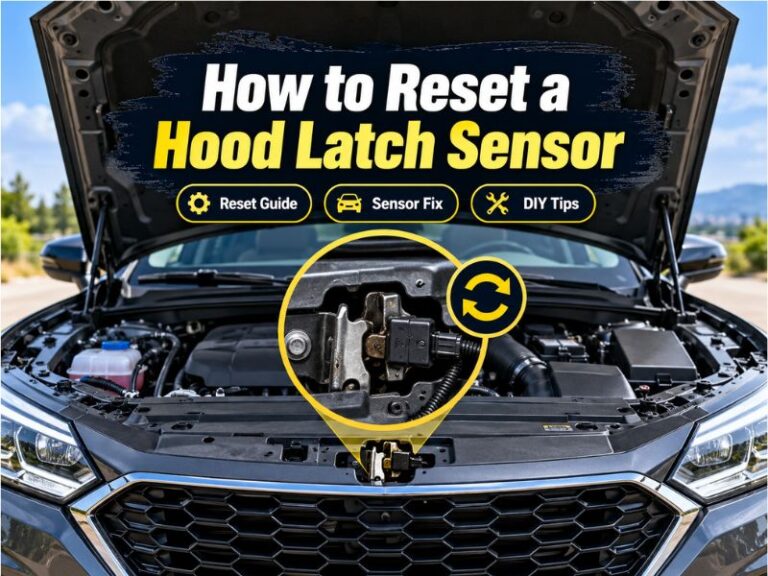
What Is a Hood Latch Sensor? Location, Look & Function Guide
A vehicle hood may look like a simple metal panel that opens and closes, but modern cars often use electronic components to monitor whether it is properly secured. One of those components is the hood latch sensor.
If you have ever seen a “Hood Open” warning on the dashboard even though the hood appears closed, experienced an alarm that activates unexpectedly, or had problems with remote start, this small sensor may be involved.
So, what is a hood latch sensor? It is an electrical switch or sensor that detects whether the vehicle’s hood is open or closed. It normally works together with the hood latch assembly, vehicle wiring, and a control module such as the Body Control Module (BCM). Depending on the vehicle, its information may be used by the dashboard warning system, anti-theft alarm, remote-start system, or other electronic features.
This guide explains what a hood latch sensor does, what a hood latch sensor looks like, and where the hood latch sensor is located. You will also learn how it works, how it differs from the hood latch itself, what happens when it fails, and how you can identify it under the hood.
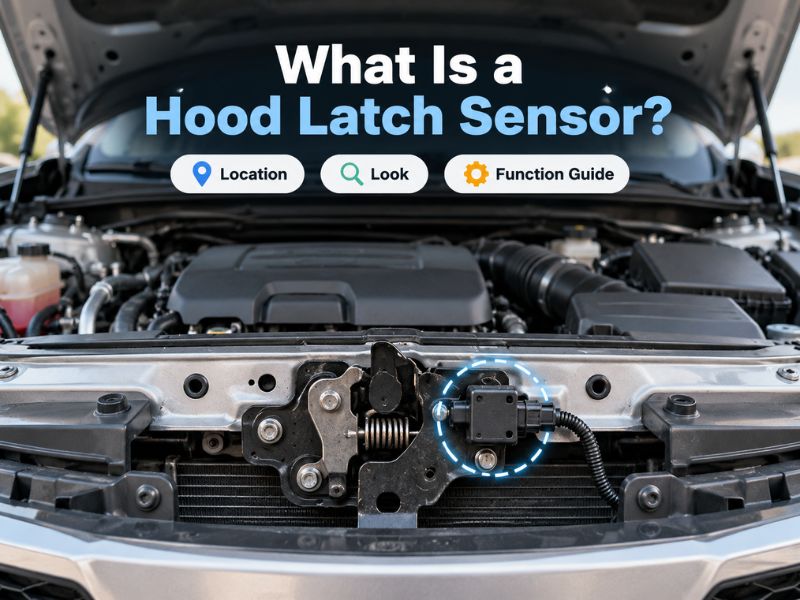
What Is a Hood Latch Sensor and What Does It Do?
A hood latch sensor is a small electrical device that tells the vehicle whether the hood is latched shut or open. It may also be called a hood switch, hood ajar switch, bonnet switch, or hood position sensor, depending on the manufacturer.
On many modern vehicles, the sensor is incorporated directly into the hood latch mechanism rather than being installed as a completely separate component.
When the hood closes, the latch mechanism changes the position of the sensor or activates an internal switch. The sensor then sends an electrical signal to the appropriate vehicle control module indicating that the hood is closed.
When the hood is opened, the signal changes.
The vehicle can use this information for several functions, including:
- Displaying a hood open warning
- Controlling the vehicle’s security system
- Monitoring the hood for attempted unauthorized entry
- Enabling or disabling remote start
- Triggering certain dashboard messages
- Communicating hood status to the Body Control Module
- Activating the alarm if the hood is opened while the vehicle is armed
The exact functions vary between vehicle makes, models, and years.
Hood Latch Sensor vs. Hood Latch
The hood latch and hood latch sensor are closely related, but they are not exactly the same thing.
The hood latch is the mechanical part that physically holds the hood closed. It typically catches a metal hood striker when the hood is pushed down.
The hood latch sensor, meanwhile, monitors the position of that latch.
Think of it this way:
Hood latch: Physically locks the hood.
Hood latch sensor: Electronically reports whether the hood is locked or open.
However, many vehicles combine both parts into one hood latch assembly. In these vehicles, replacing a failed sensor may require replacing the complete latch assembly rather than purchasing the sensor separately.
How Does a Hood Latch Sensor Work?
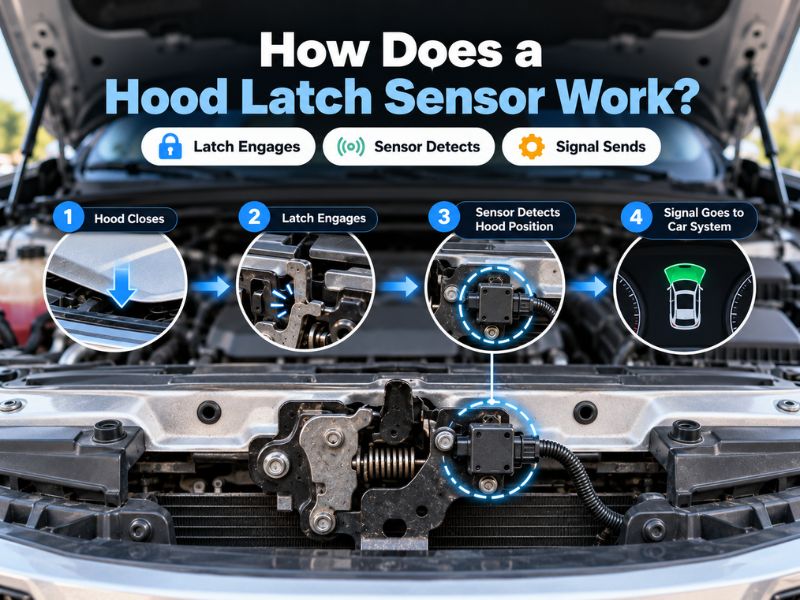
A hood latch sensor usually operates as a simple electrical switch.
When the hood changes position, the latch mechanism activates or releases the sensor. This changes the electrical circuit that communicates with the vehicle’s electronic modules.
The process generally works like this:
- The driver lowers the hood.
- The hood striker enters the latch.
- The latch rotates and locks around the striker.
- The sensor detects the latch’s closed position.
- An electrical signal is sent through the wiring harness.
- The BCM, alarm module, or another control unit receives the signal.
- The vehicle recognizes that the hood is closed.
Opening the hood reverses the process.
Some vehicles use a basic contact switch, while others may use a small microswitch built into the latch.
What Module Reads the Hood Latch Sensor?
In many vehicles, hood position information is received by the Body Control Module (BCM).
The BCM manages or communicates with many electrical systems, including:
- Door locks
- Interior lights
- Alarm systems
- Exterior lighting
- Keyless entry
- Remote start
- Door and hood warning indicators
However, vehicle architecture differs significantly between manufacturers. Some systems may send hood-switch information through another control module before it reaches the instrument panel or security system.
What Does a Hood Latch Sensor Look Like?
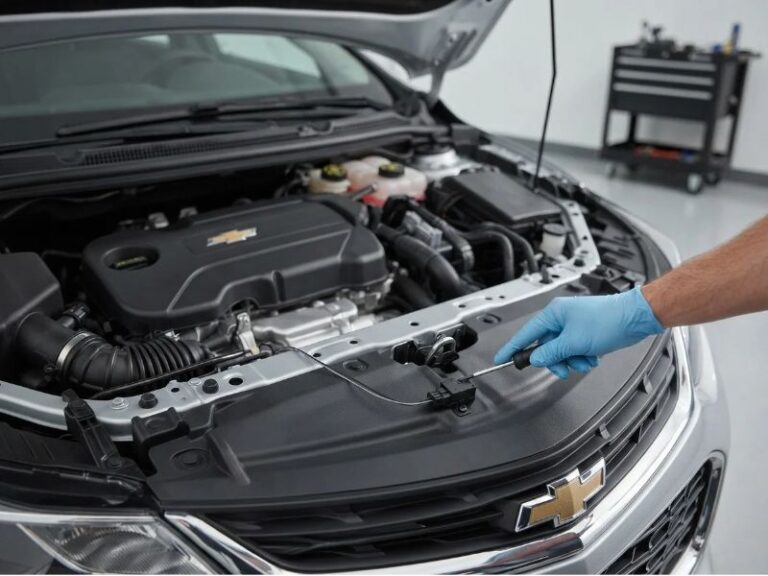
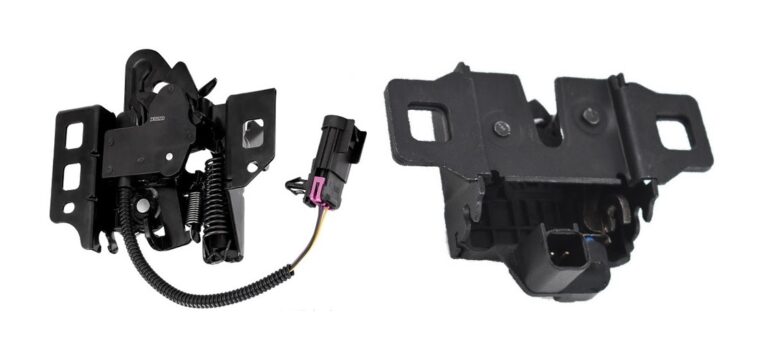
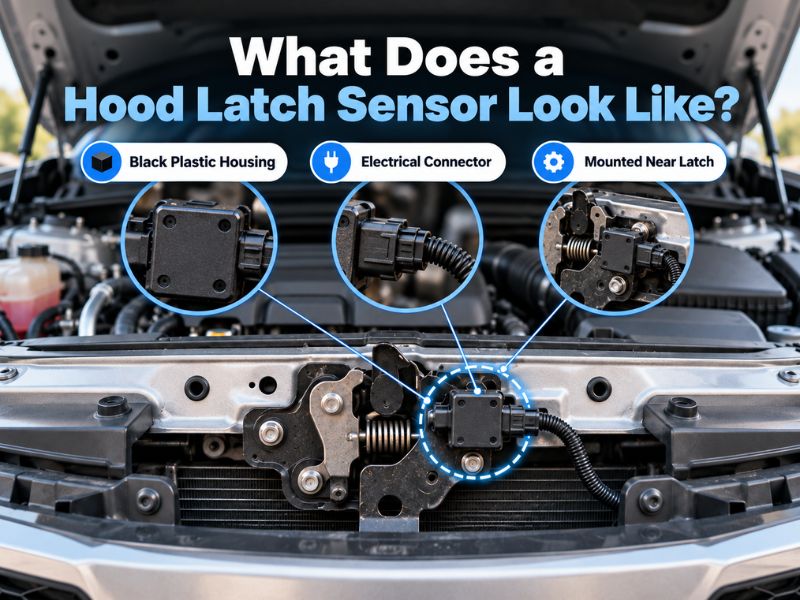
If you are asking what does a hood latch sensor look like, there is no single universal shape because manufacturers use several different designs.
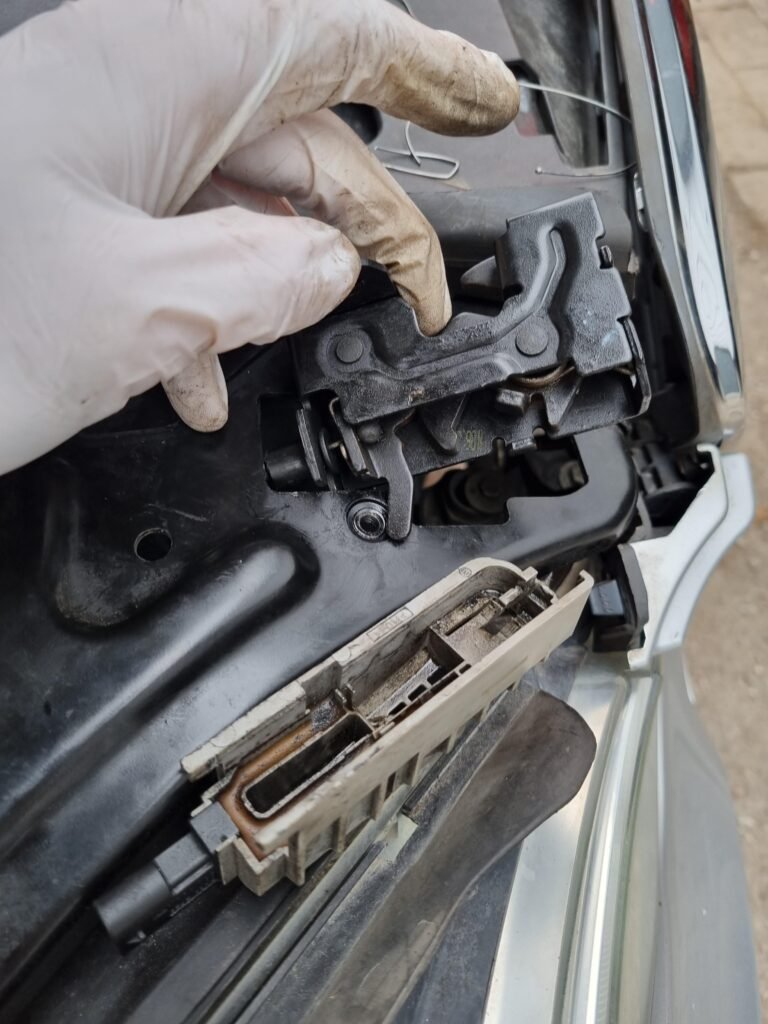
In many vehicles, the sensor looks like a small black plastic electrical switch attached to or built into the hood latch. A short wiring harness or electrical connector is usually connected to it.
You may see:
- A small black plastic housing
- A two-wire or multi-wire electrical connector
- A small microswitch
- A spring-loaded button or plunger
- Wiring leading directly into the hood latch
- A sensor integrated inside the metal latch assembly
On some vehicles, you may not be able to see the actual sensor without removing the latch because it is enclosed within the assembly.
Integrated Hood Latch Sensor
An integrated sensor is one of the most common designs on newer vehicles.
With this design, the sensor is located inside or directly attached to the hood latch assembly.
From the outside, you might only see:
- The metal latch mechanism
- An electrical plug
- Several wires connected to the latch
The presence of an electrical connector on an otherwise mechanical latch is often a strong indication that the assembly includes an electronic hood-position switch.
Separate Hood Pin or Plunger Switch
Some vehicles use a separate hood pin switch or plunger switch.
This design usually looks like a small spring-loaded button mounted near the edge of the engine compartment.
When the hood closes, it pushes the switch downward.
When the hood opens, the spring pushes the switch upward.
This changes the electrical circuit and tells the alarm or control system that the hood has been opened.
Aftermarket Hood Switches
Vehicles with aftermarket alarms or remote-start systems may have an additional hood switch installed.
An aftermarket switch is often easier to identify because it may be mounted separately near:
- The radiator support
- Fender edge
- Firewall
- Hood opening
These switches are commonly simple spring-loaded pin switches with one or two wires.
Where Is the Hood Latch Sensor Located?
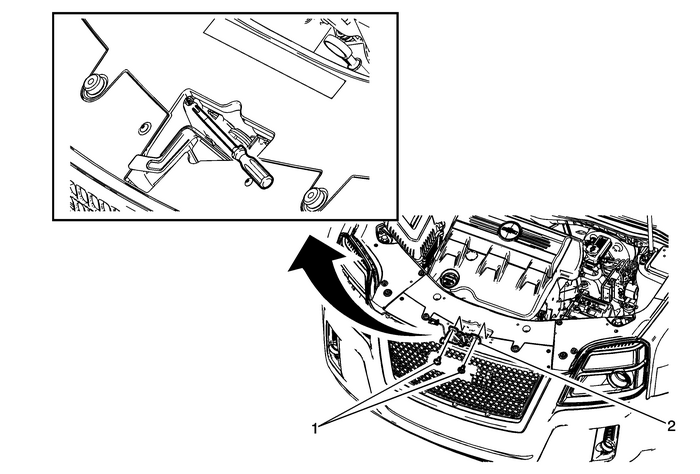
If you are wondering where is the hood latch sensor located, start by looking around the hood latch mechanism at the front center of the vehicle.
On many cars, trucks, and SUVs, the sensor is either inside the primary hood latch or mounted immediately beside it.
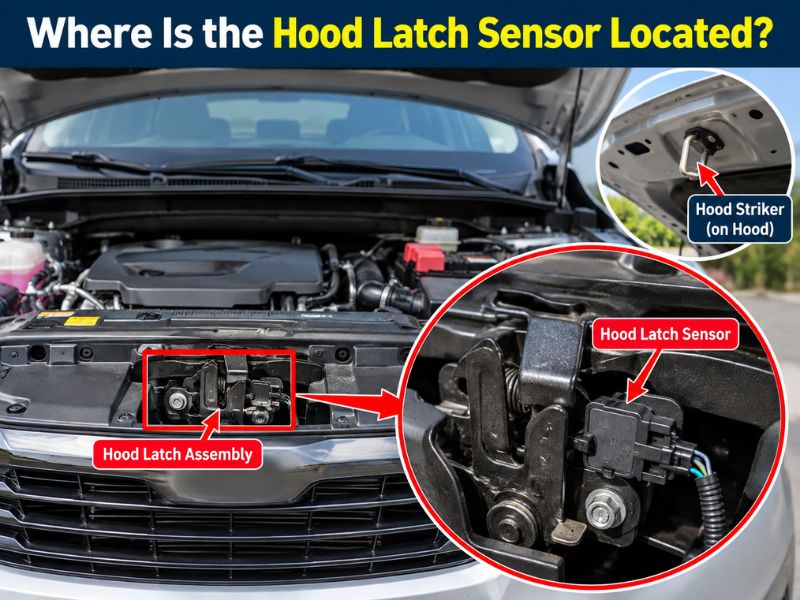
The hood latch itself is normally located near the:
- Front center of the engine compartment
- Upper radiator support
- Grille area
- Front crossmember
Open the hood and follow the metal hood striker downward. The part that receives and locks onto that striker is the hood latch.
If wires or an electrical connector are attached to the latch, the hood latch sensor may be integrated into it.
Common Hood Latch Sensor Locations
Depending on the vehicle design, the sensor may be found:
Inside the hood latch assembly
This is especially common on vehicles with factory security systems and sophisticated body electronics.
Attached to the side of the hood latch
The sensor may be externally mounted but mechanically activated by the latch.
Near the radiator support
A separate switch may be installed next to the latch instead of inside it.
Near one side of the engine bay
Some vehicles use a hood pin switch near the fender or another point where the hood makes contact when closed.
Under a plastic radiator cover
Modern engine bays often have decorative or protective plastic covers above the radiator support. The latch and electrical connection may be underneath one of these panels.
How to Find Your Hood Latch Sensor
You can usually narrow down its location using a few simple visual checks.
First, locate the hood striker attached underneath the hood.
Then look directly below the striker to identify the latch mechanism.
Inspect the latch for:
- Electrical wires
- A wiring connector
- A small plastic sensor housing
- A switch attached to the latch
- A wiring loom entering the latch assembly
If no wiring is connected to the latch, inspect the surrounding radiator support and sides of the engine bay for a separate hood pin switch.
Vehicle-specific service information may be necessary when the switch is hidden inside the latch assembly.
Why Does a Vehicle Need a Hood Latch Sensor?
At first, electronically monitoring the hood may seem unnecessary. However, hood status is important to several vehicle systems.
Security and Anti-Theft System
One of the hood sensor’s most important roles is supporting the anti-theft alarm system.
If someone opens the hood while the security system is armed, the vehicle may interpret it as unauthorized access and activate the alarm.
Monitoring the hood can help protect components located inside the engine bay, including the:
- Battery
- Engine control electronics
- Wiring
- Fuse boxes
- Other valuable components
Remote Start Safety
Many factory and aftermarket remote-start systems monitor the hood switch.
Remote starting may be prevented when the vehicle believes the hood is open.
This is an important safety feature because a technician or vehicle owner could be working near moving engine components while the hood is raised.
Therefore, a faulty hood latch sensor may cause a remote-start system to stop working even when the hood is physically closed.
Hood Open Warning
Some vehicles display a hood open, hood ajar, or similar warning on the instrument cluster.
This warning relies on hood-position information provided by the sensor.
If the sensor produces an incorrect signal, the warning can remain active even after the hood has been securely closed.
What Are the Symptoms of a Bad Hood Latch Sensor?
A failing hood latch sensor can cause several different symptoms depending on how the vehicle uses the hood-position signal.
Common symptoms include:
- Hood open warning stays on
- Hood warning appears intermittently
- Vehicle alarm activates unexpectedly
- Remote start stops working
- Alarm does not detect the hood opening
- Dashboard hood indicator flickers
- Vehicle reports the hood as open when it is closed
- Security system behaves unpredictably
These symptoms do not automatically prove that the sensor itself has failed.
Problems involving the wiring harness, connector, latch adjustment, corrosion, or mechanical latch movement can create similar symptoms.
Why Would a Hood Latch Sensor Fail?
Hood latch sensors operate in a relatively harsh environment.
The front of the engine compartment can be exposed to water, road debris, temperature changes, vibration, dirt, and chemicals.
Several issues can therefore interfere with the sensor.
Dirt and Debris
Dust, grease, leaves, or road debris can collect around the hood latch mechanism.
Heavy contamination may prevent parts of the latch or switch from moving correctly.
Corrosion
Moisture can enter the sensor or electrical connector, causing corrosion.
Corroded terminals may increase electrical resistance or interrupt the signal completely.
Worn Microswitch
An internal microswitch can eventually wear out after repeated hood-opening and closing cycles.
Damaged Wiring
Wires near the front of the vehicle may become damaged by:
- Vibration
- Previous repairs
- Collision damage
- Rodents
- Pinching
- Connector deterioration
A wiring fault can imitate a defective sensor.
Hood Latch Misalignment
Sometimes the sensor itself works normally, but the mechanical latch does not move far enough to activate it.
This could happen because of:
- Hood alignment problems
- Latch adjustment
- Bent components
- Accident damage
- A worn latch
In that situation, inspecting the complete hood latch assembly is important rather than replacing the sensor immediately.
Can You Drive With a Bad Hood Latch Sensor?
A sensor-related warning does not necessarily mean the hood is physically unsecured.
However, you should confirm that the hood is actually latching correctly before driving.
Push down carefully on the closed hood and verify that the primary latch has securely captured the hood striker. Also make sure the hood does not lift unexpectedly.
A malfunctioning electrical sensor may mainly affect warning, security, or remote-start functions. A damaged mechanical latch is a different and potentially more serious problem.
If the hood itself will not remain securely closed, the hood latch mechanism should be inspected before normal driving.
Is a Hood Latch Sensor the Same as a Hood Ajar Switch?
In many automotive applications, the terms hood latch sensor, hood ajar switch, and hood switch describe the same basic function.
They all provide information about whether the hood is open or closed.
However, the physical design may differ.
One vehicle may have a microswitch integrated into the latch, while another may have a separate plunger-style switch.
That is why replacement parts should generally be identified by the exact year, make, model, and sometimes trim or option package.
Is the Hood Latch Sensor Part of the Alarm System?
It often is.
When a factory anti-theft system is armed, opening the hood can cause the sensor signal to change. The vehicle’s control module detects this change and may activate the horn, lights, or alarm siren.
This means a defective hood sensor can sometimes cause an alarm to activate even though nobody has opened the hood.
However, unexpected alarm activation can also originate from door switches, trunk switches, motion sensors, wiring, low battery voltage, or other security-system components.
Does the Hood Latch Sensor Affect Remote Start?
It can.
Many remote-start systems require confirmation that the hood is closed before allowing the engine to start remotely.
If the hood switch continuously reports an open condition, the remote-start system may refuse to operate.
This is why a vehicle with both a hood-open warning and an unexplained remote-start problem may warrant inspection of the hood latch sensor circuit.
The exact remote-start logic varies by manufacturer.
How Can You Tell if Your Vehicle Has a Hood Latch Sensor?
Most vehicles that monitor hood position electronically will have either a sensor incorporated into the latch or a separate switch.
Look for these clues:
- A hood-open icon on the dashboard
- A factory alarm that reacts when the hood opens
- Factory remote start
- Electrical wires connected to the hood latch
- A visible hood pin switch
- Hood-position information available through vehicle diagnostics
The absence of a visible sensor does not mean the vehicle lacks one. It may be hidden inside the latch.
Frequently Asked Questions
What is another name for a hood latch sensor?
A hood latch sensor may also be called a hood switch, hood ajar switch, bonnet switch, hood position switch, or hood pin switch.
The exact terminology varies by vehicle manufacturer and sensor design.
Is the hood latch sensor inside the latch?
On many modern vehicles, yes. The switch can be integrated directly into the hood latch assembly.
Other vehicles use a separate switch mounted nearby.
What does a hood latch sensor look like?
It commonly looks like a small black electrical switch, plastic housing, or electrical connector attached to a metal hood latch.
If it is integrated internally, you may only see wires and an electrical plug connected to the latch assembly.
Where is a hood latch sensor usually located?
The most common location is around the front-center hood latch near the upper radiator support.
Some vehicles instead place a separate pin or plunger switch near the edge of the engine compartment.
Can a hood latch sensor cause the alarm to go off?
Yes. If the sensor incorrectly reports that the hood has been opened while the alarm is armed, the security system may activate.
Wiring or connector problems can create the same symptom.
Can a bad hood latch sensor stop remote start?
On vehicles that require a confirmed closed-hood signal, yes. A faulty hood sensor can make the remote-start system believe the hood is open and prevent remote starting.
Can the hood latch sensor be replaced separately?
It depends on the vehicle.
Some designs allow the sensor or switch to be replaced individually. Others integrate the switch into the latch, requiring replacement of the complete hood latch assembly.
How do I know whether the sensor or latch is bad?
First check whether the hood physically latches securely.
If the mechanical latch operates normally but the vehicle continues displaying an incorrect hood status, the sensor, wiring, connector, or electrical circuit may need further diagnosis.
Conclusion
Understanding what is a hood latch sensor, what it looks like, and where it is located makes it much easier to diagnose hood-open warnings, security-system problems, and certain remote-start issues.
The hood latch sensor is essentially an electronic hood position switch that tells the vehicle whether the hood is open or securely latched. On many vehicles, it is integrated into the hood latch assembly near the front-center radiator support, although some designs use a separate pin or plunger switch.
A typical sensor may appear as a small black switch or simply as an electrical connector attached to the latch. Because the sensor interacts with systems such as the Body Control Module, anti-theft alarm, instrument cluster, and remote start, even a small switch failure can create several noticeable symptoms.
If the vehicle reports that the hood is open when it is actually closed, inspect both the mechanical latch and the electrical sensor circuit. The problem could involve the sensor itself, but wiring damage, corrosion, dirt, or latch misalignment can produce similar symptoms.